
The most useful birthday voice note ideas begin with one detail, not a complete script. Use this simple shape:
- Open as you normally would.
- Say one thing that belongs to this person.
- Finish with a wish, question, or real next step.
For example:
“Hey, happy birthday. I was thinking about that disastrous train journey and how you somehow made it fun. Hope today is much less chaotic. Call me when you’re free.”
That is enough. The memory makes it personal, while the short structure keeps it sounding spoken.
Use three beats instead of a script
A voice note needs less structure than a card because your tone supplies part of the meaning. Think in three beats:
- Opening: “Hey, happy birthday” or whatever you would naturally say.
- Personal detail: One memory, thank-you, current interest, or shared plan.
- Closing: A simple wish, invitation, or sign-off.
Decide the detail before recording, but do not write every sentence. If you need more help shaping the words, use the four-part birthday message formula, then simplify the result until it sounds natural aloud.
About 15–60 seconds is a practical target, not a rule. Stop when you have said the personal part. Extra length does not make the note warmer.
Choose an idea based on what you know
These prompts are raw material rather than scripts. Replace the invented details with something true.
Tell one small shared story
Choose a scene you can describe in one sentence. Small memories often sound more natural than a summary of the entire relationship.
“Happy birthday. I still laugh when I think about us trying to put that tent up in the rain. Hope this year brings better weather and equally good stories.”
Do not explain every part of the story. The recipient already knows it.
Thank them for one real action
Name what they did and the effect it had.
“Hey, happy birthday. I never properly thanked you for checking in after my first week at the new job. You made a nervous week feel much easier. Hope you get a properly quiet day today.”
Specific thanks sound more credible than a list of broad compliments.
Mention something happening in their life now
Use an interest, project, or change they have discussed openly.
“Happy birthday! I love seeing how much you’re enjoying the photography course. Hope this year gives you plenty of time to keep going with it.”
Avoid predicting outcomes or mentioning private news they may not want recorded or replayed.
Look forward to a real plan
A confirmed plan gives the note an easy, natural ending.
“Happy birthday! I’m looking forward to dinner on Friday. Until then, I hope somebody else is handling the cooking today.”
Use this only when the plan is real. “We must catch up” can sound empty when nobody intends to choose a date.
Bridge distance without making it an apology
Acknowledge the distance briefly, then move to the connection you still share.
“Happy birthday. I know it’s already evening there, so I hope the day has been good. I still think about that terrible hostel breakfast. Miss you, and I’m looking forward to our call on Sunday.”
The birthday reminder timing guide can help you schedule a note or call across time zones.
Keep limited context simple
For a coworker, neighbor, or newer friend, use the setting you genuinely share rather than inventing intimacy.
“Happy birthday! It’s been good working with you on the launch. Hope you get a quiet inbox and a good celebration today.”
A voice note is best here only if audio messages are already normal between you. Otherwise, a brief text may feel more appropriate.
The guide to planning personal birthday messages explains how to collect useful prompts without writing finished greetings months early.
Why voice can feel more personal than text
A recording carries pacing, emphasis, and laughter that plain text cannot reproduce. That does not make every voice note better than every text, but it can help when warmth or humor depends on how you say the words.
Research by Amit Kumar and Nicholas Epley compared voice-based and text-based conversations involving old friends and strangers. Participants tended to underestimate how connected voice communication would make them feel and overestimate its awkwardness.
The research did not study birthday voice notes. It supports only the narrower point that hearing a voice can affect a social exchange differently from reading text. A thoughtful text remains better than a generic or inconvenient recording.
Record an audio message in Messages on iPhone
For the quickest method:
- Open the conversation in Messages.
- Tap the add button beside the text field.
- Tap Audio, then speak.
- Tap stop when you finish.
- Play the recording to check it, continue recording if needed, or tap send.
Apple says an outgoing audio message is deleted from the conversation on your iPhone two minutes after you send it unless you tap Keep. For an incoming message, deletion occurs two minutes after you listen unless you tap Keep.
The recipient can wait before playing your message. After listening, they need to tap Keep within two minutes if they want it retained in their conversation.
To keep Messages audio automatically, go to Settings > Apps > Messages > Expire, then choose Never. This changes the setting on your device, not the recipient’s.
Use Voice Memos when you want to retain the original
Voice Memos is useful when the recording is a keepsake, you want to trim an untidy start, or you may need to share it again.
- Open Voice Memos and tap record.
- Speak, then tap stop.
- Rename the recording so it is easy to find.
- Trim the beginning or end if necessary.
- Share it through Messages, Mail, or another available destination.
The original remains in Voice Memos unless you delete it. That gives you a retained copy, although you still cannot control what another app or recipient does with the shared version.
If background sound is distracting, Apple provides a Voice Isolation option for Voice Memos. While Voice Memos is active, open Control Center, tap Voice Memos at the top, then choose Voice Isolation.
Make the recording sound conversational
A few delivery choices matter more than perfect wording:
- Record somewhere reasonably quiet. Move away from a television, fan, or open window when possible.
- Use your normal pace. Speaking unusually slowly often makes a short note sound ceremonial.
- Let a harmless stumble stay. Correct the word and continue unless the mistake changes the meaning.
- Aim for one or two takes. Re-record if you omit the point, reveal something private, or the audio is unclear, not because every pause was imperfect.
- Close decisively. “Hope you have a good day,” “call me later,” or “see you Friday” gives the note a natural ending.
Reading the whole message from a screen often flattens your pacing. If you need support, write a cue such as “train story, photography, call Sunday,” not a paragraph.
Avoid the awkward parts of voice notes
Before sending, check for these common problems:
- A long introduction explaining why you chose audio.
- Several unrelated memories competing for attention.
- A private story that could embarrass the recipient.
- A joke about age, health, appearance, or relationships that depends on perfect delivery.
- Pressure to call back immediately or respond emotionally.
- Background music or noise that competes with your voice.
- A message that continues after the meaningful point has ended.
Assume the recording could be replayed or heard by somebody nearby. If a detail would be uncomfortable in that situation, choose a safer detail or send a private written message instead.
Save a cue before the birthday arrives
The difficult part is often remembering a useful detail while the birthday is still days away. Save a short, non-sensitive cue when it occurs:
- “Tell the hostel breakfast story.”
- “Thank her for the interview call.”
- “Ask about the photography course.”
- “Mention dinner on Friday.”
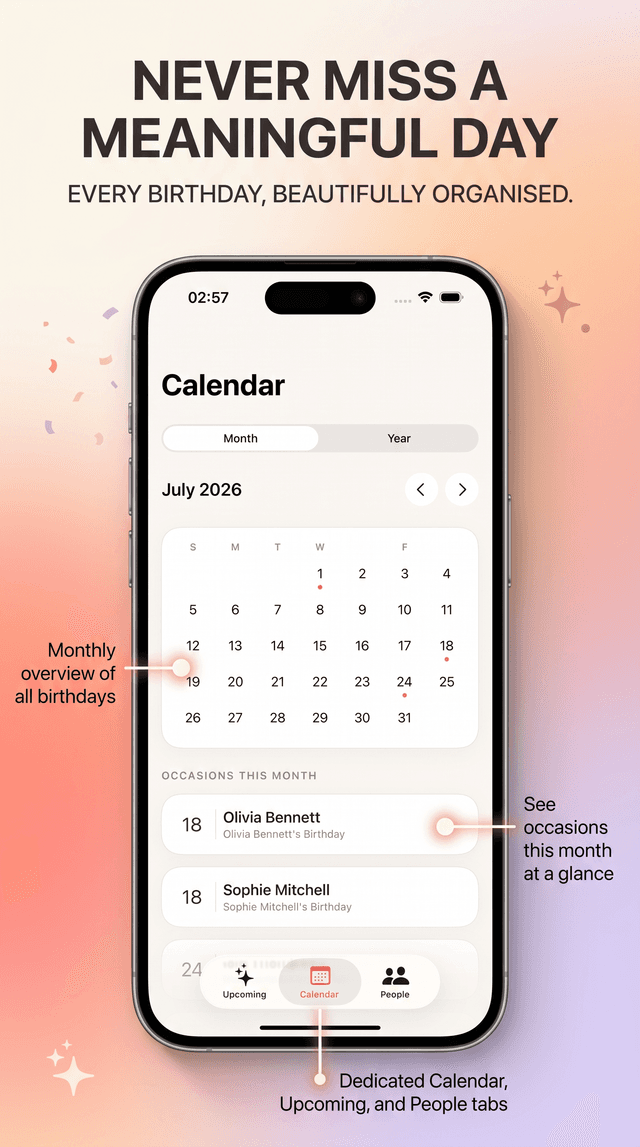
Birthday Reminder supports personal notes and customizable reminder lead days and times. A cue beside the birthday can surface the idea early enough to record without rushing. The guide to adding birthday notes and gift ideas on iPhone explains what is useful to save and what is better left out.
If you want a broader preparation routine, use the simple birthday planning system. The Birthday Reminder app page shows how notes, reminders, countdowns, and widgets fit together.
Frequently asked questions
How long should a birthday voice note be?
About 15–60 seconds works as a practical range for most notes. A longer message is fine when you have a complete story to tell, but do not add filler merely to make it feel substantial.
Should I write a script first?
Usually not. Write one cue for the detail and perhaps your opening line. If you need a script for accessibility, confidence, or language reasons, use one, then adapt any phrases that feel unnatural when spoken.
What if I stumble over a word?
Correct it and continue. Re-record when the mistake changes the meaning, exposes something private, or makes the audio hard to understand.
Is a birthday voice note suitable for work?
It can be when you already exchange voice messages with the person. Keep it brief and avoid private stories. In a formal relationship or unfamiliar communication channel, use a written greeting.
Can the recipient keep a Messages audio message?
Yes, but they need to tap Keep within two minutes after listening unless their Expire setting is set to Never. Their timer begins after playback, not when the message arrives.
Is Voice Memos better than recording in Messages?
Use Messages for speed. Use Voice Memos when you want to keep the original, trim it before sharing, or retain a copy that you can send again.
A natural birthday voice note needs one recognizable detail and a clear ending. Say the personal part, leave the harmless pauses alone, and send it before polishing away your normal voice.