
The best birthday wishes after bereavement make room for two truths: this is still the person's birthday, and the day may not feel celebratory.
You do not need to find a perfect sentence. Briefly acknowledge that the birthday may feel different, add one genuine detail or practical offer, and let the recipient decide whether to celebrate, rest, talk, or not reply.
Decide which birthday you are writing about
The phrase can describe two different situations:
- A grieving person's own birthday. A friend, relative, or colleague has lost someone, and their birthday is approaching.
- The birthday of the person who died. You want to support someone on what would have been their loved one's birthday.
Most of this guide addresses the first situation. Messages for the second appear later because the wording and purpose are different.
The loss does not have to be recent for the date to matter. A Psychology Today Personal Perspective notes that birthdays and death anniversaries can remain difficult years later. That does not mean every grieving person will struggle, only that the passage of time should not be used to dismiss the possibility.
Use a three-part message without forcing cheerfulness
A considerate message can be built from three parts:
- Name the moment carefully. Say the birthday may feel complicated rather than declaring that it will be awful.
- Add something real. Use a memory, a sincere statement of care, or an offer you can actually fulfill.
- Close without pressure. Do not require a reply, a celebration, or a positive outlook.
For example:
I know this birthday may feel different. I'm thinking of you and would be glad to bring coffee over this afternoon if you would like company. No need to reply right away.
Inscripture's card-writing article recommends acknowledging that the birthday may be difficult and replacing vague offers with practical options such as talking or sitting together. Hallmark likewise recommends checking in around birthdays, anniversaries, and other significant dates.
These are useful writing principles, not rules. The person you know should guide the final tone.
Birthday wishes after a recent loss
In the first weeks or months after a death, keep the message easy to receive. Avoid surprise plans and questions that require the recipient to explain how they are coping.
I know this birthday arrives in a very hard season. I'm thinking of you and sending love, with no pressure to reply or make plans.
Thinking of you on your birthday. I can leave dinner at your door this evening, or give you space. Either is completely fine.
Happy birthday, Maya. I've been remembering Daniel's talent for choosing the loudest card in the shop. Sending you a much quieter one, with love.
A gentle birthday wish for today. Whatever you decide to do, I hope you feel cared for.
If you did not know the person who died, do not invent a memory. A plain line such as “I know this has been a difficult time, and I'm thinking of you today” is enough.
Birthday wishes when the grief is older
Friends may stop tracking difficult dates even when the dates still matter. The Psychology Today article recommends sharing emotionally significant dates with supportive people in advance rather than assuming they will remember.
If you do remember, acknowledge the date without implying that grief should have ended:
Happy birthday. I know this time of year still carries a lot, and I wanted you to know I remembered.
Thinking of you and your mother today. I still smile when I remember how seriously she took birthday cake. I hope there is a good slice somewhere in your day.
Happy birthday. However today feels, I'm glad you are in my life.
Avoid phrases such as “after all this time” or “you've come so far.” Even when intended as praise, they can turn the message into an assessment of someone else's grief.
Choose a tone the recipient will recognize
Tone should come from your existing relationship, not from a stock idea of how grieving people speak.
Short and understated
Thinking of you on your birthday and sending quiet good wishes.
Happy birthday. I know today may hold mixed feelings, and I'm keeping you in mind.
Warm and supportive
Happy birthday, Leila. You have been carrying a great deal. I hope today gives you some gentleness, good company, and room to breathe.
Sending love on your birthday. If you want a walk, a meal, or someone to sit beside you without talking, I am available.
Personal and memory-led
Happy birthday. I keep thinking about the way your dad turned every family birthday into an excuse for pancakes. I hope that memory brings some warmth today.
I remember Anna insisting that birthdays required flowers, even in winter. I'm thinking of both of you today and sending love.
Use a memory only when you are confident it is accurate and welcome. If you are unsure whether to name the deceased person, a simpler acknowledgment is safer.
The birthday card message guide by relationship can help you choose an appropriate level of warmth without replacing the grief-specific guidance here.
Messages for coworkers and group cards
A coworker may appreciate acknowledgment without wanting their loss discussed at work. Keep the wording brief and avoid details the recipient has not shared publicly.
For a coworker:
Wishing you a peaceful birthday and sending warm thoughts your way.
When the loss is known within the team:
Thinking of you on your birthday. We hope the day brings some comfort and time with the people you care about.
For a group card:
Sending warm birthday wishes and letting you know you are in our thoughts.
Do not use a group card to reveal the relationship, circumstances, or date of the death. A more personal message can be sent privately.
When the birthday belongs to the person who died
What's Your Grief explains that a birthday remains the anniversary of a person's birth after their death. Its suggestions include sharing a memory, doing something the person enjoyed, lighting a candle, making a donation, or gathering with others who loved them.
If you are supporting someone on that date, you can acknowledge the person directly:
Thinking of you and Michael on his birthday. I still remember how he sang every song half a beat too early.
Remembering your mother today and sending you love. I hope you can mark her birthday in whatever way feels right.
I know today would have been Ava's birthday. I would be glad to light a candle with you, share a memory, or simply check in later.
Hallmark's guide includes examples built around the deceased person's name, favorite food, or a shared story. Follow that approach only when you know the reference will be welcome. Do not impose spiritual language such as “heavenly birthday” unless it matches the recipient's beliefs.
What to avoid in a birthday message after loss
Leave out:
- “They would want you to be happy.” It assigns the recipient an emotion.
- “At least they are no longer suffering.” It reframes the death instead of acknowledging the loss.
- “Everything happens for a reason” or “stay strong.” These phrases can sound like instructions rather than support.
- Questions about the death. A birthday message is not the place to request details.
- An unannounced celebration. Ask before arranging visitors, dinner, or a public tribute.
- Promises you cannot keep. “I can call after work” is better than “I'm always here” if that is the offer you can fulfill.
- Private details in a public post or group card. Match the content to where it will appear.
“Happy birthday” itself is not forbidden. If you are close to the person, add one sentence that recognizes the circumstances or your care.
Personalize an example in under a minute
Start with:
Thinking of you today. Happy birthday.
Then add one true detail:
Thinking of you today, especially because I know this was usually the week you and your brother went fishing. Happy birthday.
Choose just one of these:
- A safe shared memory.
- A quality you directly observed in the person who died.
- A practical offer such as coffee, dinner, a walk, or a call.
- An honest admission that you do not know the right words.
The birthday message formula and the guide to planning personal birthday messages provide broader writing methods. This article owns the distinct question of adapting those methods after a bereavement.
Keep a respectful prompt for next year
A private reminder can help you remember to approach next year's birthday thoughtfully. Save an action prompt such as “keep the message private” or “offer coffee, no surprise plans,” rather than a detailed account of the loss.
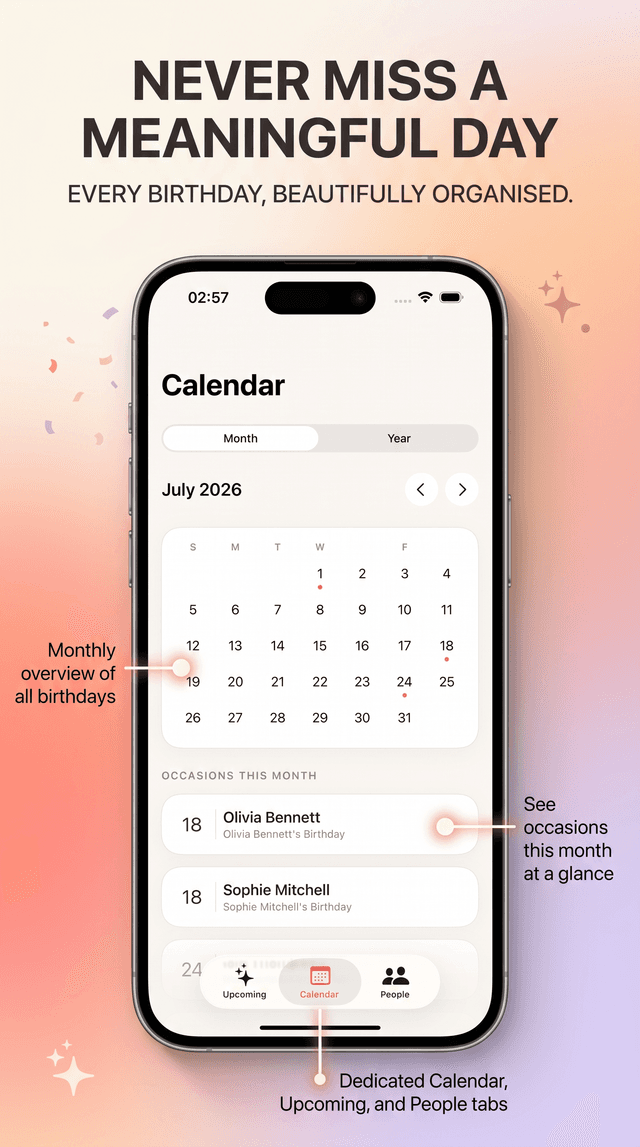
The current App Store listing for Birthday Reminder: Tracker confirms that the app supports personal notes and gift ideas, customizable reminder lead days and alert times, on-device information, and use without an account.
The Birthday Reminder app page explains the reminder and note features. The birthday reminder timing guide can help you choose enough notice for a card, visit, or call.
Frequently asked questions
Is it okay to say “happy birthday” to someone who is grieving?
Yes. Pair it with a brief acknowledgment or statement of care if that fits your relationship. Do not insist that the person should feel happy or celebrate.
Should I mention the person who died by name?
You can if you knew them, know their name, and reasonably believe the reference will be welcome. A specific memory may feel caring, but a simple acknowledgment is better when you are unsure.
What if the death happened on or near the birthday?
Recognize that the date may carry more than one meaning without asking the recipient to explain it: “I know today holds a lot. I'm thinking of you and sending love.”
Should I send a card if the person may not respond?
Yes, provided the card does not demand a response. A line such as “No need to reply; I just wanted you to know I remembered” removes that obligation.
What should I write if I never met the person who died?
Do not pretend to have a memory. Say, “I know you are missing someone important today, and I'm thinking of you on your birthday.”
Is it appropriate to mark the birthday of someone who died?
It can be. Some people light a candle, prepare a favorite meal, share photographs, visit a meaningful place, or do nothing formal. Follow the preferences of the person grieving rather than assuming a ritual is required.
Birthday wishes after a bereavement do not need to solve grief. They need to recognize the person, respect the day, and leave room for whatever the recipient feels.
Browse the other Birthday Reminder guides for more situational wishes. Our editorial policy explains how Daily Life Apps reviews sensitive topics and product claims.