
A birthday countdown should answer a useful question, then get out of the way. If you open it repeatedly without learning anything new or taking an action, the setup needs a boundary.
To use a birthday countdown effectively, give it one job, choose when you will look, and remove the cues that invite unnecessary checks. Keep reminders for decisions and actions. If the number itself makes a date harder to think about, replace it with a less visible reminder.
Understand what the countdown can and cannot do
A countdown provides one piece of information: the time remaining before a date. It can help you notice who is next or recognize that preparation should begin.
It cannot settle uncertainty about a milestone, decide how you feel about your own birthday, or complete a plan. Reopening it may feel active, but the extra look usually provides no practical benefit when the displayed day count has not changed.
Economist George Loewenstein's 1987 model of intertemporal choice incorporates savoring and dread, described as utility arising from the anticipation of a delayed outcome. The useful lesson here is modest: waiting can affect how an event feels before it happens.
That research does not show that countdown apps cause anxiety or that frequent checking has one universal explanation. It does explain why the period before a meaningful date may carry emotional weight of its own.
Give the countdown one specific job
Choose one purpose before changing any settings:
- General awareness: Show whose birthday is nearest.
- Preparation: Show when a real task should begin.
- Personal anticipation: Track your own birthday or one important milestone.
A general-awareness countdown may need only a weekly glance. A preparation countdown matters when it reaches a useful threshold. A personal countdown may be enjoyable, neutral, or uncomfortable depending on what the date represents.
Do not ask one widget to show every birthday, manage a celebration, and reassure you about the date. The countdown-versus-planning guide explains where passive visibility ends and active preparation begins.
Complete this sentence:
I use this countdown to know __________.
If the answer is unclear, hide the countdown for a week. You may need a reminder or calendar date rather than a constantly visible number.
Choose a checking rhythm that matches the job
Replace “whenever I think of it” with a specific rule.
Try one of these:
- Weekly: Check during a regular planning session when the countdown supports general awareness.
- Daily: Look once in the morning when a birthday is close enough to require attention.
- At a decision point: Open it only when you need to decide whether to order, book, post, call, or message.
- Not at all between alerts: Let one scheduled reminder bring the date back when action becomes useful.
A day-based countdown usually changes once per day. Several checks in the same hour do not create more preparation time.
Make the rule concrete: “I check after opening my calendar on Monday” works better than “I will check less.” If you break the rule, notice what prompted the check without treating one lapse as failure.
Turn the number into an action threshold
A countdown becomes more useful when a number leads to a predefined action.
For example:
- At 30 days, discuss travel or a group plan.
- At 14 days, order a gift or make a booking.
- At 7 days, post a card or confirm arrangements.
- At 1 day, prepare the message or choose a time to call.
These are examples, not universal deadlines. Delivery times, distance, availability, and the intended gesture should determine the real threshold. The birthday reminder timing guide offers more detailed starting points.
Once the action is scheduled or completed, stop using the countdown to ask whether you are prepared. Let the task or reminder own the next step.
Remove cues that trigger unnecessary checks
If you keep returning to the countdown, change its visibility before deleting your records.
Start with the smallest adjustment:
- Turn off the app badge. Go to Settings > Notifications, select the app, and turn Badges off. This removes the notification count from the app icon.
- Remove repeated day-count alerts. Keep a notification only when it prompts a distinct action.
- Move the widget. Place it on a Home Screen page you visit intentionally rather than the first screen you see on every unlock.
- Use Today View when supported. This adds a deliberate swipe between you and the information.
- Avoid automatic stack rotation. Apple allows up to ten widgets in a Home Screen or Today View stack. If a rotating stack keeps presenting the countdown unexpectedly, turn Smart Rotate off or move the widget elsewhere.
For detailed placement choices, see how to make a birthday countdown widget useful. If several apps are producing alerts, use the separate guide to reducing birthday reminder notification noise.
Treat anticipation and preparation as different problems
Sometimes repeated checking points to an unfinished task. In that case, identify the next action and schedule it. The simple birthday planning system separates remembering the date from preparing and celebrating.
Other times, there is no task to complete. Your own milestone birthday may raise thoughts about age, relationships, expectations, or plans that changed. A countdown cannot resolve those questions.
When the concern is emotional rather than practical:
- Shorten how long the countdown remains visible.
- Replace it with a plain calendar entry.
- Write down the specific concern away from the app.
- Decide what would make the day feel manageable.
- Stop displaying the number if each glance leaves you feeling worse.
Removing a countdown is not the same as ignoring the birthday. You can keep the date and one useful alert without watching the distance shrink every day.
Run a seven-day countdown reset
Use this short experiment when checking has become automatic:
- Write down the countdown's one job.
- Choose one permitted checking time.
- Remove its badge and repeated alerts.
- Move the widget away from your first Home Screen, or remove it temporarily.
- Keep one reminder tied to a real action.
- Make a simple tally each time you open the countdown outside the chosen time.
- Review the tally after seven days and adjust one setting.
You can also check Settings > Screen Time > Daily Average. Apple says its daily and weekly summaries include Pickups and Notifications reports. Those figures can show whether overall phone checking or notification volume changed, but they cannot establish why you picked up the phone or prove that the countdown caused the behavior.
Success does not require never thinking about the birthday. The test is whether the tool returns to its assigned job.
Know when to hide the countdown completely
Pause the visible countdown when:
- You check it repeatedly without a decision to make.
- Each look makes anticipation less enjoyable.
- The number distracts you from an action already scheduled.
- A static date and one reminder would provide enough notice.
- The widget exposes a personal date you would rather keep private.
Keep the birthday record if it remains useful. Remove only the display or alerts that create the unwanted loop.
Where Birthday Reminder fits
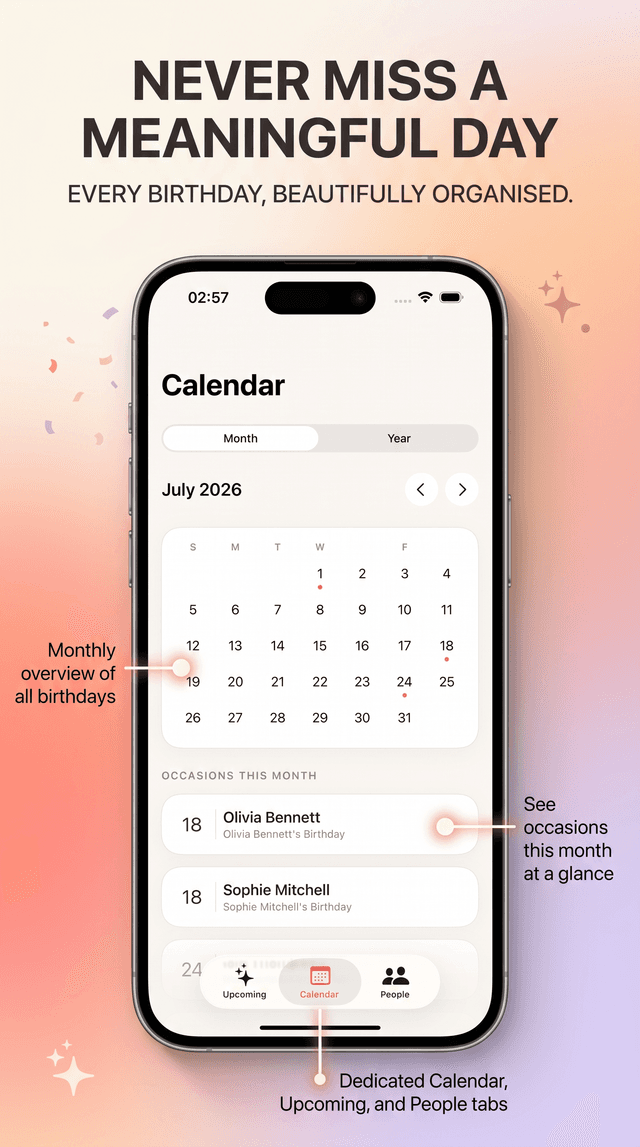
The current App Store listing for Birthday Reminder: Tracker confirms upcoming countdowns, reminders with chosen lead days and alert times, notes, gift ideas, a Home Screen widget, and use without a required account.
That combination supports a restrained setup: use the countdown for one glance, store any planning context with the birthday, and schedule an alert only when there is something to do. The same habits also work with a calendar, another countdown app, or a paper list.
Our editorial policy explains how Daily Life Apps verifies claims about its own products.
Frequently asked questions
Is checking a birthday countdown every day a problem?
Not by itself. A single daily glance may be exactly the routine you chose. Reconsider the setup when you check several times without receiving new information, delay other tasks to look, or regularly feel worse afterward.
Should I remove the widget if I keep checking it?
Try moving it to a less prominent screen first. If that does not help, remove it for seven days while keeping one useful birthday reminder. You can restore it later if the widget was genuinely helping.
Can Screen Time tell me whether I am checking the countdown too often?
Screen Time reports device and app use, pickups, and notification totals. It can provide context, but it cannot tell you why you opened the phone or whether a particular check was useful. A manual tally is better for evaluating this specific habit.
Can Birthday Reminder be used without constant alerts?
Yes. Its App Store listing confirms a Home Screen widget and customizable reminder timing. You can use the widget for passive awareness, retain only action-based reminders, and change the app's notification presentation through iPhone Settings.
What should I use instead of a visible countdown?
Use a calendar entry when you only need the date, or a scheduled reminder when you need to act. If preparation is the real concern, create a task with a deadline rather than repeatedly viewing the number of days remaining.
A useful countdown makes an approaching birthday easier to handle, not harder. Give it one purpose, decide when it deserves your attention, and let reminders or plans take over when action is required.
Browse the other Birthday Reminder guides for related setup, timing, and planning advice.