
The best birthday messages from a team sound coordinated without pretending every coworker has the same relationship with the recipient. Confirm who the message represents, gather one or two details the group recognizes, draft it in one voice, and let the named senders approve it.
This guide covers a work team acting as one sender. If each person is adding an independent line, use the guide to birthday message ideas for a group card. A household writing collectively has different considerations, covered in birthday messages from a family.
Choose the message format first
Decide how the team will participate before asking people for words.
| Format | Best when | Main rule |
|---|---|---|
| One collective message | A small team shares a clear sentiment | Let everyone represented review it |
| Shared greeting with named additions | Teammates have different details to contribute | Attribute each personal line |
| Team channel post | The group is remote or already celebrates there | Use the established channel and audience |
| Short message with signatures | Time or space is limited | Do not invent detail merely to make it longer |
A collective message is not automatically better than several short notes. Use it when the team genuinely wants to speak together, not simply because one organizer wants a more impressive card.
Build the message in four passes
Use four short passes rather than asking everyone to write a competing paragraph.
- Confirm the senders. Decide whether the message comes from named people, a project group, or the whole department.
- Collect one or two details. Ask contributors for a safe habit, shared moment, or quality they have directly observed.
- Draft one short paragraph. Open with the birthday wish, add the strongest details, and finish with a fitting wish.
- Get approval. Give represented teammates a chance to correct the wording or remove their name.
For example:
Happy birthday, Priya. Thanks for making Tuesday stand-ups calmer and for always knowing the best lunch spot near the office. We hope you get a proper break today. From the product team.
The message contains details the team recognizes, but it does not turn the birthday into a review of Priya’s output. If the organizer needs help shaping a true detail, the guide to planning birthday messages without making them generic offers a broader writing method.
Give one person ownership without speaking for everyone
One organizer should assemble the final message. Other teammates can contribute material without having to edit the same paragraph simultaneously.
| Team situation | Practical process |
|---|---|
| Small team | Ask each person for one detail, then circulate the draft |
| Large department | Draft a brief neutral message and collect names |
| Remote team | Gather suggestions in an organizer-only thread, then post the approved version |
| Shift-based team | Set a response deadline that gives every shift a fair opportunity |
Ask for “one detail by Wednesday,” not “please write the card.” A narrow request is easier to answer and produces material the organizer can combine.
Name a backup organizer as well. Otherwise, the process may fail when its usual owner is away or is the person whose birthday is being recognized.
Sign only for the people represented
The sign-off should accurately identify the senders.
Use individual names when the team is small:
From Alex, Dana, Jo, and Marcus
Use a team name when the group recognizes the message and normally uses that name:
From the customer support team
Use “from all of us” only when everyone has had a reasonable chance to see the message and nobody has opted out. Do not add an absent teammate’s name merely to make the card look complete.
If one person contributed a personal memory that others do not share, attribute it rather than turning it into “we.” Clear attribution lets the message feel collective without claiming false agreement.
Keep birthday recognition consistent and optional
The wording matters less if the process treats people unevenly. Ask a Manager advises workplaces to use a formal system or skip birthday recognition entirely, rather than relying on whoever happens to remember. It also says that requests to opt out should be respected.
A small team can use a simple routine:
- Keep an agreed list of participating birthdays.
- Assign an organizer and backup.
- Start the message at the same lead time for everyone.
- Use the same contribution deadline and delivery method.
- Record opt-outs without asking for an explanation.
The same source advises against asking coworkers to contribute money for birthday gifts. A message does not need to become a collection. If the team is also arranging a card or approved celebration, the birthday reminder timing guide can help set a realistic start date.
Keep the tone personal, not evaluative
Workhuman recommends personalizing coworker messages while maintaining a professional tone. It also cautions against comparisons between colleagues and negative jokes about aging. Grammarly advises keeping a professional birthday card focused on the recipient rather than work matters and matching the familiarity to the real relationship.
For a team message, the useful middle ground is to mention a human quality or recognizable habit without delivering performance feedback.
Good material includes:
- A safe shared ritual, such as a lunch tradition or familiar coffee order.
- A welcoming or calming quality teammates have directly experienced.
- A harmless moment from a project or team event.
- A real plan already arranged for the birthday.
Leave out ratings of someone’s productivity, hints about promotion, praise that sounds copied from a review, and claims about their private life. If the recipient manages the team, the dedicated guide to birthday wishes for a boss covers that power difference in more detail.
Adapt the process for a remote team
Use the communication space where the team already handles social messages. Do not move to a personal phone number or create a public announcement if neither is normal for the group.
Microsoft’s Teams documentation says everyone with access to a chat can see its messages. It also documents emoji reactions and the option to mark a message unread. That makes a group chat one possible delivery method, although visibility does not guarantee that every teammate will notice or participate.
For a distributed team:
- Draft the message before the recipient’s birthday reaches the earliest relevant time zone.
- Post one approved greeting in the established group space.
- Invite brief reactions or additions without requiring public participation.
- Let personal notes stay in direct messages.
- Avoid judging participation by the number of reactions.
A shared post should reduce repetition, not pressure everyone into performing enthusiasm in public.
Team birthday message examples to adapt
Replace every invented detail with something true.
For a small peer team:
Happy birthday, Dana. Thanks for keeping our Thursday lunches alive even during the busiest weeks. We hope today includes good food and no last-minute calls. From the ops team.
For a large department that does not know the person closely:
Happy birthday, Sam. Wishing you an enjoyable day and a good year ahead. From everyone in the finance department.
For a cross-functional project team:
Happy birthday, Elena. It has been a pleasure working with you on the migration project. Your calm questions have made complicated meetings much easier to follow. We hope you have a great day.
For a remote team:
Happy birthday, Marcus! Sending good wishes from three time zones and several questionable cups of coffee. Thanks for making the Monday call feel welcoming. From the whole design team.
For a team leader:
Happy birthday, Noor. We appreciate the thoughtful way you make room for everyone’s ideas. We hope you get time to enjoy the day. From your team.
These are patterns, not ready-made facts. A plain accurate greeting is better than a detailed message based on an experience that never happened.
Run a final workplace check
Before sending, ask:
- Does every named sender know about the message?
- Is each detail true, firsthand, and suitable for the full audience?
- Does the greeting celebrate the person rather than assess their work?
- Are any jokes about age, appearance, authority, or workload?
- Does the sign-off accurately describe the contributors?
- Has the recipient indicated that they prefer no public recognition?
Remove anything that fails one of those checks. A short message is not a weak message.
Save the process, not the finished wording
Afterward, keep one practical cue for the next organizer, such as “prefers a private card,” “use individual names,” or “start one week early.” Avoid saving private information or copying the full message for reuse.
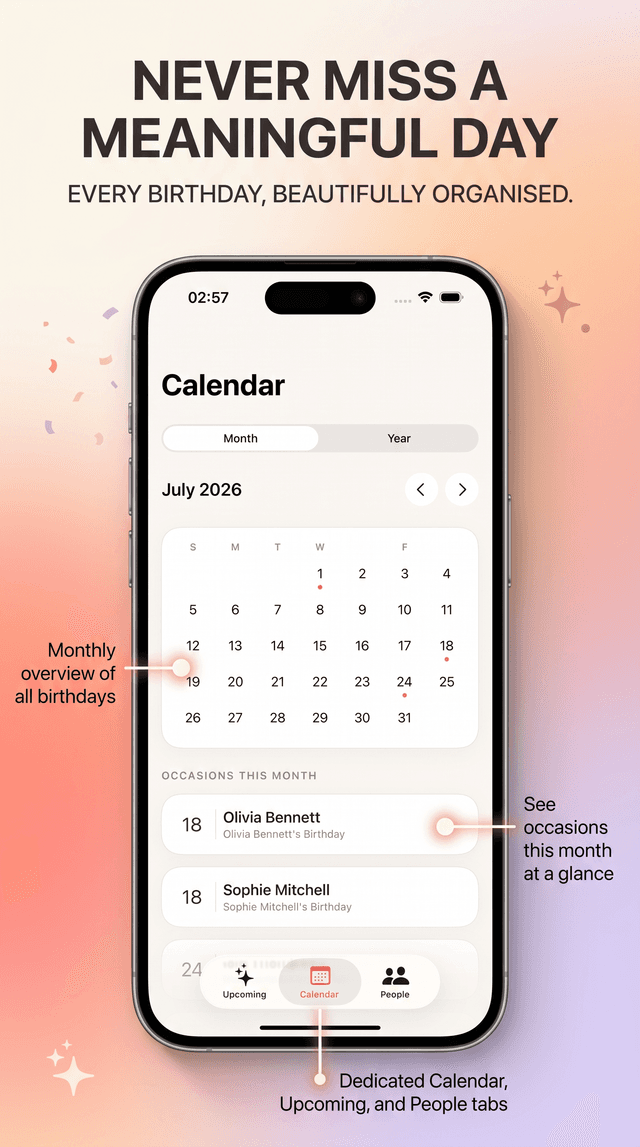
The current App Store listing for Birthday Reminder: Tracker confirms that it works without an account and supports countdowns, personal notes, customizable reminder lead days and alert times, and a Home Screen widget. If workplace policy permits a personal organizer to record the date, a brief note and early reminder can prompt the first drafting step.
Birthday Reminder is not a team approval or collaboration tool. Keep contributor status in the workplace system the team already uses. The Birthday Reminder app page shows how its private notes and reminders work.
Frequently asked questions
Who should write a birthday message from a team?
One organizer should draft the final version. Teammates can supply details and approve wording written on their behalf.
Can we sign a message “from all of us”?
Yes, when everyone represented has had a reasonable opportunity to review it and nobody has opted out. Otherwise, use individual names or a more precise group name.
Is a Slack or Teams message acceptable instead of a card?
Yes, if a shared workplace message is already normal for the team and the recipient is comfortable with public recognition. Use the established channel rather than creating a new audience for the birthday.
How long should a team birthday message be?
One short paragraph is usually enough: a greeting, one or two true details, a fitting wish, and a clear sign-off.
How can a large team keep recognition fair?
Use a maintained participation list, an organizer and backup, one standard lead time, and the same delivery method for each participating teammate.
What if someone does not want their birthday acknowledged?
Respect the preference without asking for an explanation. Remove the date from the active recognition process and do not replace the public message with a surprise.
A team birthday message succeeds when the recipient can recognize the people behind it and every signer can stand behind the words. Confirm the senders, choose true details, approve the draft, and use the same respectful process next time.
Browse the other Birthday Reminder guides for more help with birthday writing and planning. Our editorial policy explains how sources and product claims are reviewed.