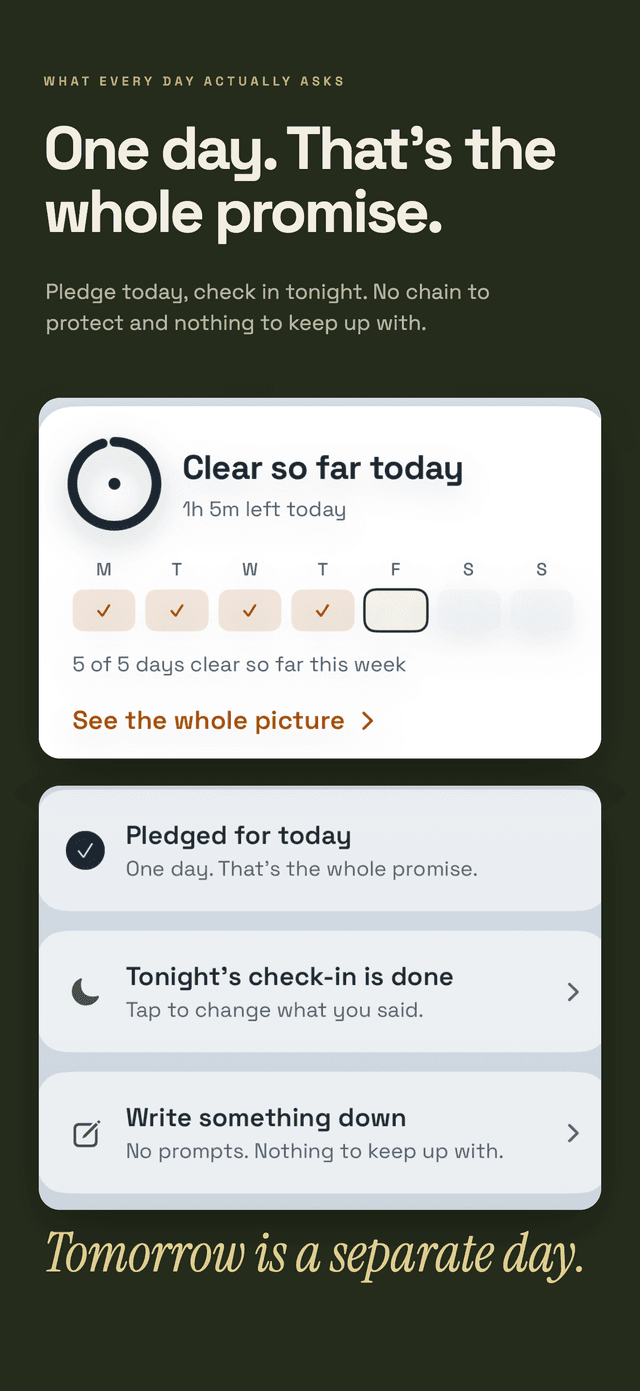

A five minute craving plan gives the first minutes of an urge a structure you decided on while calm, so you are not improvising at the worst moment. The sequence is simple: name the urge, change the scene, slow your body down, do one prepared action, then decide only what the next short stretch of time looks like. It works for alcohol, nicotine, cannabis, gambling, porn, scrolling, gaming, or any habit you are trying to stop or cut down.
Two things before the plan itself. First, this is a bridge, not a promise. Craving duration varies between people and situations, and no checklist can guarantee an urge ends on a schedule. Second, some moments are bigger than a plan, and the final section explains when to reach for people instead.
Why the first five minutes matter
Support services consistently describe urges as experiences that build, peak, and ease. WithYou notes that cravings do not last forever, often passing within an hour or less, and that distraction and planning help people get through them. SMART Recovery's DEADS framework (Delay, Escape, Accept, Dispute, Substitute) makes a related point: urges tend to fade unless you keep feeding them attention, and if one is still loud after ten or fifteen minutes, the cue that triggered it may still be in front of you.
The practical lesson is that the start of a craving is a decision window. Acting is fast and automatic; not acting needs a small amount of structure. Five minutes is enough time to interrupt the automatic sequence and not so much time that the plan feels impossible.
Minute one: name the urge and stop your hands
The first task is not to fight the craving. It is to describe it. Say something plain, aloud if you can:
- "This is an urge to drink."
- "I want to place a bet."
- "My hand is reaching for the vape."
This wording matters. "I am having an urge" describes a passing experience. "I need it" describes a conclusion. The first leaves room for a different next action; the second pretends the decision is already made.
While you name it, freeze the automatic physical step. Put the glass down. Close the betting app. Put the phone face down on the other side of the room. You are not committing to forever. You are committing to the next four minutes.
Minute two: change the scene or the access
SMART Recovery's "Escape" step is blunt: leave the situation that is provoking the urge. Leave the pub, walk away from the shop display, switch off the stream. Smokefree.gov gives the same advice for nicotine cravings in a different form: go somewhere the habit is not possible, because an environment that blocks the action does part of the work for you.
Pick the fastest version available to you:
- move to a different room, or step outside,
- put the device in another room or in a drawer,
- move money, cards, or supplies out of reach,
- sit near another person instead of alone with the cue,
- change the route if you are walking past a trigger.
If the urge stays intense after you have moved, that is useful information rather than failure. As SMART Recovery points out, a craving that refuses to fade often means the cue is still present, so look again for what is still within sight or reach.
Minute three: slow your body down
A craving is physical as well as mental. Giving your body one slow minute changes the conditions your next decision is made under.
Try this:
- Put both feet on the floor.
- Breathe in through your nose for a count of four.
- Let the exhale run a little longer than the inhale.
- Repeat five times.
Smokefree.gov recommends slow, deep breathing as one way to ride out a nicotine craving, and the same idea generalises. If focusing on your breath makes you more agitated, use an external anchor instead: name five things you can see, run cold water over your hands, or describe the room to yourself in detail.
If you want to go further with noticing an urge rather than escaping it, urge surfing is a mindfulness technique some people find useful. Treat it as one coping option, not a guarantee that the wave will pass quickly.
Minute four: do one prepared action
This is the "Substitute" step in the DEADS framework: replace the urge with an activity, and have the list ready before you need it. One action is enough, and it should be small, specific, and already decided. Good options include:
- drink a glass of water and eat something if you are hungry,
- walk to the end of the street and back,
- make tea and drink it in a different chair,
- have a shower without taking your phone,
- do one household task with a clear end, such as emptying the dishwasher,
- send a prewritten message to one person,
- put on one specific song, podcast episode, or video.
The action is a bridge to the next decision, not a performance. "I will wash the dishes before I decide anything" is a stronger plan than "I will never do this again," because the first is something you can actually complete in the next few minutes.
Minute five: decide only the next fifteen minutes
By now you have named the urge, left the cue, steadied your body, and started a different activity. The last minute of the plan is a small decision, not a big one. Ask: what do the next fifteen minutes look like?
Useful answers:
- "I will finish this task, then re-check how strong the urge is."
- "I will call my sister and stay on the phone until the match ends."
- "I will log this urge and note what set it off."
Logging belongs here, not at the start. One short line is enough: the time, what happened just before, and how strong it felt. Over a few weeks those lines become a personal timetable, which is what identifying your craving triggers and difficult times is built on. Hard Bit, the iPhone craving tracker from Daily Life Apps, does this on-device: each habit keeps its own log, and after enough entries it learns the hours you are most likely to struggle and can warn you before one arrives. The Hard Bit app overview explains how that forecast works. An app is optional; a notebook and the same honesty do the same job.
If the urge is still strong after the five minutes, run the plan again rather than abandoning it. There is no rule that you only get one round. For a fuller sequence when a craving digs in, how to handle a craving in the moment picks up where this plan ends.
Write your plan before you need it
A plan invented during a craving tends to be harsh and vague. A plan written on a calm day is specific and kind. Take ten minutes today and fill in five lines:
- My most likely time and place: for example, weeknights after 9pm, alone in the kitchen.
- My naming sentence: the exact words you will say in minute one.
- My scene change: where you will go or what you will close.
- My one prepared action: something that fits your real evenings, not an idealised version.
- My support contact: one person, or one service, you will reach for if the plan is not enough.
Keep it somewhere private but visible: a note on your phone, a card in a drawer. Read it once when you are calm so the sequence is familiar. If you track your habit, your own history will sharpen line one over time, because the difficult hour usually turns out to be more specific than "evenings."
When five minutes is not the right tool
A checklist is for manageable urges. Some situations need people, and recognising that is part of the plan, not a departure from it.
If you may be physically dependent on alcohol or sedatives, stopping suddenly can be dangerous. The NHS advises getting medical guidance before stopping completely, and calling emergency services (999 in the UK) for severe withdrawal symptoms such as hallucinations, severe tremors, or seizures. Do not white-knuckle through withdrawal with a timer.
Other situations that call for more than a plan:
- thoughts of harming yourself or someone else,
- gambling that is creating unmanageable debt, where self-exclusion and specialist support matter more than distraction,
- cravings during withdrawal, while driving, or around anything immediately unsafe.
For smoking or vaping, an official quit service can explain evidence-based support and medicines, which a coping checklist cannot replace. If the plan works some days and fails on others, that is normal too; what to do after a slip without erasing your progress covers how to respond without turning one event into a verdict. You can find more source-reviewed guides in the Hard Bit guide library.
Frequently asked questions
Will the craving be gone after five minutes?
Not necessarily, and the plan does not depend on it. Craving duration varies. The five minutes exist to interrupt the automatic sequence and get you to a calmer decision point. If the urge is still there, run the plan again, extend the delay, or contact someone.
What if I am somewhere I cannot leave?
Change what you can. Move to a different part of the room, put the device or substance out of reach, slow your breathing, and message or call someone. The scene change is about distance from the cue, and even a small distance helps.
Does this work for any habit?
The structure (name, escape, slow down, substitute, decide) applies broadly because it is drawn from coping frameworks used across alcohol, drugs, and nicotine. The details should match your habit: money access for gambling, device placement for scrolling or porn, routes and supplies for drinking or smoking.
What if I follow the plan and still give in?
Then the plan gave you information. Note where the sequence broke down, adjust one part of it, and keep the record honest. A slip does not erase the clear days around it, and repeated slips on the same step usually mean that step needs to change rather than that you need more willpower.
Do I need an app for this?
No. The plan works with a written card and a phone call. An app like Hard Bit can help by keeping the log, holding your prepared sentence, and learning your difficult hours on-device, but it is one tool among several and never a substitute for professional support.