If you are deciding what to do after a slip, begin with safety, not scoring. Deal with any immediate medical, financial, driving, violence, or self-harm risk. Then record what happened, make access to a repeat harder, contact support if you need it, and change one part of the plan for the next similar situation.
Do not wait for Monday, next month, or a new counter. The useful next step can happen today.
Check immediate safety before analysing anything
A slip can mean very different things. One cigarette after months without smoking is not the same safety situation as severe alcohol withdrawal, an overdose risk, unaffordable gambling, or driving while impaired.
Ask:
- Am I physically safe right now?
- Is anyone else at risk?
- Do I need medical or emergency help?
- Should I stop driving, move away from money, or hand over access to something?
- Is there a trusted person who should know what happened?
If you may be physically dependent on alcohol or sedatives, do not make an abrupt stopping plan without medical advice. Severe confusion, seizures, hallucinations, breathing problems, loss of consciousness, or immediate danger require urgent help.
Analysis can wait. Safety cannot.
Stop the slip from becoming the rest of the day
One common thought is, “I have already broken the plan, so today no longer counts.” That turns one event into permission for another.
Interrupt the sequence:
- move the remaining substance, device, app, or money out of immediate reach,
- leave the location if it is safe to do so,
- cancel the next planned purchase or session,
- drink water, eat, rest, or attend to basic needs,
- tell someone what happened,
- return to the next ordinary part of the day.
Smokefree.gov and MedlinePlus both frame a smoking slip as something to learn from and recover from, rather than proof that the entire attempt has failed. WithYou similarly says a lapse or relapse is not the end of the journey.
That does not make the event trivial. It makes the response practical.
Record the sequence without rewriting it
Write down the facts while they are fresh:
- When did the urge begin?
- Where were you?
- What happened immediately before it?
- What did you tell yourself?
- What access made the action easy?
- What happened after?
Avoid both extremes. Do not minimize the consequences, but do not add a verdict about your worth. “Spent £80 after opening a live-sport notification at 9:15pm” is useful. “I ruin everything” is not a plan.
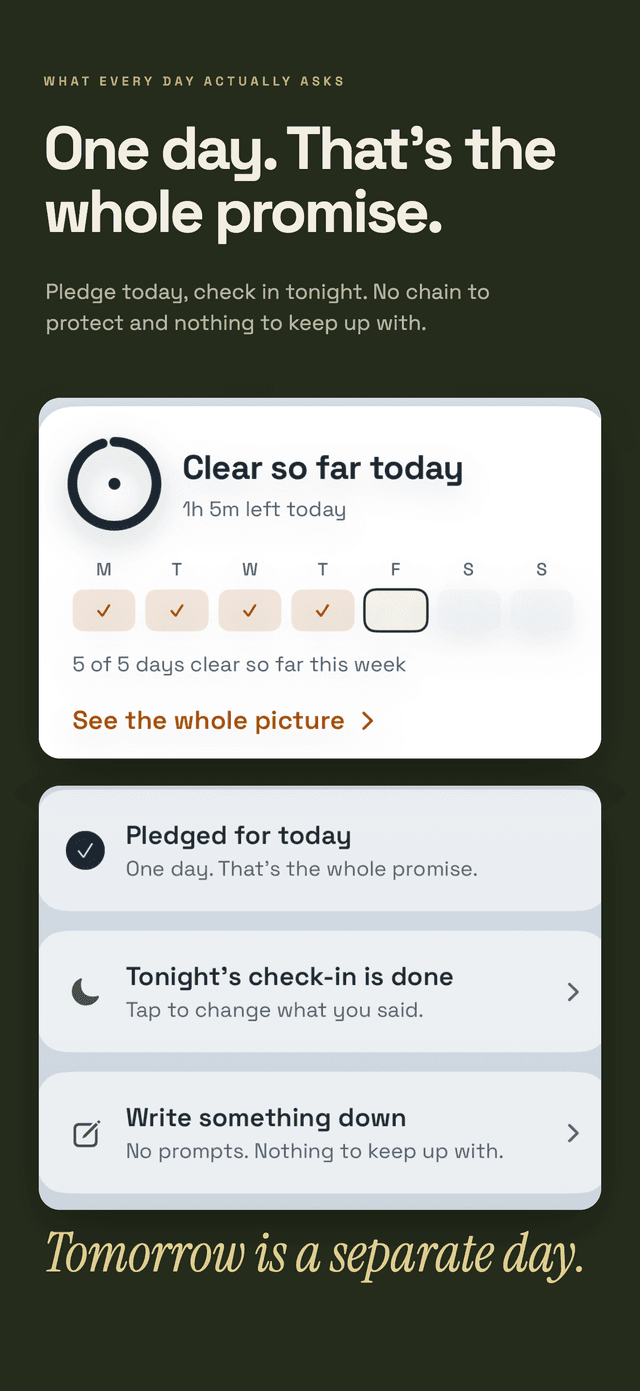
If you use Hard Bit, logging a use keeps the day in the history rather than returning the whole counter to zero. The Hard Bit overview explains why the record stays intact: hiding the difficult day would make the personal pattern less accurate.
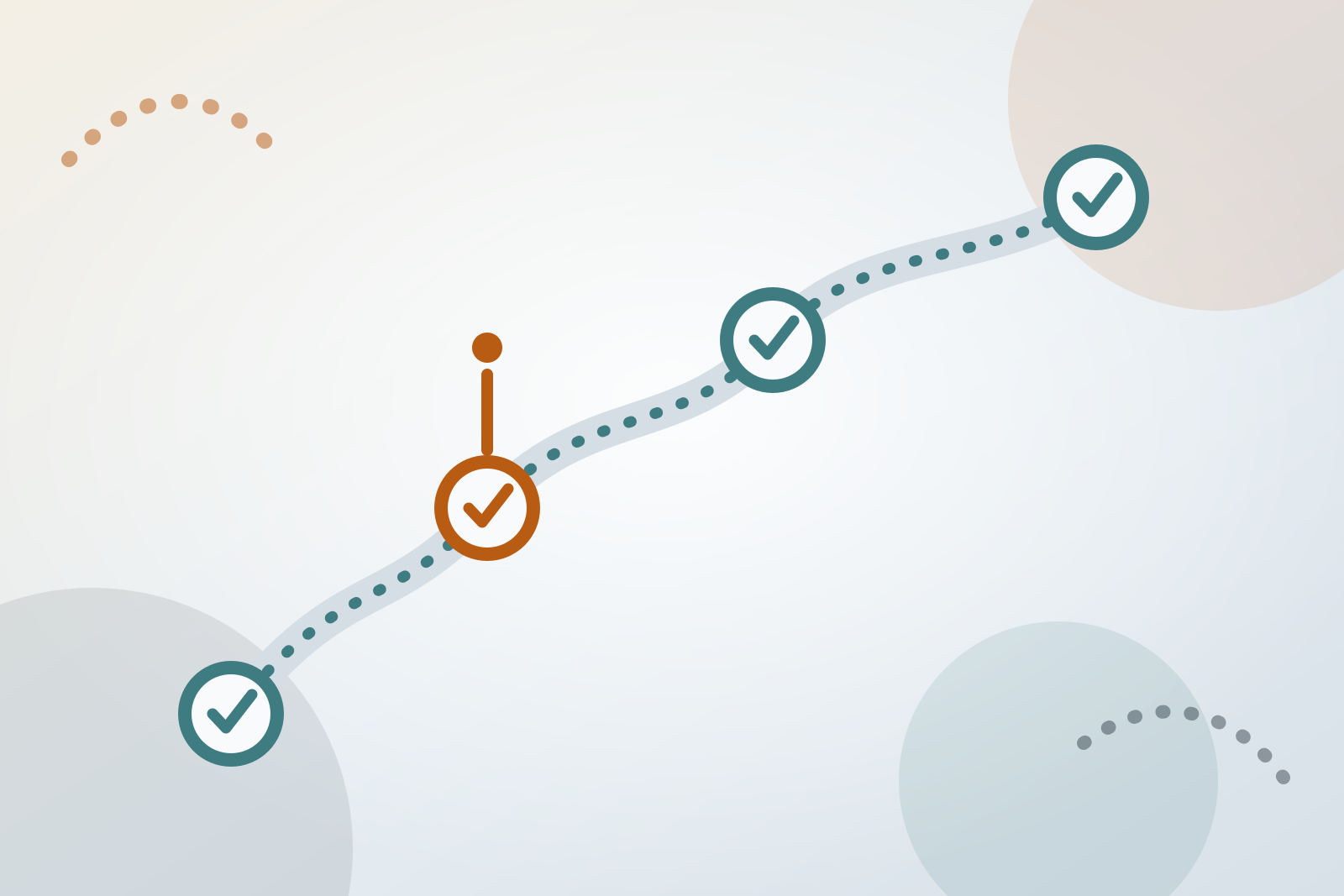
The same principle works on paper. Keep the clear days and the slip in one honest timeline.
Find the earliest changeable point
The moment of use may be the end of a longer sequence. Work backward:
- A late-night porn slip may have started when the phone came into bed.
- A gambling slip may have started with a match alert, then checking odds, then moving money.
- A drinking slip may have started by skipping dinner and taking the usual route past the shop.
- A scrolling slip may have started with one work notification during a period meant for rest.
Look for the first point you could realistically change next time. Earlier changes require less effort than trying to stop at the final click, pour, purchase, or inhale.
Use How to Identify Your Craving Triggers and Difficult Times to compare this event with earlier entries. A repeated weekday and hour may be more actionable than a vague conclusion about motivation.
Change one condition for the next similar situation
Do not redesign your entire life during the emotional aftermath. Choose one concrete change:
- eat before leaving work,
- block or remove a payment method,
- leave the phone outside the bedroom,
- ask a friend to call before the difficult hour,
- avoid carrying cash on the usual route,
- schedule a quit-service appointment,
- make a different plan for the next match, weekend, or night shift.
Write it as an if-then plan: “If the match alert arrives, I will put my phone in the kitchen and check the final score tomorrow.”
The change should address the actual sequence. A generic promise to try harder does not alter the cue, access, or support.
For in-the-moment options, read How to Handle a Craving in the Moment.
Keep progress measures that survive an imperfect record
A single streak makes progress easy to display, but it can hide useful change. Keep several measures:
- total clear days,
- frequency per week,
- amount of money or time involved,
- number of urges recorded,
- difficult moments that ended without the habit,
- speed of returning to the plan,
- support contacts used,
- high-risk situations prepared for.
None should be manipulated to make the picture look better. Their value is that they show different parts of reality.
For example, “27 of 30 days clear” retains the three difficult days without pretending the other 27 disappeared. If frequency or harm is increasing, the same record should make that visible too.
Decide whether the current goal needs to change
A slip may reveal that the plan is too vague, too isolated, or unsafe. It may also show that a cut-down goal needs firmer boundaries, or that trying to manage alone is not enough.
Ask:
- Is the goal clear?
- Are the limits measurable?
- Is the environment working against the plan?
- Is withdrawal a concern?
- Are debt, relationships, work, or safety deteriorating?
- Have repeated slips followed the same route?
Changing the goal is not automatically failure. It can mean adding professional support, choosing abstinence after moderation did not work, or choosing a safer gradual plan under medical guidance. The right decision depends on the habit and your circumstances.
Contact support before shame makes you disappear
After a slip, people often avoid the very person or service that could help. Send a short factual message:
I had a slip tonight. I am safe, but I need help changing the plan for the same situation next week.
You do not need to present a polished explanation.
For nicotine, an official quit service can help with evidence-based cessation options. For gambling, specialist support can help with self-exclusion, financial barriers, and crisis routes. For alcohol or drug use, a clinician or local service can assess withdrawal and other risks. A self-tracking app cannot make those assessments.
If you are in immediate danger, contact emergency services. Our editorial policy explains how this site handles health and safety information.
Make tomorrow specific, not symbolic
“Starting over tomorrow” can become an emotional ceremony with no operational change. Instead, choose three actions:
- One thing to remove: access, supply, app, notification, route, or payment method.
- One thing to add: food, sleep, a call, an appointment, or a prepared activity.
- One time to prepare for: the hour and situation most likely to repeat.
Then return to ordinary life. You do not need to earn the right to keep going.
More source-reviewed planning articles are available in the Hard Bit guides.
Frequently asked questions
Does one slip mean I have relapsed?
Terms vary between services and people. The label matters less than responding to the actual risk and pattern. Record what happened, prevent an immediate repeat where possible, and seek suitable support.
Should I reset my counter to zero?
You can track a current continuous streak if it helps, but keep the full history too. Total clear days, frequency, harm, and return to the plan may show progress that a single reset hides.
What if the same slip keeps happening?
Stop treating it as a surprise. Map the sequence, make an earlier environmental change, and add another person or professional service to the plan. Repetition may mean the current level of support is not enough.
When should I seek urgent help?
Seek urgent help for severe withdrawal symptoms, overdose risk, loss of consciousness, breathing difficulty, self-harm thoughts, violence, unsafe driving, or another immediate threat. If you are unsure, contact a qualified local service for guidance.