Gaming after an argument is not automatically harmful or avoidant. The useful question is narrower: are you taking a deliberate break, or leaving the conversation without saying when you will return?
A workable plan has four parts. Pause away from the screen, state a return time, choose a session you can genuinely end, and return as agreed. If the conflict feels unsafe, put safety first instead.
Why gaming can become the quickest exit
A game is available within seconds. Its rules are clearer than an unfinished argument, and it can redirect your attention quickly. Wanting that change of scene is not a character flaw.
A 2023 systematic review in Frontiers in Psychiatry included 36 studies about escapist motivation and gaming. Many found associations between escapist motivation and poorer emotional, social, or gaming outcomes, while some described benefits such as belonging, confidence, or temporary relief.
That evidence needs restraint. The review's study-design section reports that 34 of the 36 studies were cross-sectional. Those studies can identify associations but cannot show that escapist gaming caused the outcomes. The research also examined escapism generally, not the minutes after a household argument.
The practical conclusion is modest: gaming can provide a break, but whether that break becomes avoidance depends partly on what happens before and after the session.
Put safety before the pause plan
This routine is for ordinary conflict where everyone can step away safely.
If anyone is being threatened, harmed, prevented from leaving, or made afraid to state a boundary, do not treat the situation as a communication exercise. Move to a safer place if you can, seek appropriate support, and contact local emergency services if anyone is in immediate danger.
NHS guidance also advises walking away when you notice signs of anger and have a history of losing control. Do not start a competitive session while you are at risk of lashing out, breaking something, or frightening someone.
Pause before opening the launcher
NHS anger guidance recommends giving yourself time to think before reacting, including counting to 10 and using calming breathing exercises. NHS inform suggests breathing out for longer than you breathe in.
Turn that advice into a short sequence:
- Leave the room where the argument happened, if it is safe to do so.
- Leave the controller, headset, or gaming phone behind.
- Let each exhale run slightly longer than the inhale for several breaths.
- Notice whether you still feel hot, shaky, humiliated, or ready to argue.
- Decide what you will do next before touching the device.
Ten minutes is a practical starting point, not a clinical threshold or a promise that anger will disappear. Take longer if needed. The important boundary is that the decision happens before the login screen.
For a shorter general-purpose version, use the five-minute plan for the start of a craving.
Name the break and the return time
Before leaving, answer three questions:
- Does the other person know you are taking a break?
- Have you said when you intend to return?
- Can you realistically stop what you plan to play at that time?
A short statement is enough:
I am too wound up to talk well right now. I am taking a break, and I will come back at 9:15.
Do not use the sentence to deliver another verdict. NHS inform notes that words such as “always,” “never,” “should,” “must,” and “not fair” can increase tension. “You never listen” keeps the argument going; “I need twenty minutes before I can continue” states the boundary.
If you cannot promise a precise time, name a check-in instead: “I will message you at 9:15 and say whether I am ready.” A return time should create clarity, not force either person back into an unsafe conversation.
Choose a session that can end
A cool-off is easier to keep contained when the activity has an endpoint chosen in advance.
| May be harder to end | More compatible with a short break |
|---|---|
| Ranked queues or “one more win” rules | A familiar single-player section |
| Raids or matches that depend on a full team | A mode you can leave without affecting others |
| Timed events or rewards for staying online | A session with a fixed clock-time endpoint |
| Voice chat used to replay the argument | No voice chat or a different activity |
Set the stop time where you can see it. Tell teammates before joining if you need to leave at a particular time. Do not make the endpoint depend on winning, reaching a rank, or finishing “on a good game.”
If no available game fits the window, choose another cool-off activity. The broader guide to changing the hours around gaming covers session boundaries in more detail.
The NHS advises against using alcohol, cigarettes, gambling, or drugs to relieve anger. If gaming after conflict is normally paired with one of those activities, include it in the plan rather than treating it as unrelated.
Return to what you paused
Come back at the stated time. If you still need space, say so and agree another specific time instead of silently extending the gaming session.
Start with the subject you want to resolve:
I am back. I still want to sort out the weekend.
NHS inform explains that anger can occur alongside fear or a sense of threat. Asking what you feared, such as being blamed, dismissed, or hurt, may reveal a more useful way to describe the disagreement. It does not excuse threatening or abusive behaviour.
If the conversation still cannot happen safely, stop and seek support. A game session is not a safety plan.
Log the sequence, not only the hours
Total playtime tells you how long the session lasted. A sequence log shows where another decision could fit.
For a few weeks, record:
- when the argument ended,
- its subject in one or two private words,
- how you felt,
- how quickly you reached the device,
- what you played and for how long,
- whether you returned at the stated time.
Include arguments that did not lead to gaming. Those entries may show useful differences, such as being away from the setup, having another commitment, or choosing a walk first.
Look for repeated combinations rather than blaming yourself. “Conflict, late evening, alone, headset ready” gives you something to prepare for. “I have no self-control” does not.
How to identify craving triggers and difficult times provides a fuller logging method. If boredom often takes over once the immediate anger passes, use the boredom and gaming guide.
Use Hard Bit as an optional record
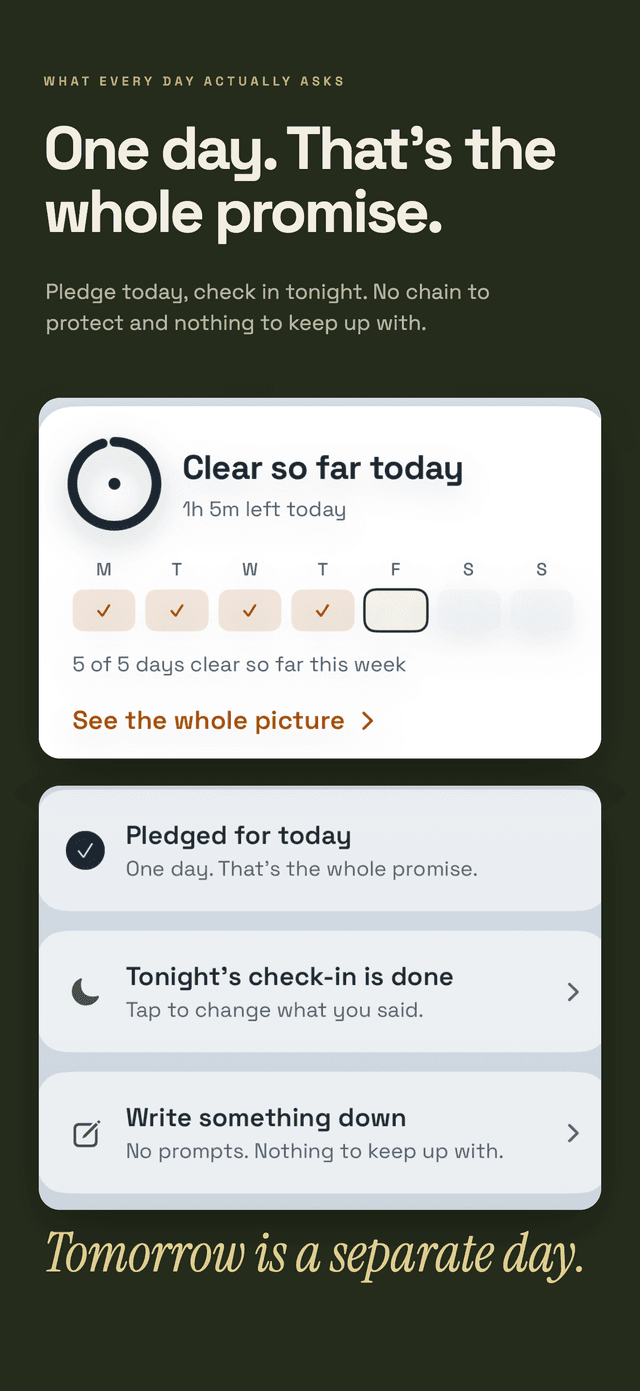
Hard Bit is an iPhone craving tracker. Selecting gaming changes its prompts to hours rather than money. Each habit has separate logs, a counter, a reason for changing, and a difficult-hour pattern.
The counter, logging, journal, hard-moment flow, personal sentence, milestones, help links, and export and delete tools are free. A subscription adds the on-device forecast and advance warning, patterns and calendar, widgets, and short reads.
The forecast uses your entries, makes no prediction below five entries, and relies more fully on your history at around twenty. There is no account or social feed, and entered data stays on the phone unless you export it.
The Hard Bit overview and support page document these boundaries. Paper works too. A tracker cannot resolve an argument, assess a relationship, diagnose gaming disorder, or provide treatment.
Know when to add professional support
Playing after one difficult evening does not establish a disorder. WHO defines gaming disorder through impaired control over gaming, increasing priority given to gaming over other activities, and continued or escalating play despite negative consequences. The pattern must cause significant impairment and would normally have been evident for at least 12 months. WHO says gaming disorder affects only a small proportion of people who game.
Seek qualified support if gaming repeatedly displaces sleep, work, study, essential spending, or relationships, or if attempts to change remain unmanageable.
In England, the National Centre for Gaming Disorders supports people aged 13 and over who have difficulty controlling gaming. It accepts self-referrals and referrals from family members or professionals. It offers assessment and CBT-based treatment focused on controlled gaming and increasing other activities.
The centre is not a crisis service. For immediate danger, contact emergency services or an appropriate local crisis service. For persistent anger, the NHS advises speaking to a GP when self-help is not working or when behaviour has become abusive or violent.
Our editorial policy explains how health and product claims are reviewed. More practical articles are available in the Hard Bit guide library.
Frequently asked questions
Is it wrong to play a game after an argument?
No. A planned break may give both people space. The practical questions are whether the other person knows you are taking it, whether you can stop when agreed, and whether the unfinished conversation is addressed later.
How long should I pause before logging in?
There is no established duration. Ten minutes is a practical starting point for leaving the immediate cue and deciding what comes next. It is not a countdown that guarantees you will feel calm.
What if gaming was the subject of the argument?
Logging in immediately may be heard as ignoring the concern. When things are calm, agree what a break will look like, whether gaming can be part of it, and when the conversation will resume.
What if I cannot stop at the agreed time?
Change the conditions before relying on another promise. Avoid modes with moving endpoints or dependent teammates, use a visible alarm, and choose a non-gaming break when no session fits. Repeated difficulty stopping, especially when harm is mounting, is a reason to seek qualified support.
Can tracking this pattern change it?
Tracking alone does not change the urge or resolve the conflict. It can reveal repeated cues, hours, and session choices so you can prepare a more specific response before the next argument.