To change a shower-and-phone porn trigger, break the combination instead of relying on willpower: keep the phone outside the bathroom, rehearse a short replacement routine for the same moment, and track when the urge repeats so the new pattern can take hold. The shower itself is rarely the problem. The learned chain is: pick up the phone, step under the water, open the site. Remove the first link and the rest has nothing to attach to.
This guide walks through that change step by step: confirming the pattern, redesigning the room, rehearsing the new routine, handling the urge if it shows up anyway, and knowing when the situation calls for more than self-help.
Why the shower-and-phone combination becomes automatic
NIH News in Health explains that habits arise through repetition and can attach to particular places and activities, which is why a behaviour can start running before you have consciously decided anything. The shower is an unusually strong context for this. It happens at roughly the same time each day, it is private, the door is shut, and the phone is usually already in your hand.
Repetition in that consistent setting teaches your brain a shortcut. The shortcut is not a verdict on your character. It is closer to a route the brain has memorized, like driving a familiar road on autopilot.
The practical target is therefore the combination, not the shower and not the phone alone. If the phone never crosses the bathroom threshold, the sequence cannot run in its usual form. For a non-shaming way to think about the cue itself, see Porn Cravings: Map the Cue Without Shaming Yourself.
Confirm the pattern before you redesign it
You probably already suspect the pattern, but a week or two of brief notes makes it concrete. After each shower or urge, record three things:
- the time and day,
- whether the phone came with you,
- what happened just before you picked it up.
You may find the trigger is narrower than "the shower". It might be the long evening shower after a stressful day but not the quick morning one. It might start in bed, when you scroll for ten minutes and then carry the phone through. The earliest changeable point is often outside the bathroom entirely.
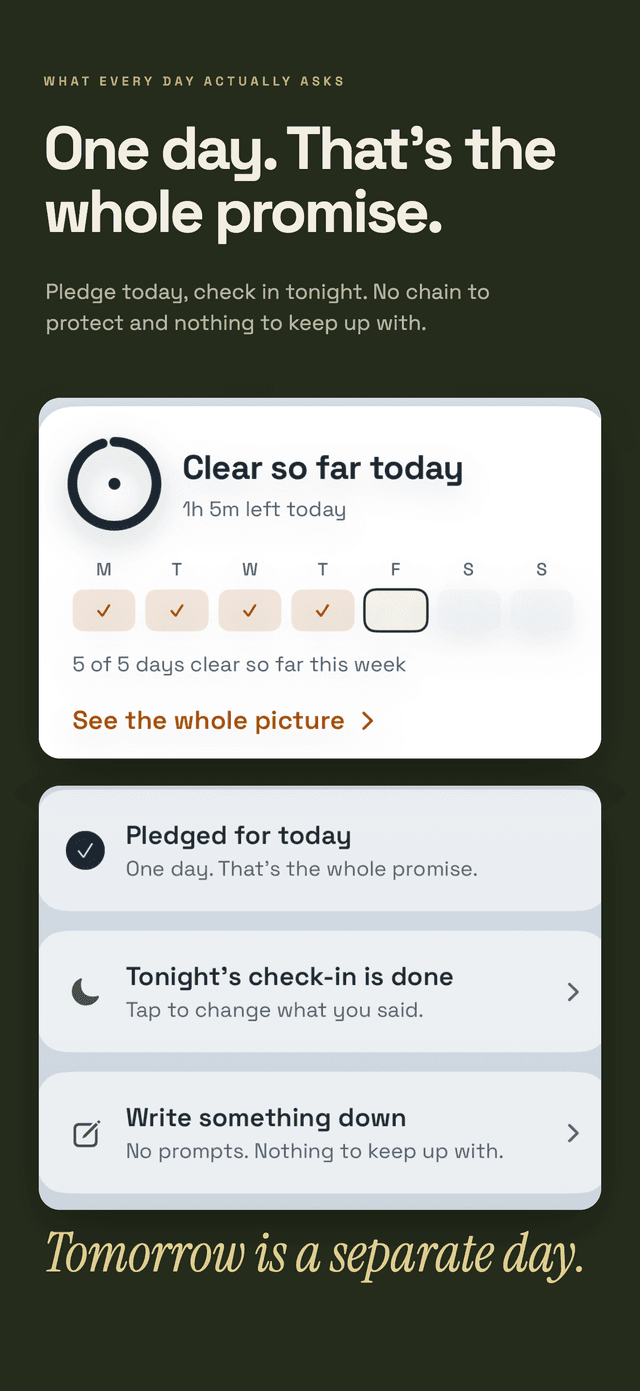
If you use Hard Bit, each habit keeps its own logs and the app learns your difficult hour from your own entries. It makes no prediction below five entries and leans fully on your history at around twenty, so early on the pattern is yours to notice. The Hard Bit overview explains how that on-device forecast works, and How to Track the Hours Porn Use Feels Most Automatic shows the logging method in more detail.
Take the phone out of the room, not out of your thoughts
Telling yourself "I just won't open anything" leaves the decision at the hardest moment. Changing the room moves the decision earlier, when you are calm.
Practical versions include:
- Charge the phone overnight in the kitchen or hallway, not the bedroom or bathroom.
- If you shower in the morning and the phone is your alarm, use an ordinary alarm clock or leave the phone across the bedroom so the first trip out of bed is already made.
- If music is the honest reason the phone comes along, put a small speaker or radio in the bathroom instead. The phone stays outside.
- Set one household rule for yourself: towels and clothes go in first, the phone never does.
None of this makes the phone forbidden everywhere. It is about one doorway. NIH's habit guidance suggests planning around the places and situations linked to a routine, and this is the same idea applied to a single threshold. If you share a home, choose the version that raises the fewest questions; a hallway charging shelf looks like tidiness, not confession.
Give the shower a new job
Removing the phone leaves a gap, and a gap tends to get filled by whatever is loudest. NIH researchers describe replacing an unhealthy routine with a new one as one of the more workable approaches, while being honest that no single method fits everyone.
So decide what the shower is for now. Useful replacements:
- A timed wash. In and out in five minutes. Speed leaves less room for the old sequence to start.
- A wake-up routine. Stretch while the water warms, a cooler finish, one song on the speaker.
- A wind-down routine. Warm shower, then straight into pyjamas and a different room, with the phone already charging somewhere else.
Lay out clothes before you get in, and decide what happens in the ten minutes after, because "after the shower" is often when the phone reappears. Boredom and Porn Triggers: Build a Better Default goes deeper on giving empty time a better default, which is the same skill in a different room.
Rehearse the new sequence while the urge is quiet
A plan written mid-craving tends to be harsh and vague. A plan rehearsed calmly tends to be usable. NIH News in Health describes mentally practising the better behaviour in advance as a technique that can help, without pretending it is guaranteed.
Keep it small. Write one if-then sentence:
When I pick up my towel, the phone stays on the hallway shelf.
Say it once when you are calm. Walk through it once physically: put the phone down, pick up the towel, walk in empty-handed. It feels slightly odd, but you are teaching your body a route so it does not have to improvise under pressure. Review the sentence after a week. If the same moment keeps catching you, change the environment again rather than adding more promises.
Handle the urge if it arrives anyway
Sometimes you will be mid-shower, phone outside, and the urge still shows up. That does not mean the change failed. It means the cue and the urge are only partly linked, which is normal.
A short sequence for that moment:
- Name it plainly. "I am having an urge to watch porn." Present tense, no verdict.
- Finish the physical task. Wash, rinse, get dry, get dressed. Each ordinary step adds a small distance from the urge.
- Delay the decision. Decide nothing until you are dressed and in a different room.
- Do one prepared action when you step out: food, a short walk, a message to someone, a task with a clear end.
Some people find it useful to notice the urge rise and ease without acting on it, sometimes called urge surfing. Treat that as a coping technique, not a guarantee that the craving will pass by a set minute, because intensity varies from person to person and moment to moment. For a fuller in-the-moment sequence, read How to Handle a Craving in the Moment.
Expect gradual change, not an instant reset
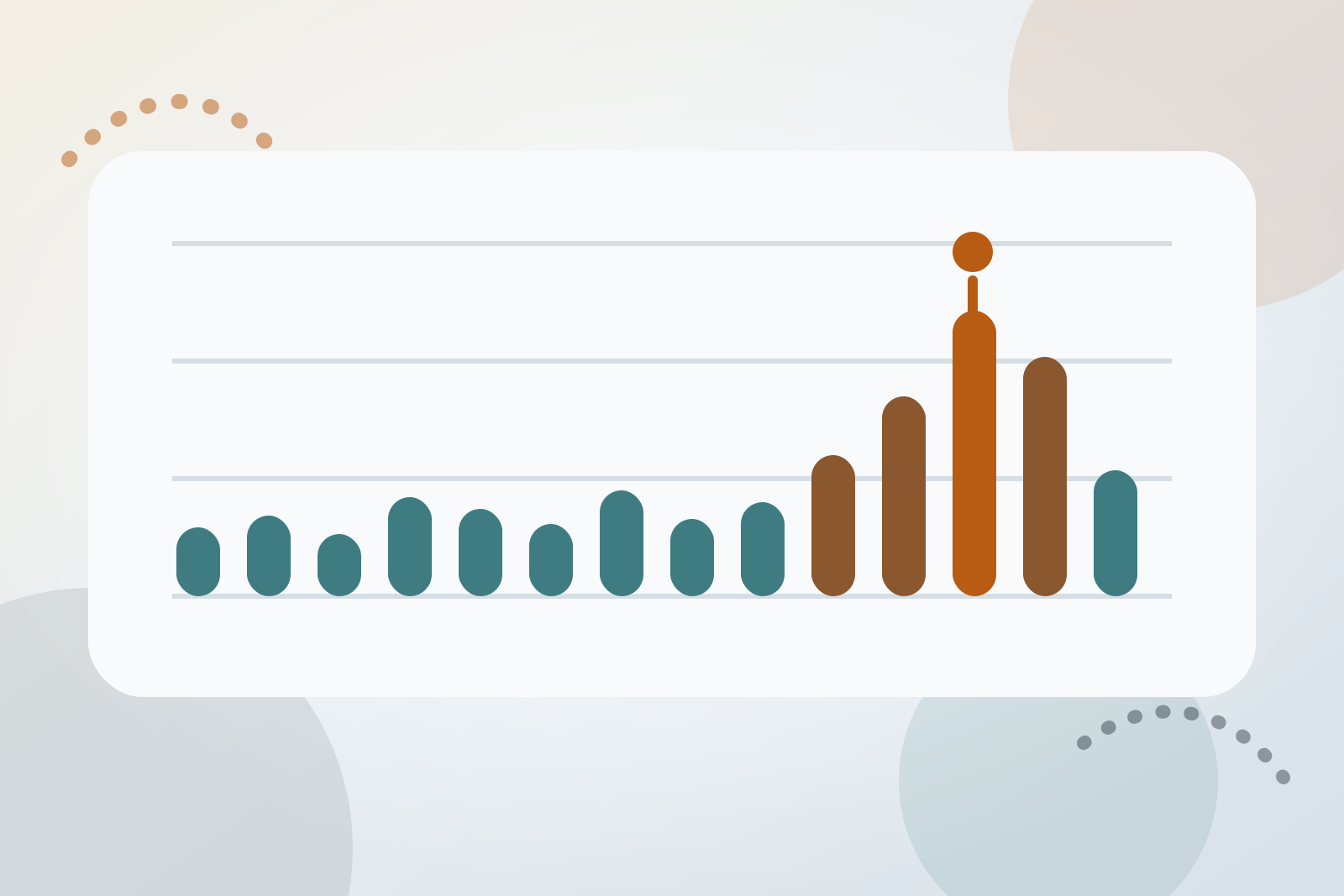
In one well-known habit-formation study, volunteers repeated a chosen everyday behaviour in the same context each day, and the time to approach full automaticity ranged from 18 to 254 days depending on the person and the behaviour. Two details matter here. First, there is no honest fixed timeline, so be suspicious of any source that promises one. Second, the researchers found that missing one opportunity did not materially disrupt the process.
Applied to your situation: one shower where the old sequence ran does not send you back to the beginning. The old route weakens as the new one is repeated, not when you achieve a perfect streak.
If a slip happens, record it honestly and keep the rest of the history. Deleting the bad day teaches you nothing about the hour, the mood, or the access that made it easy. What to Do After a Slip Without Erasing Your Progress covers how to respond without starting over from zero.
Know when the pattern needs more than self-help
Changing a cue is a useful skill, but it is not the right response to every situation. It is worth seeking professional support if porn use feels persistently difficult to control, continues despite serious consequences, or is damaging your relationships, work, finances, or sleep.
Some context helps. The ICD-11 includes compulsive sexual behaviour disorder as an impulse control disorder, defined by a persistent pattern of failing to control intense, repetitive sexual urges over an extended period with marked distress or real-life impairment. The same clinical literature is clear that shame, guilt, or distress based on moral judgment alone is not enough to diagnose a disorder, and that many people who self-identify with an addiction label do not meet those criteria. An article, including this one, cannot diagnose you.
Mayo Clinic advises asking for help early if you feel you have lost control, and notes that mental health professionals are trained to have these conversations without judgment. If you ever feel at risk of harming yourself, contact emergency services or a crisis line where you are. A tracker can help you describe your pattern to a professional; it cannot replace one.
You can find more source-reviewed guides in the Hard Bit library.
Frequently asked questions
Is taking my phone into the shower automatically a problem?
No. Plenty of people listen to music or podcasts and nothing else. It matters when the shower-and-phone combination has become a learned route to porn that you want to change, or when the habit distresses you or costs you time, sleep, or money.
Would a content blocker fix this on its own?
A blocker adds friction, but this trigger is mainly about where the phone is and what routine follows it. An environment change plus a rehearsed replacement covers situations a filter can miss, such as a different app, a different site, or sheer habit. Some people use both.
How long until the new routine feels normal?
There is no fixed timeline. In one habit-formation study, the time to near-full automaticity ranged from under three weeks to more than eight months across participants and behaviours. Judge progress by whether the new routine is getting easier over weeks, not by a deadline.
What if I cannot leave my phone outside the bathroom?
If a baby monitor, an on-call job, or a household routine means the phone must stay close, move the friction instead: leave it in a bag or drawer in the hallway, set an app limit for the shower window, or keep it out of arm's reach with the screen off. The principle is the same: the phone does not enter the room with you.