To measure clear days without streak pressure, keep the streak as one optional number, not the whole record. Define a clear day consistently, count it inside a fixed period, and display difficult and unobserved days beside it.
For example:
23 clear days of 27 observed; 4 non-clear days; 1 day not observed.
That sentence preserves the whole 28-day window. One difficult day changes the result without deleting the days before it.
Know what a streak can and cannot tell you
A conventional streak answers one narrow question: how long has it been since the most recent use?
That may be useful. It does not show how many clear days occurred earlier in the month, whether frequency or amount changed, whether harm increased, or how quickly you returned to your plan after a difficult day.
A reset can therefore make two unlike periods look identical. A month with one use day and a month with repeated use may both show a current streak of zero. The streak is accurate about recency but incomplete as a summary.
Alcohol research also cautions against reducing progress to one number. NIAAA says the alcohol treatment literature has no single agreed definition of recovery. Its own research definition considers remission and heavy drinking alongside areas such as health, social support, basic needs, and quality of life.
That does not validate a personal dashboard or apply one clinical definition to every habit. It shows why a day count should remain a description, not a verdict about recovery or personal worth.
Define a clear day before counting
For a stopping goal, use the simplest definition:
A clear day contains none of the behavior you are tracking.
Write down the day boundary too. If something happens at 1am, decide whether it belongs to the previous evening or the new calendar day, then apply that rule consistently.
If your goal is cutting down, do not quietly redefine a use day as clear because it stayed below a limit. Keep two separate measures:
- Clear day: no use occurred.
- Within-plan day: you stayed within the limit chosen in advance.
A planned drink, gaming session, or other use may be within your plan without being a clear day. Keeping the labels separate makes later comparisons understandable.
Add a habit-specific amount when it matters. That might be cigarettes, alcohol units, vaping sessions, gambling losses, gaming time, or unplanned phone openings. Do not combine unlike units into one score.
If you track several habits, keep each habit in its own record.
Use a fixed window and show missing information
Choose equal windows that fit your pattern. Seven days is enough for a simple starting record. Twenty-eight days includes four of each weekday, which can help when weekends differ from weekdays. Neither is a clinical standard.
For each window, record:
- Clear days
- Non-clear days
- Unobserved days
- Within-plan days, if you are cutting down
- One amount or consequence measure, if useful
Do not automatically label an unlogged day as clear. If you reconstruct it from a calendar, purchase record, device report, or another source, note that source and any uncertainty.
Show the counts even when you calculate a percentage. 23 of 27 observed is more informative than 85% clear because it exposes the denominator. Be cautious when comparing windows with different numbers of observed days.
NHS alcohol guidance recommends taking reduction a day at a time and having several drink-free days each week. That supports counting individual days, but it does not establish one required window or target percentage.
Keep a slip in the same timeline
Protecting a streak can make the record less useful. Warning signs include changing a date, excluding a borderline event only because the number is high, or abandoning the log after a difficult day.
Record what happened under the definition you chose. Then continue the same window.
Smokefree.gov tells people who smoke during a quit attempt that a slip is a temporary setback, not failure or a return to square one. It also encourages them to remember the cigarettes they did not smoke.
That guidance concerns smoking, not every habit. The limited cross-habit lesson is still useful: preserve the factual history. The earlier clear days happened, and the difficult day belongs beside them.
For the immediate response and safety order, use the guide to handling a slip without erasing progress.
Notice when the number is becoming unhelpful
A count may need less prominence if you:
- avoid logging because the number might fall,
- check it repeatedly for relief or punishment,
- dismiss the entire period after one difficult day,
- delay restarting until Monday or another symbolic date,
- ignore worsening money, amount, symptoms, or consequences because the streak looks good.
Try reviewing the record once a week rather than repeatedly during the day. Remove the counter from a widget or lock screen if seeing it increases pressure. Say the full result, including non-clear and unobserved days, instead of quoting only the largest number.
These are practical options, not proven treatment rules. If tracking itself is causing substantial distress or compulsive checking, simplify it, pause it, or discuss another approach with a qualified professional.
The weekly craving-log review provides a structured alternative to constant checking.
Add one measure that survives a reset
Choose one additional measure that reflects your actual goal:
- Stopping: urges recorded, support used, or return-to-plan time.
- Cutting down: amount, sessions, spending, or within-plan days.
- Gambling: losses, debt effects, access barriers, and self-exclusion.
- Smoking or vaping: product use and support from a clinician, pharmacist, or quit service.
- Gaming or scrolling: time, unplanned sessions, or activities displaced.
Do not let a favorable secondary measure cancel serious harm. Fewer gambling sessions do not outweigh rising debt. More clear days do not prove that alcohol withdrawal is safe. A lower cigarette count is not a direct measure of health recovery.
More detailed measures differ by habit. See the guides to measuring smoking progress beyond a streak and measuring gambling progress beyond a streak for examples.
Where Hard Bit fits
Hard Bit is an optional iPhone craving tracker, not medical treatment or a clinical assessment.
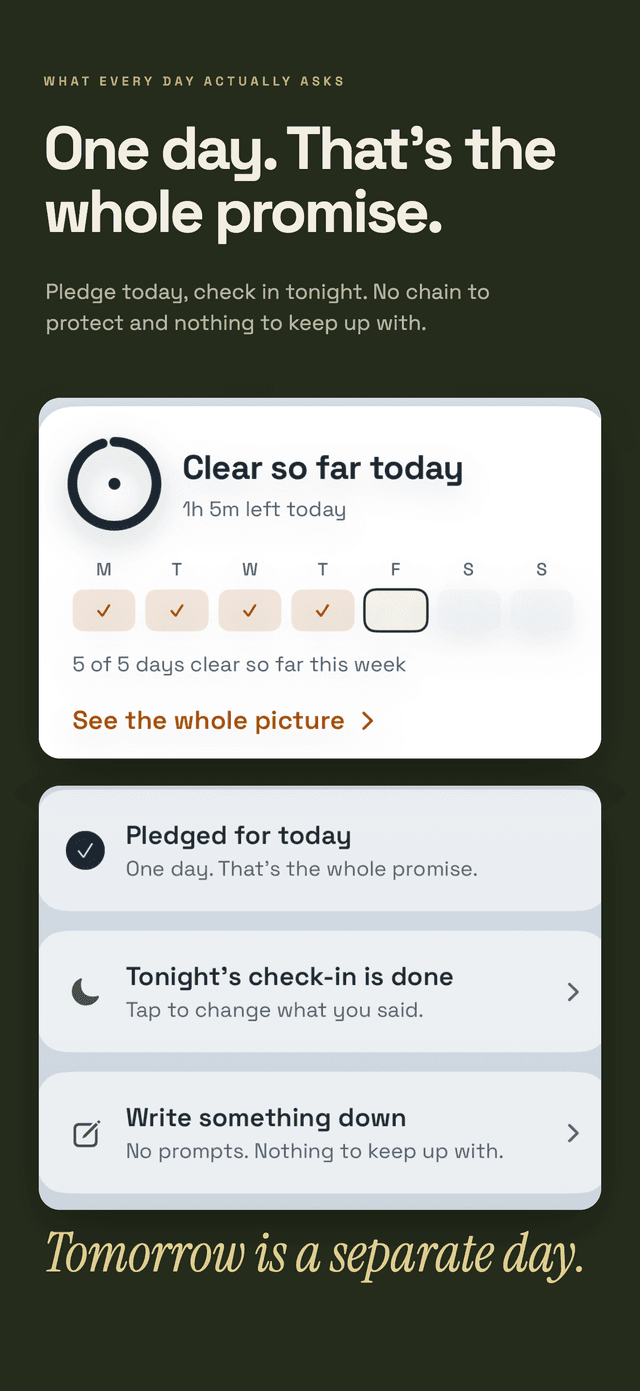
Its counter does not reset after a logged use. The product example changes day 84 to “81 of 84 days clear.” That preserves earlier days, but it is based on elapsed calendar days and the uses you record. It does not prove that you actively observed every day.
If observation completeness matters, keep the unobserved-day count separately. An app can only describe what its record contains.
Hard Bit supports stopping and cutting-down goals and keeps each habit separate. According to its current support information, the counter, logging, journal, milestones, hard-moment flow, personal sentence, help links, export, and deletion are free. Hard Bit Plus adds the on-device forecast and warning, patterns, calendar, widgets, and short reads.
The forecast makes no prediction below five entries and relies fully on personal history at around twenty. Those are product rules, not clinical thresholds.
The app's privacy policy says entries stay on the device unless the user exports them. Its App Store privacy label says “Data Not Collected,” but Apple states that the developer declaration is not independently verified. The Hard Bit overview explains the workflow, and the support page documents current feature boundaries.
Know when counting is not enough
A count cannot assess withdrawal, dependence, debt, impairment, or the level of care you need.
If alcohol dependence may be possible, seek medical guidance before stopping suddenly. Alcohol withdrawal can be dangerous. Severe shaking, hallucinations, seizures, or severe confusion require urgent medical help.
Do not abruptly stop a benzodiazepine or reduce it rapidly without guidance from the prescriber or another qualified clinician. The FDA warns that physical dependence can develop even when these medicines are taken as prescribed and that abrupt discontinuation can cause serious withdrawal, including seizures.
For smoking or vaping, a clinician, pharmacist, or official quit service can discuss counseling and suitable medicines. A clear-day counter cannot select treatment.
For gambling, prioritize practical protection when money is at risk. The Gambling Commission describes self-exclusion as an option for people concerned about the time or money they spend gambling. Specialist gambling support and qualified debt advice may be more important than completing another tracking window.
Seek urgent local help for loss of consciousness, breathing difficulty, thoughts of harming yourself or someone else, or any immediate danger. Do not delay help to protect a streak or finish a measurement period.
Our editorial policy explains how health guidance and product information are reviewed.
Start with three lines
If a full dashboard feels burdensome, record only:
- clear days,
- non-clear days,
- unobserved days.
Add one other measure after you have completed a window. A small record you can keep honestly is more useful than a detailed system you abandon.
Frequently asked questions
Should I reset my counter after a slip?
You may keep a current streak if it motivates you, but preserve the full history too. A fixed-window count shows the earlier clear days and the difficult day together.
What counts as a clear day when I am cutting down?
Use clear day for a day with no use. Record a separate within-plan day when use occurred but stayed inside a limit chosen in advance. This prevents the definition from changing to protect the result.
What should I do with days I forgot to log?
Mark them as unobserved rather than automatically clear. If reliable records let you reconstruct a day, record the source and uncertainty. Keep the missing count visible when comparing periods.
Is counting clear days harmful?
Not inherently. It can provide useful feedback. Reduce or pause tracking if it encourages dishonest entries, repeated checking, severe self-criticism, or avoidance of support.
Can clear days tell me whether I need professional help?
No. They cannot assess withdrawal, dependence, debt, mental health, or medical risk. Take the record to a qualified service if it helps you explain what has been happening, but do not wait for a threshold before asking for help.