To track pornography time saved honestly, start with a real baseline instead of a guess. For one ordinary week, log each episode as it happens and count three parts: the lead-up, the viewing, and the time lost afterwards. Add them up. That weekly total is your baseline. From then on, subtract what you actually spend each week and keep a running total of the time returned.
The method works whether you are stopping or cutting down, and it keeps counting through a slip.
Count the whole episode, not just the viewing
Many quit counters multiply days since you stopped by an assumed daily figure. That gives you a tidy number, but it often misses where the time actually went.
For many people, one episode has three parts:
- The lead-up. Opening a browser "just to check", scrolling, searching, skipping things.
- The viewing. The part most people think of as the time cost.
- The aftermath. Lying awake, getting to sleep later than planned, a slow start the next morning, or half an hour of feeling too flat to do much.
You don't have to count all three. But if the lead-up or the aftermath regularly takes real time, leaving it out will understate what the habit cost. Pick what you will count, write it down, and use the same definition every week.
Log one ordinary week instead of estimating from memory
Memory is a poor measuring tool here. A pre-registered meta-analysis in Nature Human Behaviour found that people's estimates of their own digital media use matched logged measurements only moderately and were rarely accurate. That research covered screen use in general, not porn specifically, but the lesson is the same: write it down when it happens.
For a baseline week:
- Note the start time when the lead-up begins, not when viewing starts.
- Note when you put the phone or laptop down.
- Add any aftermath you are counting, such as "fell asleep about 40 minutes later than planned."
- Keep each entry short and factual.
Pick a typical week, not your best or worst. If you have already stopped, reconstruct a recent typical week as carefully as you can, label it an estimate, and lean towards the conservative side.
If you are on an iPhone, Screen Time can help with the viewing segment. Apple's documentation explains that once App & Website Activity is turned on, it shows reports of time spent in apps and on websites. Check how your browsing actually appears in your own report before relying on it, and remember that Screen Time won't capture the lead-up or the aftermath. Also check whether anyone else can see your reports, for example through Family Sharing.
The guide to tracking porn use without turning it into shame covers neutral wording for entries, which matters when you are writing these down every day.
Turn the week into a baseline you can work with
Here is an invented example, not a typical figure:
| Segment | Baseline week |
|---|---|
| Five episodes, about 45 minutes each including the lead-up | 225 minutes |
| Later sleep on three of those nights, about 30 minutes each | 90 minutes |
| Weekly baseline | 315 minutes (5 h 15 min) |
Then fix the baseline. Don't recalculate it downwards each time you improve, because that quietly shrinks the progress you are measuring. Change it only if you find it was clearly wrong, and make a note when you do.
Be careful with yearly projections. Multiplying a weekly figure by 52 can be motivating, but it treats one week as permanent. A monthly figure is usually easier to believe and act on.
Track time returned, whether you stop or cut down
Use one rule every week:
Time returned = weekly baseline − actual time this week.
In the example above:
- A clear week returns the full 315 minutes.
- A week with one 50-minute episode plus 20 minutes of late sleep returns 245 minutes, about 4 hours.
- A cut-down week at roughly half the old pattern returns about half the baseline.
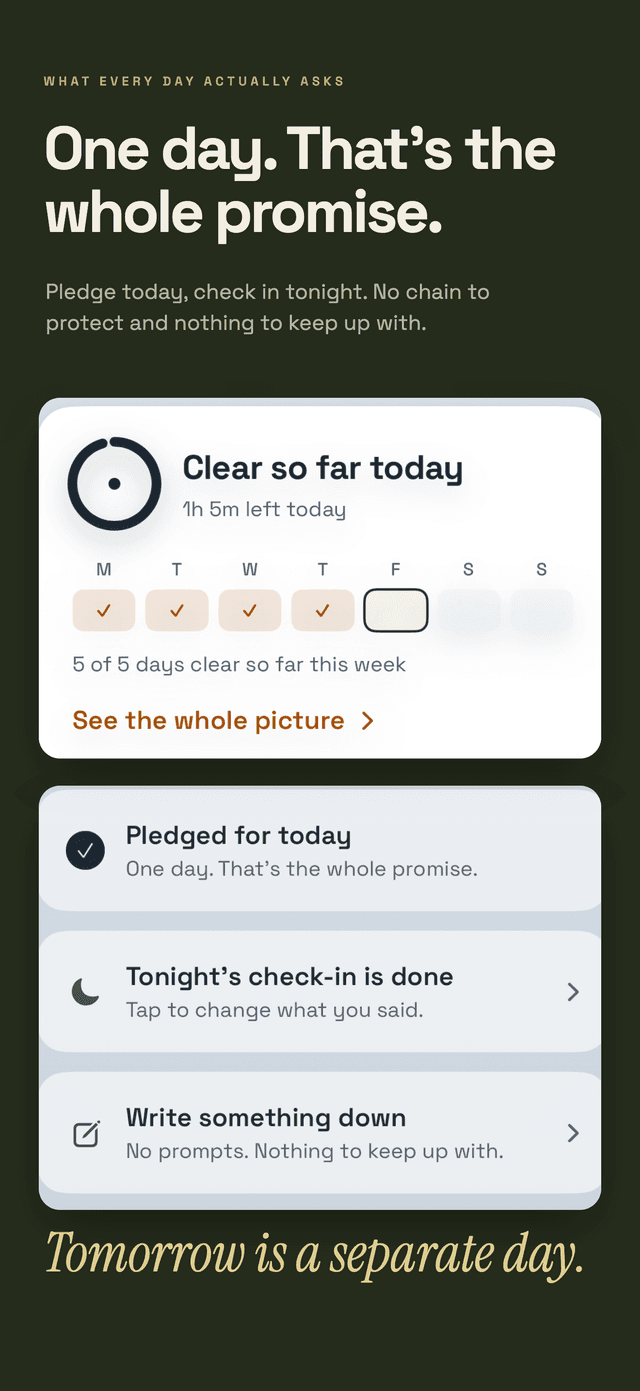
This rule matters most after a slip. A streak counter that resets to zero can make one difficult evening look like it erased everything. With this method, the slip lowers one week's figure and the running total keeps everything you already got back. Both are true, and both go in the record.
Keep porn time separate from other screen habits. A combined "screen time saved" figure hides which change is actually working.
Notice when the time cost clusters
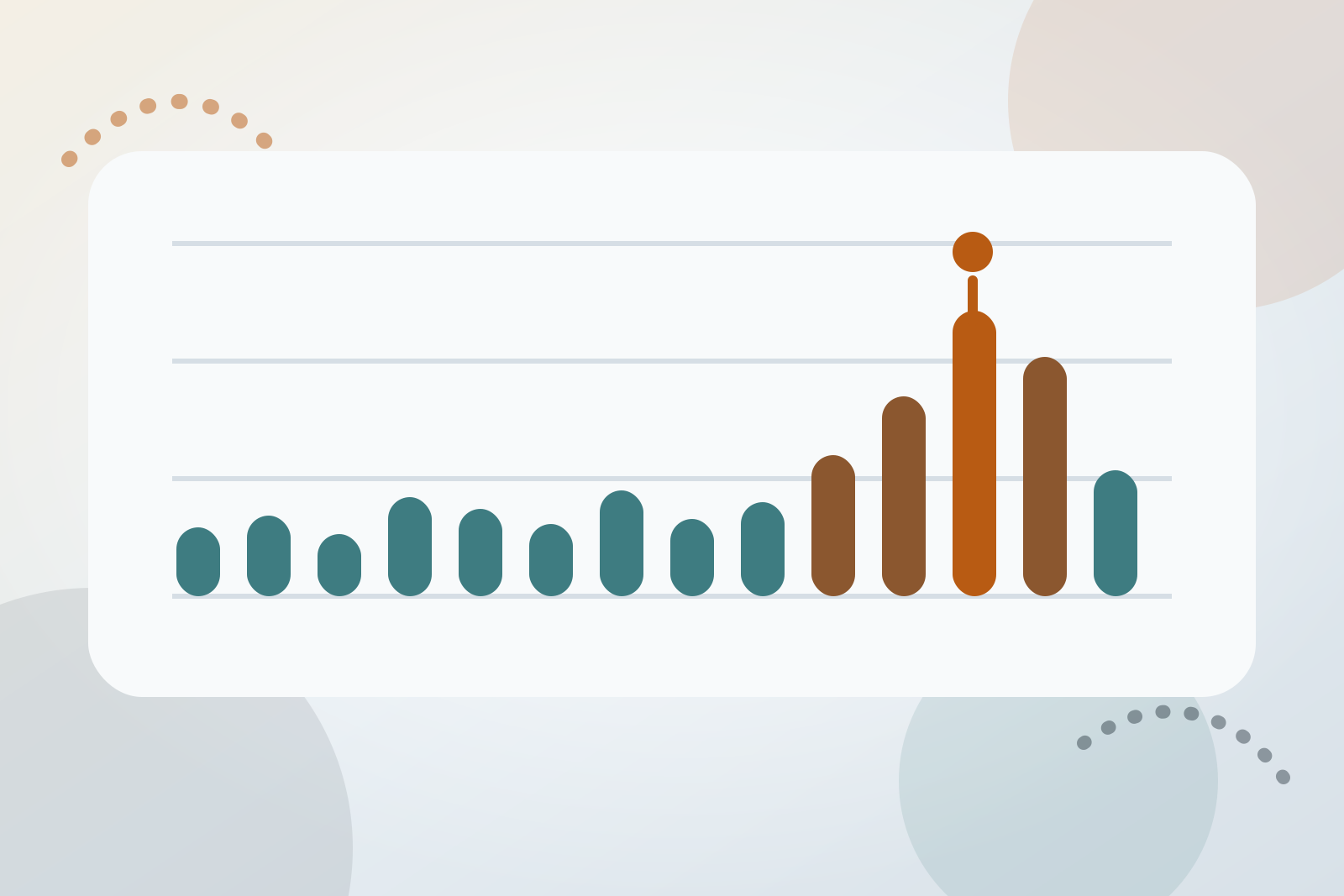
When you review the week, you may see that the minutes aren't spread evenly. One person might find most of the baseline sits in two late weeknights. Another might find weekend afternoons with no plans are the problem.
That's useful. Changing the setup for one evening can return more time than general resolve spread across the week. If the cost clusters at a particular time of day, tracking the hours porn use feels most automatic explains how to log the timing in more detail.
If lost sleep is a big part of your total, it is worth treating on its own. The CDC recommends at least seven hours of sleep a day for adults, so a habit that regularly pushes bedtime back can cost more than its viewing minutes suggest. Late-night porn urges: change the setup before bed covers practical changes to the bedroom and phone setup.
Give the returned time a default, not a target
This is editorial advice rather than research. Time that opens up with no plan can turn into restless, empty time, and for some people that becomes the next trigger.
Don't turn the hours into a productivity quota. Instead:
- choose one easy default for the time slot that used to be the hardest, such as a walk, a shower with the phone left outside, a call, or a book,
- make it low effort, so you can do it while tired,
- leave some returned time as plain rest, because rest counts.
If empty time is part of the pattern, the guide to building a better default for boredom and porn triggers goes further.
What the evidence does and does not say
Established: A Psychological Bulletin meta-analysis of 138 randomised studies, summarised by the American Psychological Association, found that prompting people to monitor their progress improved goal attainment. Effects were larger when progress was physically recorded or reported. Most studies involved health goals such as diet or smoking, not porn use.
Also established: People often misjudge their own screen time, which is why this guide uses logs rather than estimates.
Not established: No source cited here shows that tracking porn time on its own reduces use, or that the time saved has a particular effect on mood, focus, or relationships. Some people say seeing the number helps. That is personal experience, not a guaranteed outcome.
Where Hard Bit fits
A notebook or a private note can hold this whole system. If you want the record on your iPhone, Hard Bit lets you set up porn as its own habit, choose to stop or cut down, log each episode, and keep a short journal entry such as "about 50 minutes including searching, slept late." Each habit keeps its own counter and logs, and the counter does not reset after a slip, which fits the baseline-minus-actual approach. Logging, the counter, the journal, and export and delete are free.
Hard Bit doesn't calculate your time baseline for you. Do that sum yourself and keep it in the journal. There is no account, no feed, and no server copy of your history, and you can export or delete the record at any time. The Hard Bit overview explains the workflow, and a private way to track pornography on iPhone walks through the setup.
When the numbers suggest getting more support
A time record can show things that are worth taking to someone qualified:
- the weekly time keeps rising despite real attempts to cut down,
- the habit is regularly costing work, sleep, money, or relationships,
- you feel unable to control it, or it brings intense distress,
- you have thoughts of harming yourself.
The World Health Organization's ICD-11 includes compulsive sexual behaviour disorder, defined by a persistent failure to control intense sexual urges, with marked distress or impairment over an extended period. It also states that distress coming entirely from moral disapproval does not meet that definition. Only a qualified professional can assess this, and a spreadsheet of minutes can't. A GP, a qualified therapist, or a psychosexual service can, and an honest log can make that first conversation easier. If you are in immediate danger, contact emergency services.
Our editorial policy explains how we separate general information from health guidance. More practical guides are in the Hard Bit guide library.
Frequently asked questions
How much time does porn use usually take?
There is no reliable figure that fits everyone, and averages from websites or apps say little about your own pattern. One logged week that counts the lead-up, the viewing, and the aftermath will tell you far more than a general estimate.
Should I reset my time-saved total after a slip?
No. Subtract the slip's time from that week's figure and keep the running total. The time you already got back doesn't disappear, and the honest entry shows what happened.
Can I track time saved if I am cutting down rather than stopping?
Yes. Time returned is your fixed baseline minus your actual time, so a week at half the old pattern returns about half the baseline. That progress is real even when a full-stop counter wouldn't show it.
Is Screen Time enough to measure it?
It can help with the viewing segment, but it won't capture the searching beforehand or the lost sleep afterwards. Use it alongside short written entries rather than instead of them.