Here is how to identify pornography triggers in three passes. First, rewind your last few episodes and write down what happened in the hours before each one, not only the minute before. Second, sort what you find into five layers: body state, feeling, setting and time, access route, and the thought that gave you permission. Third, test each suspected trigger against your clear days. If it shows up on days that went fine too, it may not be the real trigger.
The aim isn't a perfect list of everything that could ever set off an urge. It's to find one combination that repeats and that you can change.
Why one-word trigger lists rarely help
Search for porn triggers and you'll find the same lists: stress, boredom, loneliness, being alone at night. They're common, but a single word is too broad to plan around. Stress happens in hundreds of settings, and most of them pass without an urge.
Stop It Now UK's adult pornography self-help module gives a more useful split. Some triggers come from situations, such as sitting in the room where you usually watch porn. Others come from habits, such as watching at the same time of day. The module also says that working out what set off a feeling can be hard, which is why it suggests keeping a diary for a week rather than relying on memory.
Mayo Clinic adds a factor these lists often leave out: easy access. Technology and social media make intense sexual material available almost instantly, and Mayo lists that as a risk factor for compulsive sexual behaviour. So your triggers aren't only inside you. They're also built into the device in your hand.
Pass one: rewind your last few episodes
Start with what has already happened. Pick the last three to five times you watched porn, or came close. For each one, answer these questions honestly:
- When was it? Day and time, as exactly as you can remember.
- Where were you, and what device were you using?
- What were you doing in the 30 minutes before?
- What had happened earlier that day? A difficult conversation, a long shift, a cancelled plan, a win you wanted to celebrate.
- What did you tell yourself just before you started?
Question four is the one most people skip. Some triggers are delayed: an argument at 4pm can turn into an urge at 11pm, once the house is quiet and the feeling has had time to build. If you only look at the minute before, you'll blame the bed and the phone and miss the conversation that set things up.
Do this when you're calm, not right after an episode. A small exploratory study published in Archives of Sexual Behavior in 2025 tracked 22 adults several times a day for four weeks. Among participants whose porn use conflicted with their own values, shame, guilt and low mood rose after use and lasted for several hours. That's early, small-scale evidence. But it supports a practical rule: don't do your detective work while you're still feeling raw.
Pass two: sort what you find into five layers
Now lay your notes out across five layers. Most episodes have something in at least three of them.
- Body state: tired, hungry, wired after exercise, restless, unwell, had a drink.
- Feeling: lonely, bored, rejected, anxious, flat. Include pleasant ones too: relieved, celebratory, aroused, "I've earned this". Stop It Now's own example of a trigger is seeing someone attractive and feeling aroused, so a good feeling can start the chain as easily as a bad one.
- Setting and time: bed, shower, desk after work, an empty flat on Sunday afternoon, a hotel room, after everyone else has gone to sleep.
- Access route: the exact path from screen to porn. A suggestive post in a feed, a private browser tab, a particular app, "just checking" a site. This is often the most changeable layer.
- Permission thought: the sentence that turned an urge into a decision. "Just five minutes." "Today's already ruined." "Nobody will know." "I need to switch off."
Here's an example rewind entry sorted into layers: Thursday, 11:40pm. Tired after a late shift (body). Felt shut out after a short reply from a friend (feeling). In bed, lights off (setting). Opened a short-video app and it drifted (access). "I just need something to help me sleep" (thought).
That's far more useful than "stress". You now have five places where you could step in, not one.
If the feeling layer keeps saying loneliness or rejection, read what to do with porn urges after rejection or loneliness. If it's mostly empty, unstructured time, try building a better default for boredom-related porn triggers. If "had a drink" shows up in the body layer, plan for the two together with the guide to alcohol and porn triggers. Mayo Clinic notes that the risk of compulsive sexual behaviour may be higher in people who have problems with alcohol or drugs.
Pass three: test each suspected trigger against your clear days
This is the step most trigger guides leave out. A suspected trigger is a hypothesis until you've checked it.
For the next one to two weeks, keep a short log going forward. It can be as simple as the version in mapping porn cravings without shaming yourself. Log three kinds of day:
- Days you watched. Same five layers.
- Near-misses. The urge came and you didn't act on it. What was different?
- Clear days. Did your suspected trigger happen, and nothing followed?
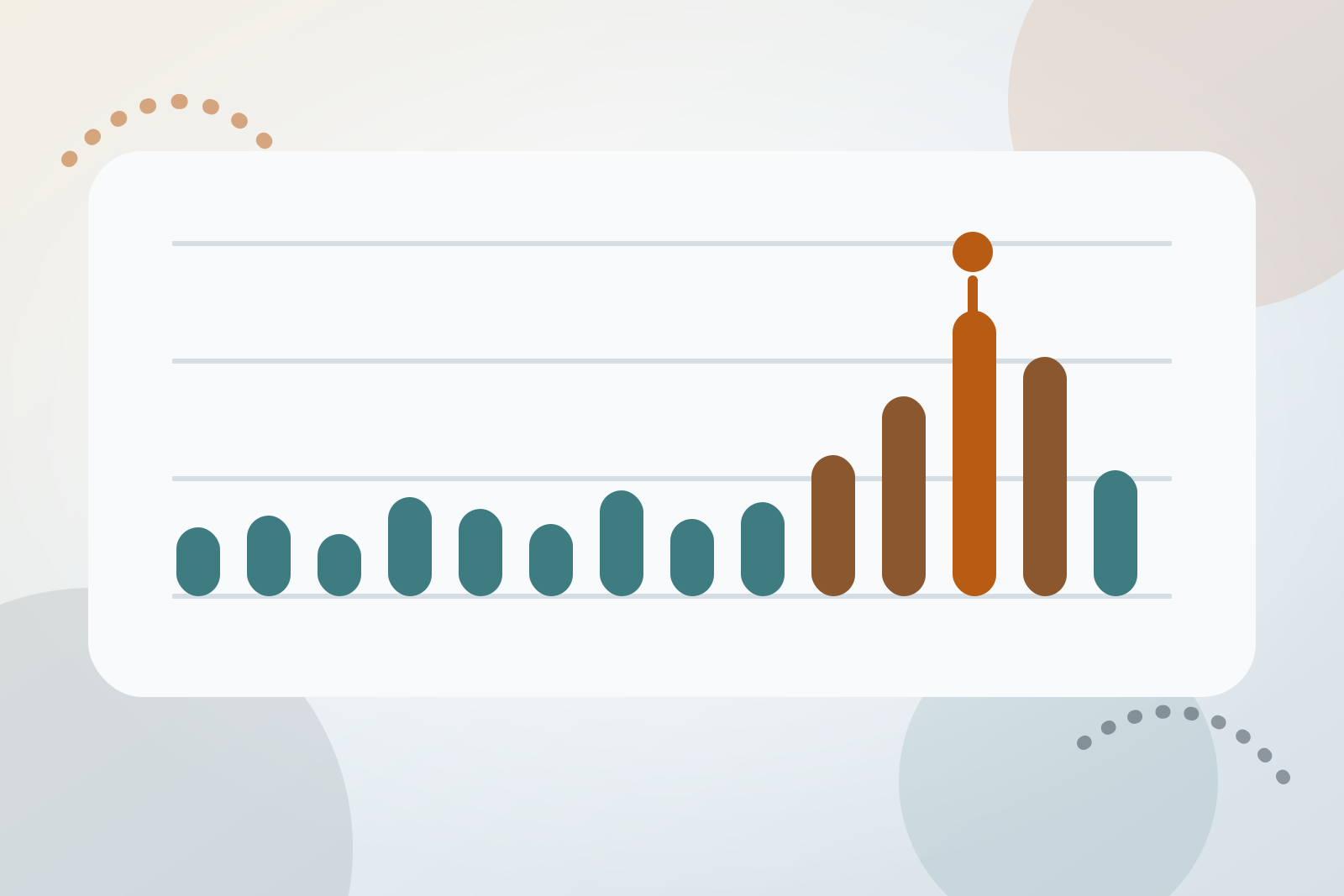
Then ask one question of each suspect: does it appear on clear days as often as on difficult ones? If you were tired on nine days and watched on two of them, tiredness alone isn't the trigger. Maybe tiredness plus your phone in bed is. Clear days and near-misses show you which conditions protect you, and that's just as useful as knowing what puts you at risk. If you're unsure whether something is a real pattern, see how to separate a pattern from a coincidence.
Time patterns often come out of this step. "Evenings are hard" may turn out to be "Thursday and Sunday, after 11pm". For a closer method, see tracking the hours when porn use feels most automatic.
If you want to keep this record on your iPhone, Hard Bit gives the porn habit its own private log on your device. There's no account, no feed, and nothing leaves your phone. Logging is free. A Hard Bit subscription adds an on-device forecast of your difficult hours. It makes no prediction at all until you have five entries, and it leans fully on your own history at around twenty. Apply the same caution on paper: a few entries raise a question, they don't prove a rule.
Rank your triggers by how often they appear and how easy they are to change
By now you may have several real triggers. Don't try to fix them all at once. For each one, score two things from one to three:
- How often: does it show up in most episodes, or only now and then?
- How changeable: can you alter it tonight, or would it take months?
Start with whatever scores high on both. That's usually the access route or the setting, not the feeling. You can't stop loneliness from turning up, but you can charge your phone outside the bedroom, log out of a feed app at night, or put a short walk between closing your work laptop and sitting on the sofa. Mayo Clinic's self-care advice points the same way: identify the situations, thoughts and feelings that may trigger urges, and set boundaries that keep you away from tempting situations.
Feelings and permission thoughts still matter. Write your usual permission thought down, and next to it write a reply you'd actually believe at 11pm. "I'll decide in the morning" is often more usable than a big promise.
For phone-heavy patterns, preparing for phone-based porn triggers covers the access layer in more detail. To turn your top trigger into a written plan, use a craving plan for pornography made before you need it.
Keep the investigation kind and honest
How you go about this decides whether you keep going. If every review turns into "why am I like this?", the log will quietly stop. Some ground rules that help (practical editorial advice, not clinical guidance):
- Write facts, not verdicts. "Watched, 40 minutes" is information. "Pathetic again" isn't.
- Keep the days you watched in the record. Deleting them hides the very pattern you're looking for.
- Review once a week, not after every urge.
- If logging itself makes urges or distress worse, write entries later in the day, or talk the pattern through with a professional instead.
When your triggers point to more support
Sometimes the honest conclusion from a trigger review is that self-help isn't enough. Take that seriously if you notice use getting more frequent or taking more time, repeated failed attempts to cut down, harm to sleep, work, money or relationships, or triggers tied to depression, anxiety or past trauma. Mayo Clinic notes that compulsive sexual behaviour tends to get worse over time without treatment, which is why it advises getting help early. Established routes include talk therapy such as CBT, support groups, and in some cases medicines. A GP or a mental health professional with relevant experience is a sensible first step.
Bring your notes with you. A clinician is likely to ask when it happens and what sets it off, and your log already answers both.
If you're in crisis or thinking about harming yourself, contact emergency services. In the UK, Samaritans are free on 116 123. In the US, call or text 988. If urges ever involve children or non-consensual material, step away from access immediately and contact a specialist confidential service such as Stop It Now.
Our editorial policy explains how we separate sourced health information from product information.
Frequently asked questions
What are the most common pornography triggers?
Commonly reported ones include loneliness, boredom, stress, tiredness, being alone at night, particular rooms, and phone or feed access. But common doesn't mean they're yours. Use the three passes to find the combination that actually repeats in your own life.
Can a good mood be a trigger?
Yes. Celebration, relief after a hard week, arousal, or feeling you've "earned" something can come before an urge just as a bad mood can. Include pleasant feelings in your log so you don't miss them.
How long does it take to identify my triggers?
There's no fixed timeline. Looking back at a few episodes can reveal an obvious pattern in one sitting. Confirming it against clear days usually takes at least a week or two of logging. Treat early findings as provisional.
What if I can't find any trigger at all?
Look further back in the day, and look at the access layer. Sometimes the "trigger" is simply an open route at a familiar hour. That still counts, and it's often the easiest thing to change.
More source-reviewed guides are in the Hard Bit guide library.