To identify your gaming triggers, write down the few minutes before each strong urge to play, or before each session that ran longer than you meant. Note the time, where you were, what you had just been doing, how you felt, and whether something from the game reached you first: a notification, a friend coming online, a daily reward, a new season. Review the notes each week and look for combinations that repeat. Then note what kept you away on the clear days. Those protective cues are the other half of the picture.
This isn't a test of whether you "have a problem." It gives you information about the routes that lead to the console, the PC or the phone, so you can change one of them.
If you're working on a different habit, or several at once, the general guide on how to identify your craving triggers and difficult times covers the same method without the gaming detail.
Two places gaming triggers come from
Most trigger advice is written for substances or gambling. Gaming is different in one important way: the activity can send its own invitations. Before logging anything, it helps to know you're looking in two places.
Everyday cues. These come from your life outside the game:
- a time of day, such as straight after work, after dinner or once the house goes quiet,
- a place, like the sofa, the desk or bed with the phone,
- a feeling: boredom, stress, loneliness, frustration, or wanting a reward after a hard day,
- a physical state, such as tiredness, hunger or restlessness,
- an avoided task, like an unopened email, an essay or a difficult conversation,
- a person, for example after an argument or when a housemate starts playing.
Game cues. These come from the game, platform or community:
- push notifications, emails and badges,
- a friend's status changing to online, or a party invite,
- daily rewards, login streaks, limited-time events and countdown timers,
- patches, new seasons, expansions and battle passes,
- a lost match that leaves you wanting a rematch,
- clips, streams and group chats about the game.
Researchers who study problem gaming have proposed that features of game design, including social, reward and presentation elements, may help explain why some people play more than they intend. That's a proposed explanation, not proof that any particular game causes harm. In practice, it means a cue from the game can be just as real as a cue from your own mood.
If timed rewards are a big part of your pattern, what to do when a daily reward pulls you back goes into that one cue in detail.
Scan the few minutes before you start
People often say "I just started playing." Usually something came first. SMART Recovery's trigger worksheet suggests going through each sense in turn and listing every trigger, even ones that seem minor. For gaming, that might look like:
- Sight: the console light, the controller on the table, a thumbnail, a friend's online icon.
- Hearing: the startup chime, a Discord ping, a teammate's voice note.
- Touch: picking up the phone with nothing to do, sinking into the gaming chair.
We'd add one more line that isn't a sense but often comes just before you pick up the controller:
- Thought: "Just one match," "I've earned this," "The event ends tonight."
Then look one step further back. Before the notification, were you already bored, avoiding something or worn out? The cue you notice last is often not the earliest one you could change.
Keep a gaming log you'll actually fill in
A log only helps if it's quick. Six fields are usually enough:
- Day and time
- Where you were and what device was nearby
- What happened just before
- How you felt (one or two words)
- Any game cue (notification, friend online, reward, update, loss)
- What happened next (didn't play, played as planned, or played longer than intended)
Two example entries:
- "Tuesday 10:40pm. Bed, phone. Finished a stressful work call. Wired, flat. Daily quest reminder. Played until 1:15am."
- "Saturday 3pm. Living room. Friend messaged that the new season was live. Excited. Played the two hours I'd planned, then went out."
Neither entry is a verdict. The second one is just as useful as the first, because it shows a version of the situation that went the way you wanted.
Write the log after the moment if writing during it would pull you back into the game. If logging makes you feel worse about yourself, tracking gaming without turning it into shame suggests neutral wording that keeps the record honest without it turning into self-criticism.
Record what keeps you away, too
Most trigger logs only collect the pulls. Research on online role-playing games suggests that's half the story. In a 2016 survey of 377 online role-playing game players, researchers described cues as real-life or in-game conditions that usually prompt play or usually prevent it. Players who were more sensitive to cues that prompted play reported more playing time and more signs of problematic use. Sensitivity to cues that held them back appeared to be protective. These are associations from one group of players, not a guarantee for everyone, but they're a useful prompt.
So on clear days, or after a session that ended when you meant it to, add one line: what helped? Examples include:
- plans with a person at a set time,
- the controller left in another room,
- eating properly before the evening,
- an early start the next morning that felt worth protecting,
- notifications switched off for that game.
Over a few weeks, you may find your protective cues are easier to set up than your triggers are to avoid.
Read the log for combinations, not single causes
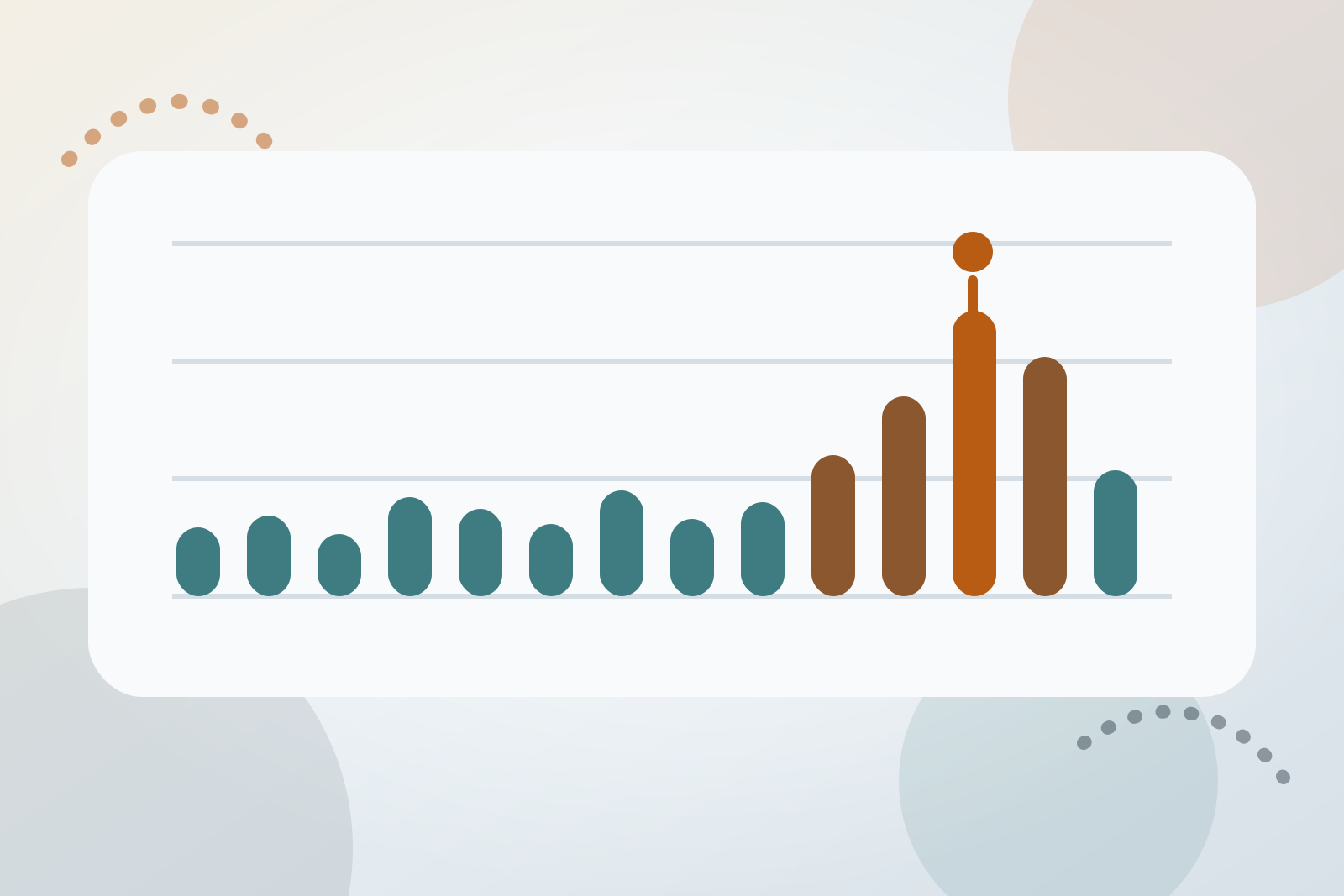
After a week or two, sort entries by day, time, place, feeling and game cue. Look for pairings that keep turning up:
- "Friend online and tired and after 10pm."
- "Boring afternoon and working from home and phone within reach."
- "Lost a ranked match and annoyed and no plan for the evening."
One factor alone is usually too broad. Lots of people feel bored without starting a four-hour session. A combination is specific enough to plan around.
Look for sequences too. A long night might start with a notification, then checking the event timer, then "one quick match," then a queue that never seems to end. If that sequence sounds familiar, stopping one more match from becoming the whole night focuses on breaking that loop.
Treat early findings as hunches. A few entries can raise a question but can't settle it. Holidays, illness, exams and big game releases can all change the shape of a week.
Hard Bit is built around this idea of the difficult hour. On iPhone, you can track gaming as its own habit with its own counter and log, separate from anything else you track, and the app asks about hours rather than money. If you use Hard Bit Plus, the app builds an on-device forecast from your own entries. It makes no prediction until you have five entries and relies fully on your data at around twenty. The Hard Bit overview explains how that works and why nothing leaves your phone. A paper notebook can do the core job of this exercise just as well.
Turn one pattern into one change
Choose the clearest repeated combination and write a short plan for the next time it comes round. This is editorial advice, not a research finding, but a specific plan is easier to use than a general intention:
- When: weeknights after 10pm
- Cue: friend comes online while I'm tired
- Early sign: opening the friends list "just to see"
- Earliest change: set my status to offline and charge the phone outside the bedroom at 9:45pm
- Alternative: a show I can stop at the end of an episode, or a shower and bed
- If I still want to play: decide on an end time before I start, and tell my friend about it
Aim for the earliest step you can realistically change. Turning off one notification at 6pm takes less effort than closing a game at midnight.
If boredom keeps showing up as the root cause, replacing the default when you're bored helps you find a substitute that fits that hour. For a full written plan, see make a craving plan for gaming before you need it.
Whether you're aiming to stop or to cut down, the method is the same. The difference is what the plan says to do when the cue arrives.
When a pattern suggests you need more support
Most people who play games don't have a disorder. The World Health Organization describes gaming disorder as a pattern involving impaired control, gaming taking increasing priority over other activities, and continuing despite negative consequences, with significant impairment in areas such as family, work or education. A trigger log can't tell you whether that applies to you. Only a qualified professional can assess it.
A log can show you when it's time to ask. Consider talking to a GP or a qualified service if your entries show:
- sessions regularly cutting into sleep, meals, work or study,
- repeated attempts to cut back that don't hold,
- money going on in-game purchases you can't afford,
- gaming as the only way you can cope with low mood or anxiety,
- conflict at home that keeps getting worse.
In England, the NHS National Centre for Gaming Disorders, run by Central and North West London NHS Foundation Trust, supports people aged 13 and over who struggle to control their gaming, mainly through online treatment. Outside England, ask your doctor about local options. If spending looks like gambling, such as loot boxes or paid random rewards, gambling support services may also help. If you're having thoughts of harming yourself or are in immediate danger, contact emergency services or a crisis line now.
Our editorial policy explains how we separate research, lived-experience suggestions and practical advice.
Frequently asked questions
How long should I log before I trust a pattern?
There's no fixed number. One entry can reveal an obvious cue, like a notification you didn't know you were reacting to. Patterns of time and feeling need repeated entries before they're credible. Keep going for a couple of weeks and treat early conclusions as hunches you can revise.
Are game notifications really triggers, or just an excuse?
They can be real cues. Research describes in-game conditions, such as a new expansion, as cues that can prompt play. You don't need to decide whether it's "really" the notification. Log it, see how often it comes before a long session, and switch it off for a week to compare.
What if my trigger is a friend I play with?
You don't have to cut the person off. Look at the combination instead: is it the friend, or the friend late at night when you're already tired? Agreeing on an end time, playing earlier, or meeting up in another way can keep the friendship and change the pattern.
Does finding my triggers mean I have gaming disorder?
No. Everyone who plays has cues that make them want to play. Identifying them is a self-awareness exercise, not a diagnosis. If gaming is causing serious harm or feels impossible to control, a GP or specialist service can assess what's going on and what support would help.