
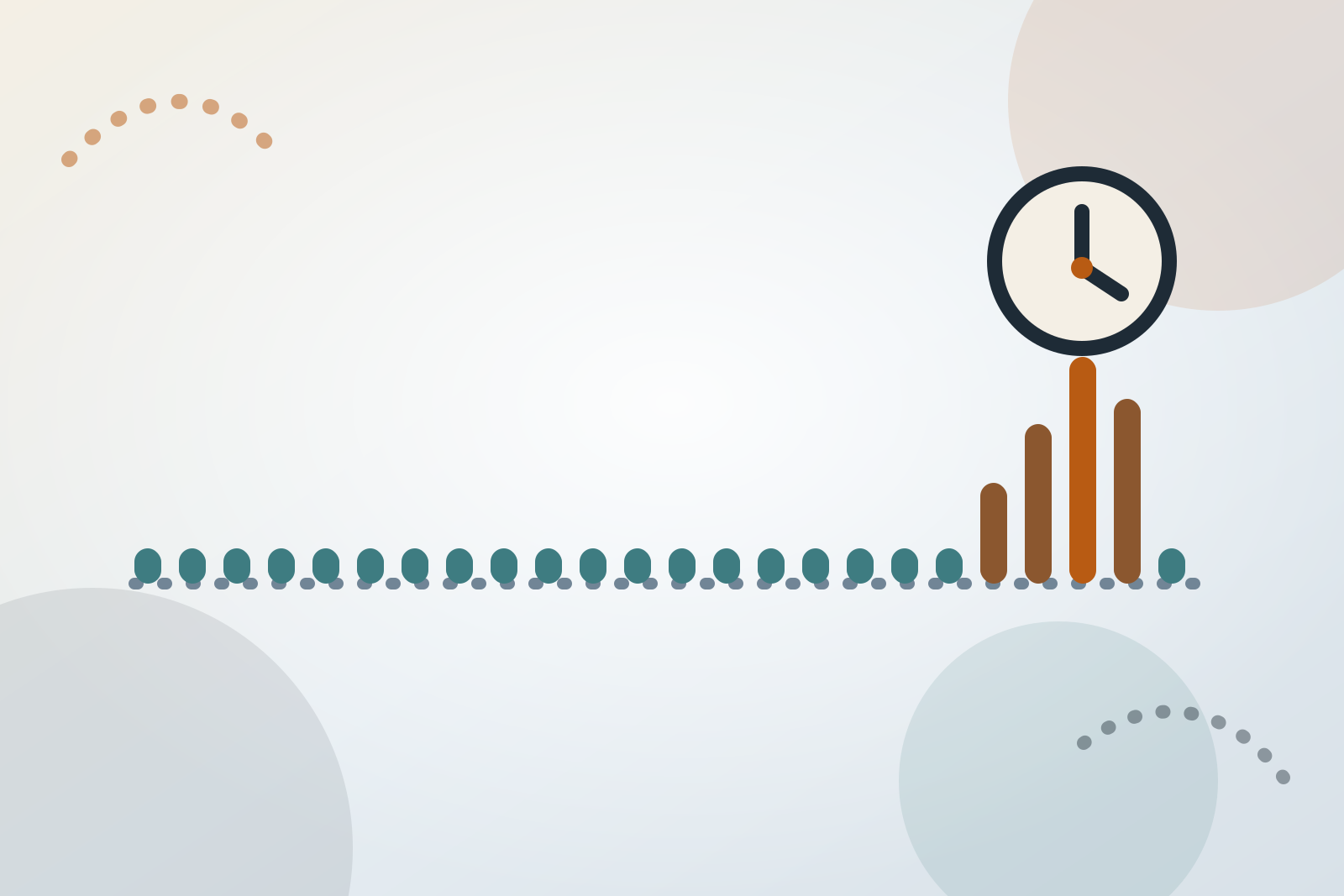
The most practical way to handle smoking triggers at work is to stop treating "work" as one trigger. Split your shift into phases: arriving, pressure spikes, finishing a task, breaks, the end of the shift and work socials. For one week, note which phases pull hardest. Then prepare one concrete response for each of the two or three hardest, change the physical cue where you can, and combine the plan with evidence-based quit support.
You don't need a plan for the whole day. You need one for the parts of it that keep repeating.
Why "work" is too broad to plan around
NHS Better Health lists taking a break at work as a routine smoking trigger and also links cravings to stress. Health-library guidance from University of Michigan Health (written by Healthwise) goes further. It names the workplace smoking area, the entrance where smokers gather, the moment you switch between tasks and the aftermath of an argument, and it notes that drinking alcohol can weaken your decision not to smoke.
These are all very different moments. A response that helps at 8:55am outside the building won't help at 4:40pm after a difficult call. That's why "I'll be strong at work" rarely holds. It's a promise with no time, place or action attached.
Map your shift in one week
For five working days, add one line each time you notice a pull towards a cigarette. Keep it short:
- Time
- Phase (arrival, pressure, task ending, break, end of shift, social)
- What happened just before
- Strength on a 1–10 scale
- What you did
An entry might read: "Wed 15:10, task ending, sent the monthly report, 7/10, walked to the stairwell and back." Write it after the moment if logging during it would be awkward in front of colleagues or customers, and never while you're driving.
At the end of the week, count the entries in each phase. The pull is often uneven. One or two phases may account for most of the entries, and that's where the plan should start.
If you want an app to do the counting, Hard Bit lets you log each urge privately on your iPhone and keeps the smoking record separate from any other habit. Its forecast, part of Hard Bit Plus, is built on the device from your own entries. It makes no prediction until you have at least five, so a single bad Tuesday won't be treated as a pattern. How to Track the Hours You Are Most Likely to Smoke explains the method with or without an app.
Arrival: change the doorway and the commute
The minutes before work can carry a strong pull. You might have smoked one last cigarette before going in, or stopped for a chat at the smokers' entrance. The Healthwise guidance suggests avoiding the entrance where smokers gather, using a different door or timing your arrival to miss them.
Practical changes:
- Use a different entrance for the first few weeks, even if it adds a minute.
- Arrive just in time rather than early, so there's no waiting gap outside.
- Walk in holding something you'll use straight away, such as a drink, your badge or your laptop.
If the urge starts in the car or on the walk in, Driving and Smoking Triggers: Change the Car Routine deals with that part of the commute. If coffee and a cigarette always came together before your shift, separating the coffee from the cigarette is worth doing first.
Pressure spikes: the email, the call, the argument
Stress-linked urges are usually the hardest to plan for because you can't always predict when they'll arrive. You can predict their type, though: the tense meeting, the angry customer, the deadline, the message from a particular manager.
Smokefree.gov makes a point that's worth keeping on a sticky note: smoking doesn't solve the problem causing the stress, and the stress comes back. It also notes that nicotine cravings can themselves feel stressful as withdrawal begins. That's one reason ordinary work friction can feel bigger early in a quit.
A prepared sequence for a pressure spike:
- Name it. "That call has set off an urge."
- Move your body before you decide anything. The Healthwise guidance suggests walking briskly around the building after an argument or upset. Even a walk to the far printer counts.
- Slow your breathing. NHS Better Health suggests a 4-5-6 pattern: breathe in for 4 seconds, hold for 5, breathe out for 6.
- Do the smallest next work task. Reply to one easy email or file one document, so you're moving again.
This is a coping technique, not a guarantee. How long an urge lasts varies from person to person and day to day. The aim is to make the next decision deliberately.
The finish-line cigarette between tasks
The between-task moment is easy to overlook in your own day because it doesn't feel like a trigger. For many people, the cigarette marked an ending: the report sent, the delivery loaded, the patient handed over. It worked as a reward and a full stop.
Healthwise suggests replacing the cigarette when you switch tasks with a short walk or a few minutes of reading. It can also help to replace the reward part. Some options:
- Stand up, stretch and refill your water bottle before starting the next thing.
- Tick the task off on paper rather than on screen, so the ending feels physical.
- Allow yourself a set few minutes of something you enjoy, such as a podcast clip or a message to a friend.
Write down which task endings appear most in your log. You may find it isn't every finished task, only the big or tedious ones.
Breaks and colleagues who smoke
Breaks are covered in depth in How to Handle a Smoke Break Without Smoking, so here is the short version. NHS Better Health suggests taking your break at a different time or going for a walk. Healthwise suggests spending breaks with people who don't smoke.
If a colleague holds out a packet, a short prepared sentence is easier than an explanation made up on the spot. What to Do When Another Smoker Offers You One has wording you can adapt.
End of shift and work drinks
The cigarette at the gate after a long shift can feel earned. Plan the first ten minutes after you clock off: walk straight to the car or bus, call someone on the way, or have food ready so you're not hungry and tired at the same time.
Work socials add another layer. The Healthwise guidance notes that after a drink, your decision not to smoke may weaken. If the Friday drinks are on your map, decide your plan before you arrive: how long you'll stay, what you'll drink and where you'll stand. How to Prepare for an Alcohol-Related Smoking Trigger goes into this in detail.
If you work from home, on shifts or outdoors
The six phases still apply, but the cues look different:
- Remote work: the back door, the balcony or the kettle may be the old smoking spot. Move your breaks to a different part of the home and keep cigarettes out of the house if that's realistic for you.
- Shift and night work: your hard hour may fall at 3am rather than 3pm. Map by hours into the shift, not by clock time.
- Outdoor or site work: there's no building to leave, so the cue is often the van, the tailgate or the tea stop. Change where you sit and what you hold during that stop.
Write a one-page work plan
Use your week of entries to fill in a short plan for your two or three hardest phases. Here is an example from a site engineer whose log showed two clear peaks:
- Phase: after the 2pm client call. Early sign: jaw tight, reaching for the pocket. Response: walk the site perimeter, then the 4-5-6 breathing. Backup: text a friend who has quit.
- Phase: packing up at 5:30pm. Early sign: looking for the usual colleague. Response: leave by the other gate, with the radio on before the engine starts. Backup: chewing gum in the van door.
Keep it private and somewhere you'll see it. If a phase still ends in a cigarette, record it and adjust that one response. Don't throw away the whole week. How to Measure Smoking Progress Beyond a Perfect Streak explains how to count honestly after a slip.
Hard Bit's free version includes the counter, the hard-moment flow, a personal sentence of your own, logging and a journal. Hard Bit Plus adds the learned forecast and can warn you before a difficult hour returns. The Hard Bit overview explains both. There's no account, and your history stays on your phone.
Add support that goes beyond coping ideas
Everything above is a coping strategy. It's not a treatment. A 2019 UK government evidence summary found that the most effective way to quit smoking is expert behavioural support from a local stop smoking service combined with stop smoking aids. People who use that combination are about three times as likely to succeed as those who quit unaided or rely on over-the-counter nicotine replacement alone.
A stop smoking adviser, a quitline, a pharmacist or a GP can talk through nicotine replacement and prescription options, including which might suit predictable work peaks. Ask them rather than improvising a dose. Some employers also offer quit support through occupational health or an employee assistance programme, so it may be worth checking yours.
If cravings or withdrawal are making work unmanageable, or getting harder rather than easier, take that as a sign to add support, not to try harder alone. If work stress itself is affecting your mood or sleep, it's worth raising with your GP or occupational health too. The Hard Bit support page sets out what the app can and can't do. Our editorial policy explains how we review health sources.
Frequently asked questions
What are the most common smoking triggers at work?
Public-health guidance names work breaks, stress, the workplace smoking area, colleagues who smoke, switching between tasks, coffee and drinking alcohol. Your own mix will be narrower, which is why a week of simple notes is more useful than a general list.
Should I tell my colleagues I'm quitting?
That's up to you. Telling one or two people can make breaks and offers easier, and some people find support helps. If you'd rather keep it private, a short "No thanks, not today" is enough, and you can change where you take breaks without explaining why.
How long will work cravings last?
There's no fixed timeline that applies to everyone. Cravings tend to be strongest early in a quit, and work cues repeated daily for years can linger. Use your log to see whether the hard phases are getting less frequent rather than waiting for a set date.
Can I use nicotine replacement at work?
Many people do, but the right product and dose depend on you. A stop smoking service, a pharmacist or a GP can advise on what fits your shift pattern. Check any workplace rules on where nicotine products can be used.



