Being offered a cigarette is a normal part of quitting, and NHS Better Health names it as a smoking trigger. If it has just happened to you and you're not sure what to do, here's the short version. Say one plain line, such as "No thanks, I've stopped." If they ask again, say the same words. Then do something physical straight away: pick up your drink, step out of the smoke or go back inside for a minute. Later, ask the people who usually offer to stop offering, and note who offered, where you were and what time it was.
The aim is not a perfect speech. You only need to get through the next couple of minutes without lighting up.
Why an offer from another smoker is so hard to turn down
Seeing someone smoke is a cue. An offer is a cue with an easy next step attached. The packet is open, the lighter is ready, and the person holding it is often a friend. For years, saying yes was part of how you spent time together. Saying no can feel like stepping out of that.
NHS Better Health lists being around other smokers, drinking alcohol and being offered a cigarette as common triggers. They often arrive together: the same garden, the same group, a drink in your hand and a lull in the conversation. That's a lot of cues at once, so it makes sense if this feels harder than a craving you'd handle alone at home.
It helps to treat the pull as a learned reaction to a familiar setting, not as a sign that your quit isn't working. Separating a smoking cue from the next action explains that general idea in more depth. This guide is about the specific moment when someone holds one out.
Say one line, then say it again
Quit, the Cancer Council Victoria quit service, suggests deciding what you'll say to friends who smoke before you quit. The moment of the offer is the worst time to work out a reply. Long explanations invite debate ("go on, one won't hurt"), while short ones end the conversation.
Pick a line that sounds like you:
- "No thanks, I've stopped."
- "I'm alright, cheers."
- "Not for me tonight. How did the interview go?"
- "I'm cutting down, so I'll pass."
If they offer again, say exactly the same words in the same friendly tone. You don't owe anyone a reason, a health lecture or an update on how many days it's been. This repeat-the-line approach is practical editorial advice, not a clinical technique. It works because there's nothing new for the other person to argue with.
If you're cutting down rather than stopping, say what's true for you. "I've had my one for today" is honest and just as final.
The smoking-specific versions of the offer
Cigarette offers don't always look like "Want one?" Plan for the other versions too:
- "Got a light?" You don't have to carry a lighter for other people. "Sorry, I don't carry one any more" is enough.
- "Can I borrow one?" If friends know you used to have a packet, they may ask you for one. Not carrying any answers that for you.
- "Share this with me." Being handed a lit cigarette to share happens fast. Keep your hands full so there's nowhere to put it.
- A partner or housemate who smokes at home. Ask for something specific, such as not leaving packets in shared rooms and smoking out of your sight, rather than asking them to change everything.
If you're offered a vape rather than a cigarette, what to do when someone offers you a vape covers that situation.
Change what your hands and feet are doing
Your line deals with the other person. Your body still knows the old routine: reach out, take it, lean in for the light. Interrupt that sequence with something you can do in seconds.
- Fill your hands. Hold a drink, your keys or your phone. Quit suggests bringing something to keep your hands busy and sipping water around people who smoke.
- Move a few metres. Step out of the smoke, stand upwind or go inside "to get a drink."
- Change the activity. Get the next round, start a different conversation or take a walk. Quit mentions walking around the block if things get tough.
- Leave early if you need to. In the first few weeks, leaving a gathering early is a sensible plan, not a failure.
Choose your move before you arrive, so you don't have to decide on the spot. If offers mostly happen at work, handling a smoke break without smoking shows how to keep the break and change what you do during it.
Prepare for the "just one" thought
Sometimes the hardest voice isn't the person offering. It's your own thought straight afterwards: one won't matter, I've done so well, it's rude to refuse, I'll start again tomorrow.
Write a reply to that thought now, in your own words:
- "One is how the old routine comes back."
- "I want to wake up tomorrow glad I said no."
- "I'm not refusing them. I'm keeping a promise to myself."
If you use Hard Bit, the hard-moment flow shows you the personal sentence you saved when you were calm, at the moment it's hardest to remember. A note on your lock screen or a card in your wallet does the same job.
Cravings can come in waves while people around you keep smoking. Some people find it helps to notice the urge rising and falling without acting on it. That's a coping technique, not a promise that the urge will pass by a set minute. If it stays strong, go back to a physical move: change rooms, change company or go home.
Ask the usual offerers to stop offering
Most offers come from the same few people: a colleague, a friend from the pub, a partner, a relative at family gatherings. Quit recommends telling friends who smoke that you've quit and politely asking them not to offer. Smokefree.gov suggests telling the people around you exactly how they can help. If someone close to you smokes, it also suggests asking whether they'd like to quit with you.
A short message before you meet can save a lot of awkward moments:
I've stopped smoking, so please don't offer me one tonight, even if I look tempted. Still looking forward to seeing you.
The last line matters. You're keeping the friendship and changing one thing. If someone keeps offering after you've asked, that tells you something about the setting, not about you. For a while, you could meet where smoking isn't allowed, or call instead of meeting. Quit suggests limiting time with people who smoke during the first few weeks.
Drinking makes offers harder to turn down, because the cue and lower inhibitions arrive together. If most offers happen on nights out, read preparing for an alcohol-related smoking trigger before the next one.
If you said yes, keep the record honest
Sometimes you'll take it, or have a few puffs and hand it back. That's something to learn from. It doesn't wipe out your effort.
Deal with the next ten minutes first. Hand back what's left, don't ask for another, and step away from the group. Later, write down what happened in plain words: who offered, where you were, what time it was, what you'd been drinking and what you told yourself just before saying yes.
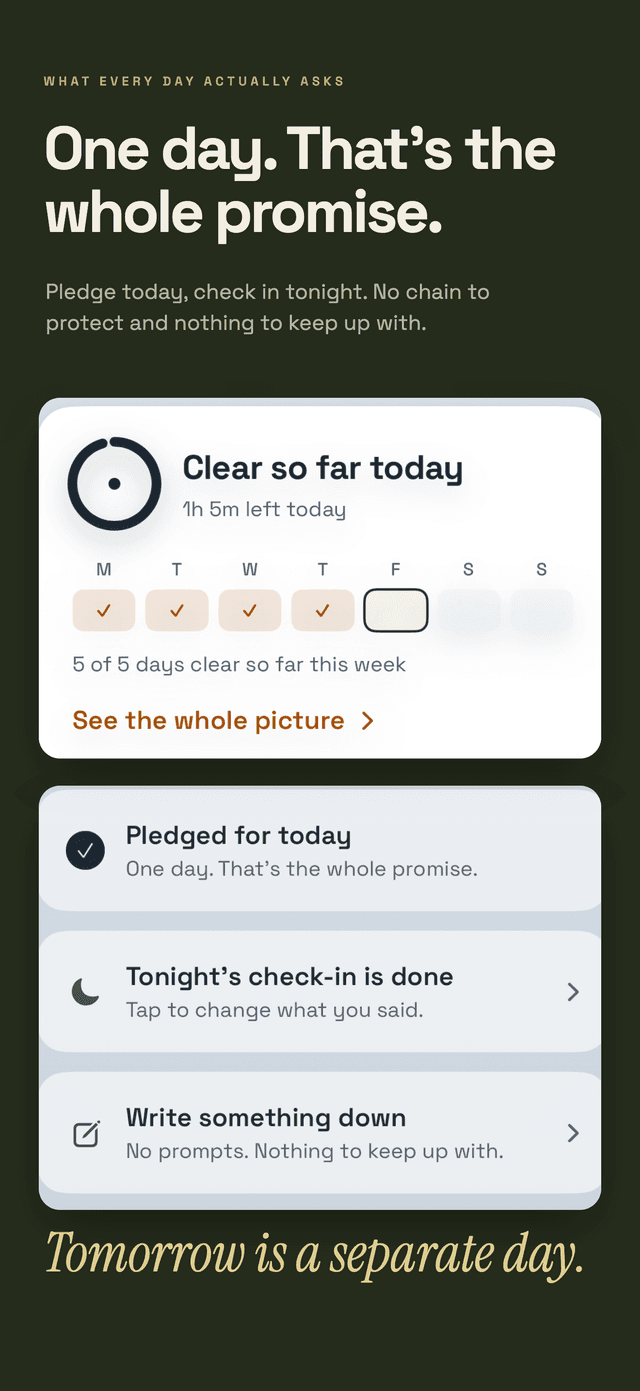
Leave out verdicts like "I've ruined it." One cigarette at a birthday party doesn't erase the days before it. What to do after a slip covers the next steps, and measuring smoking progress beyond a perfect streak shows how to count clear days and frequency so one evening doesn't overshadow the rest. That's also why Hard Bit's counter doesn't reset after a slip. A record with the hard days hidden is less useful to you.
Track who offers, where and when
After a couple of weeks, offers often stop looking random. They might come from one colleague after the Thursday meeting, in the pub garden on Saturdays, or at a relative's house after Sunday lunch. Once you can see that, you can prepare for it.
One line per offer is enough:
- Day and time
- Who offered
- Where you were, and whether alcohol was involved
- How strong the urge was, from 1 to 10
- What you said and did next
Tracking the hours you are most likely to smoke shows how to turn notes like these into a time pattern. Hard Bit keeps each habit's log on your iPhone, with no account. Logging is free. With Hard Bit Plus, the app learns your difficult weekday and hour from your own entries and can warn you before one comes round. It makes no forecast until you've logged at least five entries, and it relies fully on your own history at around twenty. The Hard Bit overview explains how it works. A notebook also works, as long as you read it back.
Know when coping ideas need backup
Everything above is general coping advice, drawn partly from public-health guidance and partly from practical experience. None of it is treatment. NHS Better Health says cravings are often strongest in the first four weeks after stopping. In England, free local NHS stop smoking services have trained advisers who can help you get nicotine replacement and prescription stop-smoking medicines. In Australia, Quitline (13 7848) counsellors can help you plan for friends who smoke. In the US, the free quitline is 1-800-QUIT-NOW. A pharmacist or doctor can also explain your options.
If offers keep ending in a cigarette, withdrawal makes social situations very hard, or you feel you're doing this alone, add support rather than pushing harder with the same plan. If you're in severe distress or having thoughts of self-harm, contact local emergency or crisis services. The Hard Bit support page explains what the app does and where its role ends. Our editorial policy describes how we keep health information separate from product details.
Frequently asked questions
What is the best thing to say when someone offers me a cigarette?
A short sentence you can repeat word for word, such as "No thanks, I've stopped." You don't need to give a reason. If they offer again, say the same thing in the same friendly tone, then change the subject or move away.
Should I avoid friends who smoke while I'm quitting?
Not forever. Quit services suggest limiting time with people who smoke during the first few weeks. You can meet where smoking isn't allowed, call instead of meeting, or ask them in advance not to offer.
What if my partner smokes at home?
Ask for specific, practical changes: no offers, no packets left in shared rooms, and smoking outside or out of your sight. Smokefree.gov also suggests asking someone close to you who smokes whether they'd like to quit with you, but the choice is theirs.
What if I accepted the cigarette?
Hand back what's left, don't take another, and step away for a moment. Later, write down who offered, where you were, what time it was and what you told yourself. Then change one thing for next time. One cigarette doesn't cancel the clear days before it.
What if I've never smoked and just don't want to start?
The same approach works. A plain "No thanks" is enough, and you don't need a reason. Change the subject or move to another group. If someone keeps pushing, it's fine to leave.