
To handle vape cravings while driving, do most of the work before you start the engine. Put the vape somewhere you cannot reach from the driver's seat. Put sugar-free gum in your mouth before you set off if that helps, and choose your audio before you pull away. Once you are moving, use only actions that keep your eyes on the road and your hands on the wheel. If the urge is taking your attention, find a safe place to stop. Log the craving after you park, never while you drive.
Driving is unusual because so much ordinary craving advice doesn't work in a car. You can't walk away, you shouldn't type a note, and closing your eyes to breathe is not an option. This plan is built around that limit.
Why the car can feel like a strong vaping cue
A car can bundle several cues together. You sit in the same seat and the vape may live in the same cup holder. You drive the same routes at the same times of day, often with a stretch of time where your hands and mouth have little to do.
Smokefree.gov's guidance on vaping triggers names changing routines, including taking a different route to work or school, as one way to weaken a trigger. Smokefree also suggests swapping the vape for something that keeps your mouth busy, such as sugar-free gum or mints. Those are general ideas from a public-health service, not driving-specific research, but they fit the car well.
It also helps to separate two things that can feel the same at the wheel:
- A habit cue: the urge arrives when you start the engine, reach a certain junction, or join the motorway, whether or not you are stressed.
- A stress or withdrawal cue: the urge builds in heavy traffic, when you are late, or after a long gap without nicotine.
You will plan differently for each, so notice which one is more familiar.
Put road safety ahead of every craving tactic
UK Highway Code rule 148 says safe driving needs concentration. It lists eating, drinking, smoking, and starting or adjusting music or radio among the distractions drivers should avoid. Whatever your local rules say about vaping at the wheel, the same reasoning applies to coping tactics. A tactic that takes your eyes, hands, or attention away from driving is the wrong one, however well it works at home.
That rules out, while moving:
- writing a note, logging the urge, or opening any app,
- texting or messaging someone for support,
- drinking, eating, unwrapping food, or hunting for gum in a bag,
- scrolling for a new playlist or changing stations,
- long breathing exercises that pull your attention inward,
- arguing with yourself so intensely that you stop tracking the road.
If the craving, irritability, or poor concentration of nicotine withdrawal makes you feel unsafe to drive, that is a reason not to drive or to stop. It is not a test to push through. Quitting doesn't make you a bad driver, but a tired, restless first week is worth planning around.
Before you turn the key: set up the car
This is where most of the plan lives. The HSE's quit-vaping guidance suggests making spaces such as your car or home vape-free before your quit date. A few concrete steps:
- Move the vape out of reach. If you are stopping, take it out of the car entirely. If you are cutting down, put it in the boot or a zipped bag on the back seat, so using it would mean stopping the car.
- Clear the leftovers. Remove spare pods, chargers, cables, and packaging from the door pockets and glovebox. A charging cable on the dashboard can work as a cue too.
- Fill the empty slot. Put a water bottle, or a drink you like, where the vape used to sit, for before you set off and after you park. If gum helps, put a piece in your mouth before you start the engine.
- Choose your audio first. Queue a podcast, audiobook, or playlist before you leave so there is nothing to adjust on the way.
- Air the car out. If the car smells of a favourite flavour, a clean and some fresh air may make the cue less familiar.
If the urges come at predictable times, such as the drive home from work or the school run, note when they happen. The guide on tracking the hours you are most likely to vape shows how to find that window and plan for it.
While you are moving: eyes-free actions only
When the urge rises, pick one action from a short list you chose in advance. Keep it simple enough to do without looking away from the road or taking a hand off the wheel.
- A longer exhale. Breathe in normally and let the out-breath go a little slower, with your eyes on the road. Smokefree.gov lists slow breathing as one way to manage vape cravings. In a car, keep it light and stop if it pulls your focus.
- Chew. If gum is already in your mouth, chewing gives your jaw something familiar to do. Don't reach for a new piece while moving.
- Narrate the road. Describe aloud what you can see: the car ahead, the next junction, the speed limit sign. This keeps attention outward and on driving at the same time.
- Say your reason once. Repeat a short sentence you wrote earlier, such as "I want to get out of the car without that taste."
- Let the audio do its job. Leave the podcast or playlist you chose running rather than searching for something new.
Craving intensity often changes over a few minutes, but there is no fixed time you can count on, and some urges come back. Treat these actions as a way to get to the next safe point, not a promise that the urge will be gone by a certain mile.
If none of this is enough and you notice you are gripping the wheel, speeding up, or losing track of the road, find somewhere safe and legal to stop. A lay-by, a car park, or the next services all count. Once parked, you can drink, step out, or breathe more slowly. Stopping the car is a safety decision, not a failure.
When you park: log it and step out
The minute after you park is when you can do what driving ruled out. With the engine off, before you get out:
- Note three details: where on the route the urge started, how strong it felt on a simple scale, and what you were doing just before.
- Note what helped, even a little, and anything that made it worse.
- Record honestly if you did vape. One entry doesn't erase the rest of your record. Measuring vaping progress beyond a perfect streak explains how to keep the whole picture.
Then step out of the car. If arriving somewhere usually means a vape, such as outside work or at a petrol station, plan that moment too. The guide on handling a vape break without vaping covers the walk from the car park to the door.
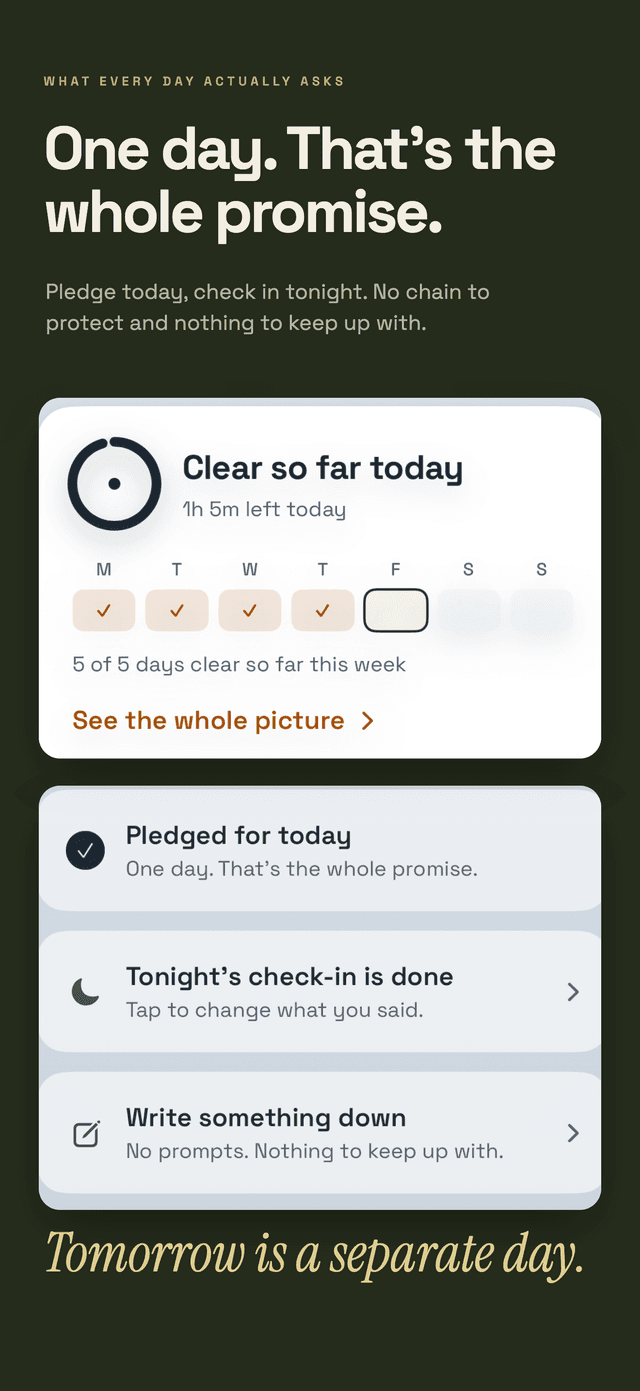
If you use Hard Bit, this is where it fits: log the urge or a use once the car is parked. Logging is free in the iPhone app, and each habit keeps its own record. Hard Bit Plus can learn your difficult hours from your own logged history and warn you before one arrives. That warning is useful before a drive, when you can still move the vape to the boot or pick a different route. It is not something to read at the wheel. The forecast makes no prediction until you have five entries, and your entries stay on your phone. The Hard Bit overview explains how this works without an account.
Adjust the route, not just your willpower
After a week or so of notes, look for repeats. Maybe the urge always arrives at the same roundabout, the same garage, or the first ten minutes after leaving work. Then change one condition for the next similar trip:
- take a different route that skips the shop or garage where you used to buy pods,
- leave five minutes earlier so you are not driving late and stressed,
- eat something before a long drive if hunger is part of the pattern,
- ask a passenger not to vape in your car, so it stays a vape-free space,
- save the most absorbing podcast episodes for your hardest drive.
If you used to smoke in the car as well, changing the car routine after smoking covers the overlap.
These ideas are practical suggestions, not tested treatments. If the same drive keeps going the same way despite changes, the plan probably needs more support, not more effort.
When to add evidence-based support
Coping tactics and a tidy car can help, but they are not cessation treatment. In England, NHS Better Health lists free local Stop Smoking Services through a postcode finder, and says advisers can support people using a vape to quit smoking. If your goal is to stop vaping itself, ask your local service whether it can help. In Ireland, the HSE suggests considering nicotine replacement therapy if dependence is high. Smokefree.gov's page on nicotine withdrawal and vaping notes that the U.S. FDA has not approved medicines specifically for quitting vaping, and advises talking to a doctor about whether medication could help.
Speak to a stop-smoking service, pharmacist, or GP if you are unsure which route suits you. Contact a clinician if withdrawal, low mood, anxiety, or difficulty concentrating is severe or persistent, and seek urgent help for thoughts of self-harm. Our editorial policy explains how we separate general information from product details and review health sources.
Frequently asked questions
Is it illegal to vape while driving?
The rules vary by country. In the UK, the Highway Code lists smoking among the distractions drivers should avoid. Even where vaping at the wheel is not banned outright, a distraction or a view blocked by vapour can still affect whether you are driving safely and legally. Check your local road rules, and keep coping tactics that need your eyes or hands for after you have stopped.
What if the craving gets very strong on the motorway?
Stick to eyes-free actions such as a longer exhale or narrating the road, and keep driving steadily to the next services or exit. If you feel unable to concentrate, stop as soon as you can safely and legally do so. Do not stop on the hard shoulder unless it is an emergency.
Should I keep my vape in the car in case I need it?
If you are stopping, keeping it in the car makes the cue easier to act on. If you are cutting down, put it somewhere you can only reach by stopping, such as the boot. That gap between the urge and the device gives you a moment to decide.
Is it safe to log a craving at a red light?
No. Even a short note pulls your eyes and attention away from the road and traffic around you. Keep the details in your head, or say them aloud, then log the craving after you park.
Does nicotine gum count as one of the car tactics?
Nicotine replacement is a cessation treatment, not just a snack. Speak to a pharmacist, stop-smoking service, or doctor about whether it suits you before relying on it, and follow the product instructions. Sugar-free gum without nicotine is a separate, general hand-and-mouth substitute. Either way, put it in your mouth before you set off rather than unwrapping it while moving.