To track time of day vaping, first decide what one entry means, because a vape has no natural unit the way a cigarette does. A workable definition is a session: continuous use from picking the device up to putting it down. Record the clock time and how long you had been awake, keep different kinds of day separate, and measure the gaps between sessions as well as the totals.
The result is a picture of when your hand tends to move toward the device. It cannot measure nicotine dependence, and it cannot predict that you will vape at a particular hour.
Decide what one entry means before you count anything
A cigarette ends itself. A vape does not, so many people graze: a few puffs, device down, a few more puffs twenty minutes later. If you do not define the unit first, the same day can produce six entries or sixty depending on your mood.
Pick one definition and keep it:
- Session: continuous use from pick-up to put-down. This is the easiest unit to notice and the one this article uses.
- Reach: every time you pick the device up, even for one puff. More granular, more work.
Some devices estimate puff counts. Treat those numbers as a rough extra column, not a medical measurement, and do not convert puffs into cigarettes. There is no agreed conversion, and inventing one only makes the log look more precise than it is.
Resisted urges belong in the log too, but label them as a different entry type rather than mixing them into session counts.
Keep the log small enough to survive a busy day
Five fields are enough:
- clock time,
- time since waking,
- where you were and what you were doing,
- what happened just before,
- session or resisted urge, with a rough strength rating.
An entry might read:
6:50am; 10 minutes after waking; kitchen, kettle on; alarm went off; session, urge 8/10.
Another might read:
10:20pm; 15 hours after waking; sofa, episode ended; reached automatically; resisted, urge 6/10.
Log at the moment or at the next safe opportunity. Do not type while driving or during anything that needs your attention. One ordinary week, including days off, gives you a first sample. It is a starting view, not a clinical threshold, so extend the record if the week included illness, travel, or visitors.
Record the morning twice
A clock-only log can hide a morning pattern. If you wake at 6:30am on workdays and 10am on days off, the same “within fifteen minutes of waking” session will land in two different clock windows and look like nothing.
Smokefree.gov lists waking up wanting to vape among nicotine withdrawal triggers, so the first session of the day deserves its own question. Record both measures:
- Clock time: 6:50am.
- Time since waking: 10 minutes.
Then sort each day's first session by time since waking. A tight cluster tells you the morning pattern follows your body, not the clock. A scattered result tells you to look at the accompanying activity, such as coffee, the phone, or the first commute, instead of the hour.
Separate the kinds of day and the rooms
Vaping reaches rooms that smoking often cannot: the bed, the desk, the sofa, the car. Smokefree.gov's everyday trigger list, including being on the phone, drinking coffee, work breaks, watching TV or gaming, and walking or driving, reflects how woven into ordinary hours the habit can be. Because access is nearly constant, the place and activity fields carry more weight than they would for a habit confined to a smoking area.
Keep groups apart:
- workdays,
- days off,
- each shift type,
- any other recurring schedule.
Label days by what actually happened. A Tuesday spent working from the sofa may behave like a Sunday. Mixing it into the workday group dilutes both patterns. For a wider review of the people, feelings, and routines around your entries, use the guide to identifying craving triggers and difficult times.
Measure the gaps between sessions as well as the windows
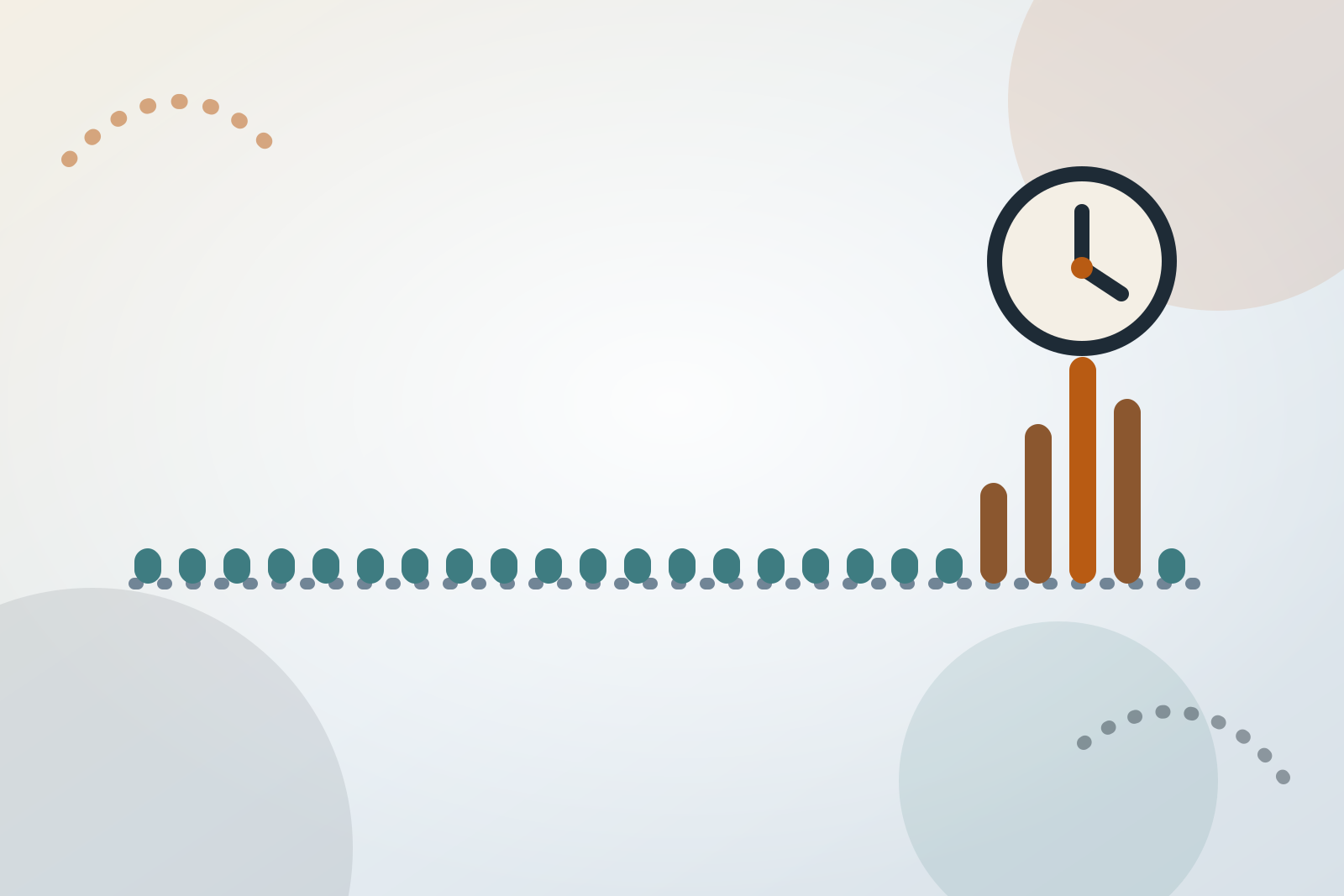
Group the sessions into two-hour windows and, for each window, count the sessions and the days when you were awake to observe it. A window with four sessions across five observed mornings tells a different story from four sessions across two.
Then add a measure smoking trackers rarely need: the gap. Each day, note the longest stretch without vaping and the typical gap between sessions. This matters for two reasons. First, an all-day grazing habit can look flat on a clock chart while the gaps quietly shrink. Second, the NHS describes increasing the time between vaping sessions as one way to cut down gradually, giving the example of extending a twenty-minute gap to forty. If you later choose to cut down, your log already contains the baseline you would be stretching.
Keep the interpretation modest either way. “Sessions clustered between 9pm and 11pm on four of five evenings” describes the record. It does not mean the same will happen next week.
Treat the first pattern as a draft
Early patterns are hypotheses. Shift changes, holidays, a new pod strength, or a stressful week can bend the shape temporarily. Use honest language: “this window keeps appearing,” not “this window always beats me.”
Also protect the log from shame. The point of counting is to locate the habit in time, not to produce a daily verdict. If logging starts to feel like prosecution, shorten the fields rather than abandoning the record.
Turn the two clearest windows into plans
Choose no more than two windows with a repeated pattern and write an if-then plan tied to the real routine:
- “If I finish dinner and sit on the sofa, the device stays in the hallway and I make tea first.”
- “If the morning alarm goes, I shower before touching my phone, and the device is not beside the bed.”
The NHS suggests creating vape-free spaces or times and slowly expanding them, which pairs naturally with a time pattern: your hardest window can become your first vape-free window. Smokefree.gov recommends replacement actions for the hands and mouth, such as sugar-free gum, crunchy snacks, or doodling, and planning something specific for downtime, which is when many sessions happen.
For the moment an urge peaks inside one of those windows, read how to handle a craving in the moment and prepare one short response in advance.
Keep logging while you cut down or quit
The record stays useful after you change the goal. Log resisted urges alongside any sessions, labeled separately, so difficult hours that ended without vaping still exist in the data. A day with three resisted urges and no sessions is different from a day you forgot to log, and only one of them can teach you anything.
Expect withdrawal to have its own timetable. The NHS lists strong cravings, irritability or low mood, trouble concentrating, feeling hungrier, and difficulty sleeping among common experiences when quitting nicotine vaping. Smokefree.gov describes cravings as common and temporary. Individual urges vary in length and intensity, so treat any delay technique as a way to create decision space, not as a countdown every craving must obey.
If you vape during a quit attempt, keep the entry. The guide to responding after a slip explains how to retain the information and adjust the plan instead of erasing the week.
Where a private tracker can fit
Paper works, but a vaping log is personal, and a notebook can be found. Hard Bit is one optional iPhone tracker built for this kind of record. You can track vaping as its own habit, choose whether you are stopping or cutting down, and each habit keeps a separate counter, logs, reason, and learned difficult hour. The counter, hard-moment flow, personal sentence, logging, journal, milestones, help links, export, and deletion are free. Hard Bit Plus adds an on-device forecast with advance warning, patterns and calendar views, widgets, and short reads.
The forecast is calculated on your phone from your own entries. It makes no prediction below five entries and leans fully on your history at around twenty. Those are product rules, not clinical predictions. There is no account, advertising, social feed, third-party analytics, or server-side history. The Hard Bit overview and the support page document the workflow and its limits.
Pair the pattern with real quit support
A timing log is preparation, not treatment, and it works best alongside proper support.
In the UK, local Stop Smoking Services are free, and a pharmacist or stop-smoking adviser can discuss nicotine replacement. The NHS notes that Nicorette QuickMist is currently the only NRT product approved for quitting vaping, and that combining a fast-acting product with a patch can be discussed with a professional. In the US, the CDC points readers to free trained quit coaches at 1-800-QUIT-NOW. Smokefree.gov notes that the FDA has not approved smoking-cessation medicines for quitting vaping, while advising anyone struggling to talk with a doctor about whether medication might help. Truth Initiative offers free digital quit support through EX Program.
If you are pregnant, under 18, or managing significant mental-health symptoms, involve a clinician in the plan rather than relying on self-tracking. Seek urgent help for severe distress, thoughts of self-harm, or any situation that feels unsafe. Our editorial policy explains how this site separates general information from product facts.
Frequently asked questions
How long should I track before the pattern means anything?
One ordinary week is a reasonable first sample, not a dependable prediction. Extend the record if the entries are sparse or the week was unusual, and keep treating early patterns as drafts that later entries can confirm or overturn.
Should I count puffs or sessions?
Sessions are easier to notice consistently, and consistency matters more than granularity. If your device reports puff estimates, keep them as a separate column. Do not convert puffs into cigarette equivalents, because no agreed conversion exists.
What if I vape all day with no obvious peak?
Re-sort the same entries by gap length, place, and preceding activity instead of clock time. A flat clock pattern can still hide a routine, and your longest daily gap is useful baseline data if you later stretch the gaps to cut down.
Is it dangerous to stop vaping suddenly?
Nicotine withdrawal is uncomfortable but is not usually dangerous for most people. Support from a doctor, pharmacist, or quit service can make it more manageable, and professional advice matters more if you are pregnant, under 18, or experiencing severe mood symptoms. Seek urgent help for thoughts of self-harm.
Does this work if I vape and smoke?
Track each habit in its own record, because the two patterns usually live in different hours and places. The guide to tracking more than one habit without mixing the data explains how to keep the logs separate while still noticing how they interact.