To take a vape break without vaping, keep the time away from work and replace the device-dependent parts of the routine. Before you stand up, decide where you will go, when you will return, what your hands and mouth will do, and what you will say if someone offers you a vape. Keep one backup action ready in case the urge is stronger than expected.
This is a plan for changing a cue. It is not a treatment for nicotine withdrawal.
Identify what you want to keep from the break
Smokefree lists taking a break at work among common everyday vaping triggers. It also recommends planning something else for downtime rather than waiting until the urge arrives.
Look at one or two recent breaks and ask what each provided:
- Permission to pause: a reason to leave your task for a few minutes.
- Movement or a change of place: standing up, walking, or going outside.
- Company: time with colleagues you might not otherwise see.
- A boundary: a familiar beginning and end.
- Occupation: something for your hands or mouth.
- Nicotine: the part that can involve cravings and withdrawal.
Choose the one or two benefits you most want to preserve. If company matters, a solitary replacement may not fit. If the main benefit is leaving your desk, replacing vaping with more screen time may miss the point.
If you need a fuller picture of when these breaks occur, use the guide to tracking the hours you are most likely to vape.
Write a six-part break plan
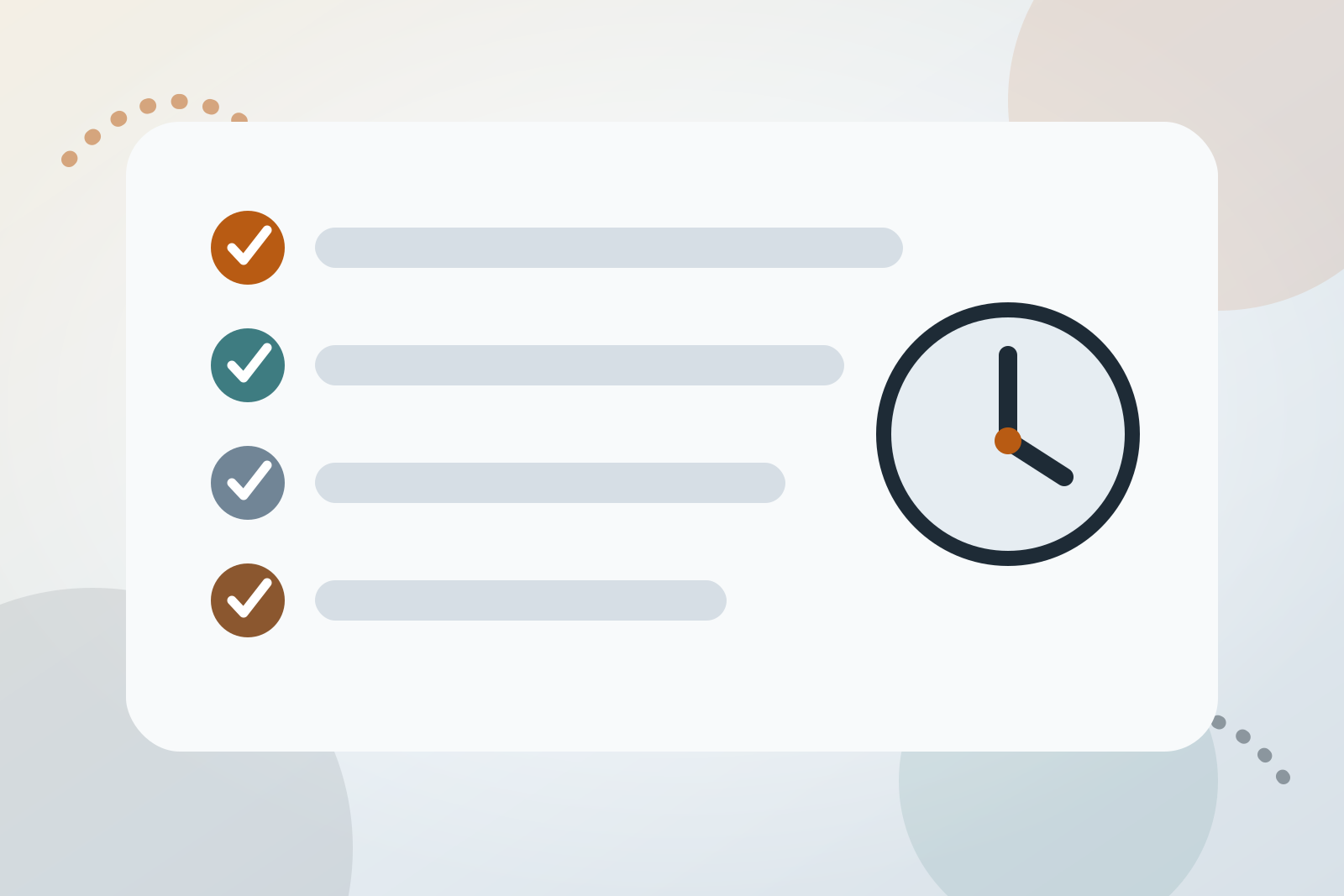
Make the plan specific enough to follow without another decision:
- Start: “I will stand up at 10:30.”
- Place: “I will walk to the far entrance and back.”
- End: “I will return after one lap.”
- Hands or mouth: “I will take water and sugar-free gum.”
- Social reply: “I am still taking a break, just not vaping.”
- Backup: “If the urge feels strong, I will walk another lap and message Sam.”
A destination and end point keep the break from disappearing or turning into an open-ended scrolling session. The activity can be ordinary. Repetition is useful because it reduces the number of choices you must make while the cue is active.
For help choosing a realistic backup, see how to choose one action for a difficult twenty minutes. The time block is a planning tool, not a promise about how long a craving will last.
Separate yourself from the device before the break
Do not rely on deciding again at the doorway. Put the vape in a secure place that you will not automatically carry, then take only what belongs in the replacement break.
You can also change an early part of the route:
- use another exit,
- take the break in a different permitted area,
- begin with a short indoor task before going outside,
- arrange to meet a colleague somewhere other than the vaping area.
If you are quitting, Smokefree advises removing vapes, chargers, and pods so they do not remain physical reminders. If you are cutting down rather than removing the device, a defined vape-free break or time can fit the NHS approach of gradually creating vape-free spaces and periods.
If vaping helped you stop smoking, do not let this experiment become an unplanned return to cigarettes. The NHS advises quitting vaping only when you are confident you can do so without smoking.
Give your hands and mouth a simple job
Smokefree suggests options such as sugar-free gum, crunchy snacks, doodling, or a phone game. A short walk, stairs, or another brief change of activity may also help during a craving.
Choose by practicality:
- For your mouth: water, sugar-free gum, or an appropriate snack.
- For your hands: a pen, small puzzle, doodling, or carrying your drink.
- For movement: one lap, a flight of stairs, or a brief stretch.
- For attention: one saved song, a short message, or a clearly bounded task.
Keep the substitute where you will actually start the break. It cannot help if it stays at home or at the bottom of a bag you never bring.
These actions may make the break easier to navigate. They do not replace clinical advice or nicotine treatment when withdrawal needs more support.
Plan for colleagues who vape
A difficult point may be the invitation rather than the break itself. Smokefree recommends preparing a simple response, asking people not to offer a vape, and considering temporary distance from places where others vape.
Use a short line you can repeat:
- “I am coming out, but I am not vaping.”
- “Not today. I am taking a walk instead.”
- “I am changing my breaks. I will catch up with you afterwards.”
- “Please do not offer me one.”
Then decide where the conversation will happen. Walking with colleagues who are vaping preserves company but also keeps you near a familiar cue. Taking the break elsewhere reduces that exposure but may remove the social part you value.
You can test one arrangement, record what happened, and change it. You do not need to prove that you can stand beside someone who is vaping.
Expect withdrawal to change the difficulty
The NHS lists strong cravings, irritability or low mood, trouble concentrating, increased hunger, and difficulty sleeping as possible experiences when quitting nicotine vaping. Smokefree describes vape cravings as common and temporary, but neither source gives one duration that applies to every urge.
Treat a short delay as decision space, not a countdown. If the first plan is not enough:
- change location again,
- walk or take the stairs if that is safe,
- breathe slowly if focusing on breathing feels comfortable,
- contact a supportive person,
- use qualified quit support.
The NHS also describes gradual options such as lowering nicotine strength, extending the gap between sessions, and expanding vape-free places or times. If lowering the strength leads you to vape more, the NHS says that may indicate the reduction happened too quickly.
A pharmacist, doctor, or stop-smoking adviser can help you decide whether gradual reduction, stopping in one step, or nicotine replacement is suitable.
Record whether the replacement break worked
After the break, capture four facts:
- what you did,
- how strong the urge felt on your usual personal scale,
- who was present,
- whether you vaped.
Add one sentence about what happened immediately beforehand if it seems relevant. A stressful meeting, coffee, boredom, or seeing somebody else vape may explain why two breaks at the same hour felt different.
Review several entries together. Look for a repeated situation, not evidence about your character. If the record becomes accusatory, use the guide to tracking vaping without turning it into shame.
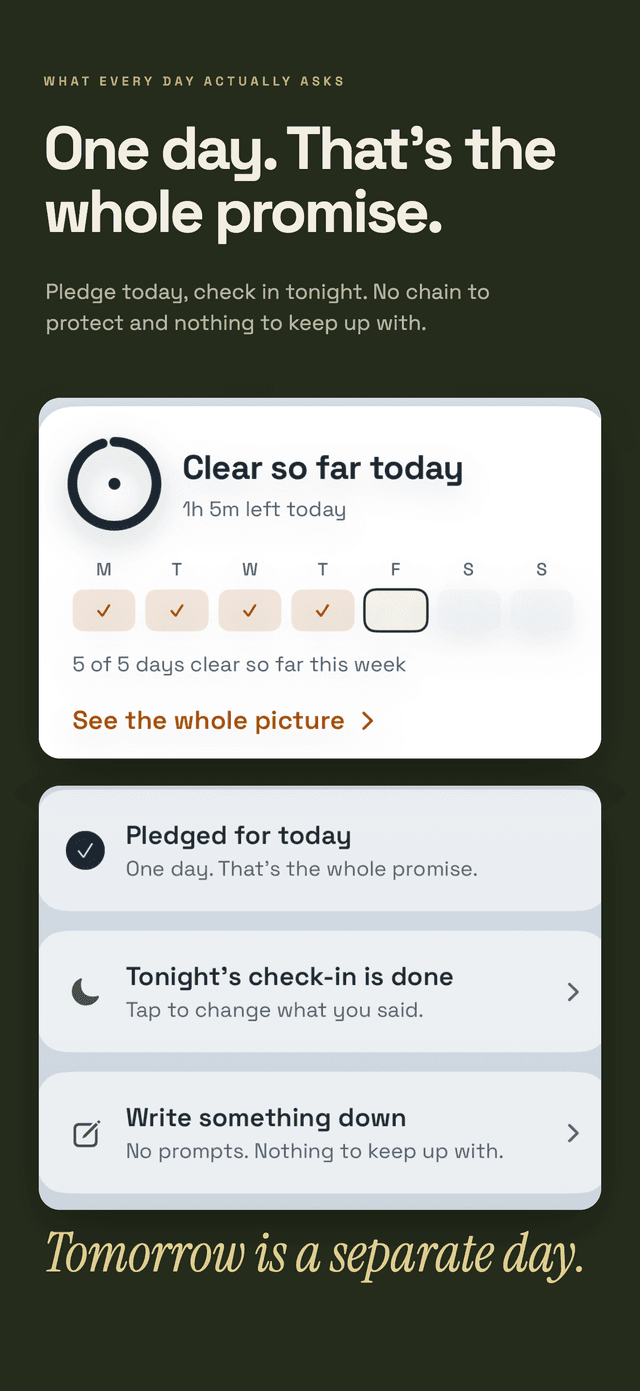
Hard Bit is one optional iPhone tracker for this kind of record. It keeps vaping separate from other habits and supports stopping or cutting down. Its counter, hard-moment flow, personal sentence, logging, journal, milestones, help links, export, and deletion are free. A subscription adds the on-device forecast and warning, pattern and calendar views, widgets, and short reads.
The forecast makes no prediction below five entries and relies fully on personal history at around twenty. Those are product rules, not clinical thresholds. The Hard Bit overview and support page document the workflow and its limits.
Know when to add qualified support
A replacement break can change a routine. It cannot assess nicotine dependence, prescribe treatment, or handle a mental-health crisis.
In the UK, ask a pharmacist or stop-smoking adviser about suitable support. The current NHS page says Nicorette QuickMist is the only NRT product approved specifically for quitting vaping and describes combining it with a patch. Product suitability should be discussed with a professional.
In the US, Smokefree says the FDA has not approved nicotine replacement therapy, varenicline, or bupropion specifically for quitting vaping. It still advises discussing medication with a healthcare professional. The CDC provides confidential, no-cost access to trained quit coaches through 1-800-QUIT-NOW.
Talk to a doctor or counsellor if anxiety or mood changes feel extreme, overwhelming, or persistent. In the US, call or text 988 for free, confidential crisis support. Elsewhere, use your local crisis or emergency service. Seek urgent help for thoughts of self-harm or any immediate danger.
Our editorial policy explains how Daily Life Apps separates general health information from product facts.
Frequently asked questions
Should I stop taking the break?
Not necessarily. If the break provides useful rest, movement, or company, preserve those parts and change the vaping routine around them. Give the replacement a clear beginning and end so it remains a real break.
What if everyone on my break vapes?
Decide whether company or distance from the cue matters more right now. You could walk with one supportive colleague, meet the group somewhere else, or take a separate break temporarily. Ask people not to offer you a vape.
What if the craving is too strong for the planned activity?
Change location, contact support, and use a qualified quit service rather than repeatedly demanding more willpower from the same plan. Withdrawal or repeated difficulty may require advice from a clinician, pharmacist, or stop-smoking service.
What if I vape during the break anyway?
Keep the event in the record. Note what happened before the break and change one condition next time, such as the route, company, device access, or backup action. The guide to responding after a slip without erasing your progress explains the next steps.
Can one vape-free break help me quit?
It can test a practical change and create one defined vape-free period. It does not establish that you will quit or replace appropriate treatment. Use what you learn to refine the next break and involve qualified support when needed.