
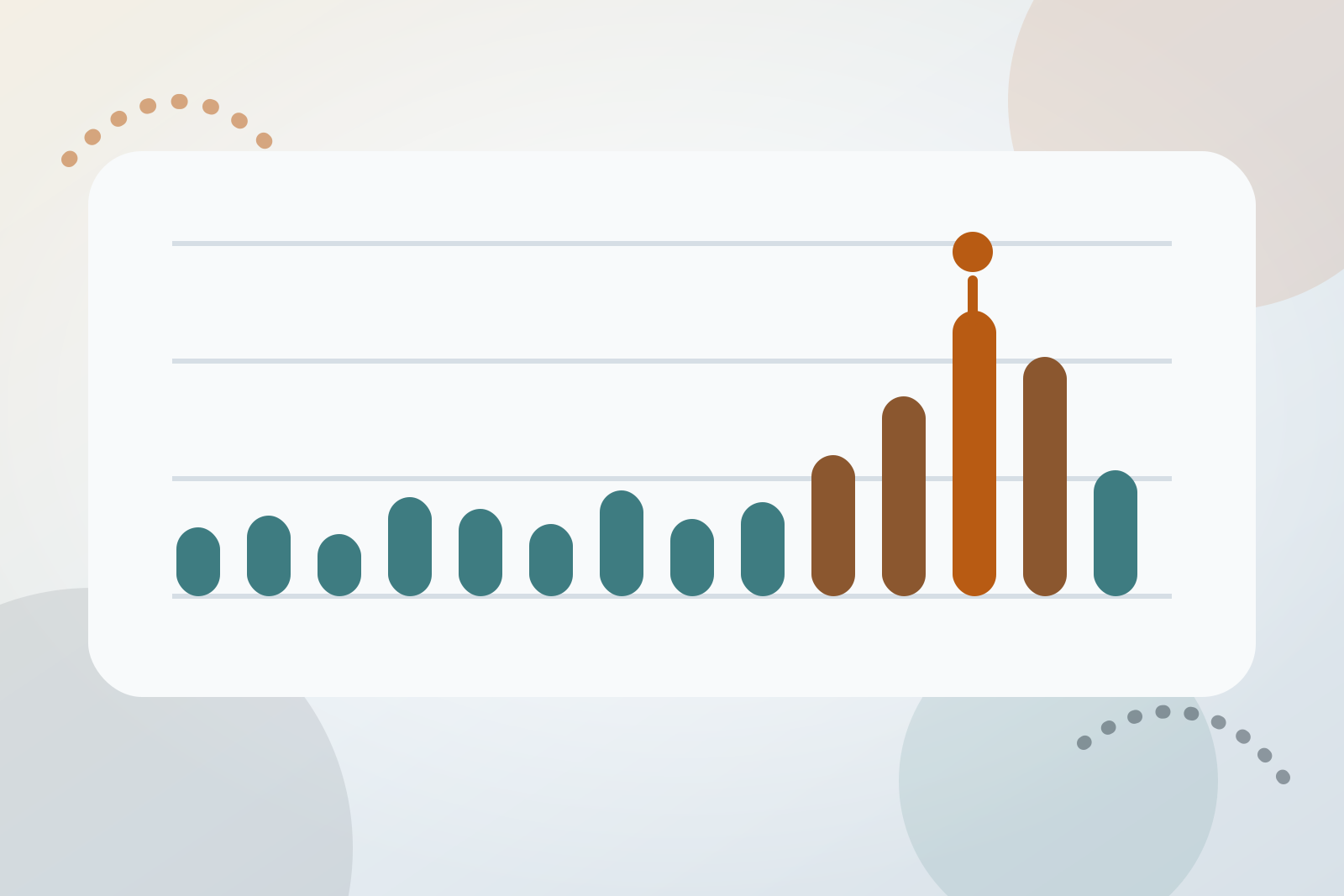
To identify your drinking triggers, write a short note each time you want a drink or have one. Record the time, the place, who was there, how you felt, and what happened just before. After a week or two of notes, go back through each drink and trace what led up to it. Then compare those moments with evenings that went differently. The trigger you can act on is usually a combination that repeats, such as "Thursday, after the late meeting, home alone, wine already in the fridge," not one dramatic cause.
The aim is not to prove why you drink. It is to find a moment you can see coming and prepare for.
What counts as an alcohol trigger
The US National Institute on Alcohol Abuse and Alcoholism (NIAAA) describes two broad kinds of trigger. External triggers are people, places, things, and times of day. Internal triggers are thoughts, feelings, and physical sensations. NIAAA notes that external triggers are usually more predictable and easier to avoid. Internal ones can feel as if they pop up from nowhere.
Some examples of each:
- External: the walk past a particular shop, a friend you mainly see at the pub, opening the fridge while cooking, the end of a working week, a match on TV.
- Internal: frustration after a phone call, a tense jaw, a thought such as "I've earned this," tiredness, or feeling good and wanting to celebrate.
Pleasant feelings count too. NIAAA notes that a positive emotion can set off an urge as well as a negative one. If you only look for stress, you can miss the good-news drink.
Drinkaware puts the purpose simply: being aware of your triggers is the first step towards being able to control them. That applies whether you want to stop or cut down. If you track more than one habit, the general guide to identifying craving triggers covers the same idea across habits. This page focuses on drinking.
Check your safety before changing anything
Identifying triggers is a planning exercise. It does not tell you whether it is safe to stop.
The NHS warns that if you have become physically dependent on alcohol, stopping overnight could be harmful. It advises getting advice first about how to stop safely, including any medicine you may need. A GP is a good place to start. If you have ever had shaking, sweating, anxiety, or other withdrawal-type symptoms when you went without a drink, talk to a doctor before making a sudden change.
The NHS also says that visible shaking, confusion, hallucinations, or seizures after stopping need urgent medical help. Call emergency services (999 in the UK) or go to A&E, and do not drive yourself.
Step 1: Log urges as well as drinks
Most people only write something down when they drink. That gives you half the picture. An urge you rode out has the same trigger behind it, and it shows you a moment that went differently.
Keep each note short enough that you will actually write it:
- When: the day and approximate time.
- Where: the room, venue, or route.
- Who: alone, or with which people.
- Feeling: one or two words, such as tired, wound up, bored, or relieved.
- Just before: the last thing that happened.
- Outcome: urge only, or how many drinks.
For example: "Tue 6:40pm, kitchen, alone, wound up, inbox notification about tomorrow's deadline, urge only, made tea." Or: "Sat 8:15pm, friend's garden, four people, relaxed, someone handed me a beer, 4 drinks (planned 2)."
If writing in full sentences puts you off, how to journal about alcohol without writing an essay suggests ways to keep entries quick.
A paper notebook works fine. If you use Hard Bit on iPhone, the free logging and journal keep this record on your phone, and drinking stays separate from any other habit you track. Hard Bit Plus adds an on-device forecast of your difficult hour, built from your own entries. It makes no prediction with fewer than five entries and relies fully on your own history at around twenty. The Hard Bit overview explains how this works.
Step 2: Trace each drink backwards
This is the step most trigger lists skip. A drink rarely follows directly from a single cue. Usually there is a short chain:
time or situation → feeling or thought → cue or access → the pour
Take one entry and work backwards, link by link:
- What was in my hand or in front of me just before?
- What was I thinking a few minutes earlier?
- What happened earlier that evening or afternoon?
- Was the drink already in the house, or did I go out for it?
Someone might find that their "evening stress" drink really begins at 5:30pm, when they choose to walk home past the supermarket. The stress is real, but the route is the link they can change most easily.
Tracing the chain also stops you blaming the last link. "I drank because I opened the fridge" is accurate but not very useful. "I was hungry, there was no dinner plan, and the fridge was the first thing I opened" gives you three places to step in.
When the chain begins with conflict, alcohol cravings after an argument covers that situation in more detail.
Step 3: Separate first-drink triggers from "more than planned" triggers
If you are cutting down rather than stopping, there are two different questions:
- What starts the first drink? This is often a time, place, or routine, such as arriving home, the start of a meal, or the first round at a social event.
- What turns one drink into several? This is often something else entirely: a full bottle left open, refills offered without asking, staying past a certain hour, or a "might as well now" thought.
Mark each entry that went past what you planned, and ask what was true at the point you passed it. You may find the first drink is fairly stable while the extra ones cluster around one particular setting or companion. That tells you to plan for that setting, not to treat every drink as the same problem.
Step 4: Compare with the evenings that went differently
Clear evenings and urges you rode out are your comparison. Put a difficult entry next to a similar one that went another way. Ask what was different:
- Had you eaten?
- Was someone else at home?
- Was there alcohol in the house?
- Did you have plans for the next morning?
- Did you take a different route, finish work earlier, or go straight into another activity?
This turns the log from a record of failures into information. It often shows a protective condition you can deliberately repeat.
Look at timing, too. If entries keep landing in the same window, tracking the hours you are most likely to drink shows how to narrow "evenings" down to a specific hour. Treat early patterns as guesses to check, not rules. A handful of entries can suggest a pattern, but a holiday or an unusual week can change the picture.
Step 5: Test one trigger with one change
WithYou suggests writing down what tends to happen before you drink, then trying to avoid those triggers. NIAAA adds that not every trigger can be avoided, especially internal ones, so you also need a planned way to respond.
Pick the combination that repeats most often, or the one that causes the most harm, and write one specific change:
- Trigger: weekday, 6–7pm, home alone, hungry, wine in the fridge.
- Change: no wine kept at home on weekdays, and a simple dinner planned before leaving work.
- Backup: if the urge still arrives, a walk outside or a message to a friend.
Run it for a while and keep logging. If the urges move to a different hour, that is useful information, not a failure. For the evening window in particular, build a plan before evening cravings start.
This step is practical editorial advice, not a clinical protocol. If several honest attempts do not change the pattern, that is a reason to get more support, not a reason to try harder alone.
Review gently: looking back can stir up urges
NIAAA's worksheet notes that recalling the details of an urge can itself set one off. It suggests that if you are unsure about doing this alone, you could do it with a therapist, a doctor, or someone you trust. Plan your review with that in mind:
- Review at a time that is usually easy for you, not during your difficult hour.
- Keep it short, around ten minutes, and finish with one decision rather than a long reflection.
- Use neutral language. "Drank 3 after the work call" is more useful than "Failed again."
If a review leaves you wanting a drink, stop and use your usual plan for an urge. How to track alcohol without turning it into shame has more on keeping the record honest without it becoming a weapon against yourself.
When the pattern points to more support
A trigger log can show things that need more than a plan. Look out for:
- drinking earlier in the day, or to stop feeling unwell,
- shaking, sweating, or anxiety when you go without,
- drinking that keeps going past what you intended despite clear plans,
- drinking in unsafe situations, such as before driving or while caring for someone.
These are reasons to speak to a GP, a doctor, or a local alcohol service. Your log can help you explain what has been happening, but it cannot diagnose anything or tell you what level of care you need. If you are in immediate danger, or thinking about harming yourself, contact emergency services.
Our editorial policy explains how we separate health guidance from product information.
Frequently asked questions
How long should I log before I can identify my triggers?
There is no set number of days. NIAAA suggests tracking urges for a couple of weeks. Obvious triggers may show up within a few entries. Patterns tied to the day of the week or a specific hour need more weeks to compare. Treat early findings as guesses and keep updating them.
What if I can't tell what triggered a drink?
Write "unclear" and record what you can: the time, place, and how you felt physically. Tiredness, hunger, and routine are easy to miss because they feel ordinary. Unclear entries often make sense once they are set next to others.
Should I avoid all my triggers?
Avoiding high-risk situations can be sensible, especially early on. Some triggers, such as feelings, work stress, or family events, cannot be avoided. Those need a planned response and, where needed, support from other people or professionals.
Are drinking triggers different if I'm cutting down rather than stopping?
Often, yes. Alongside what starts the first drink, track what leads to drinking more than you planned. Those are frequently different situations, and each needs its own plan.
Can triggers change over time?
Yes. A new job, a move, a relationship change, or the time of year can bring new triggers or weaken old ones. Repeat the review whenever your routine changes.



