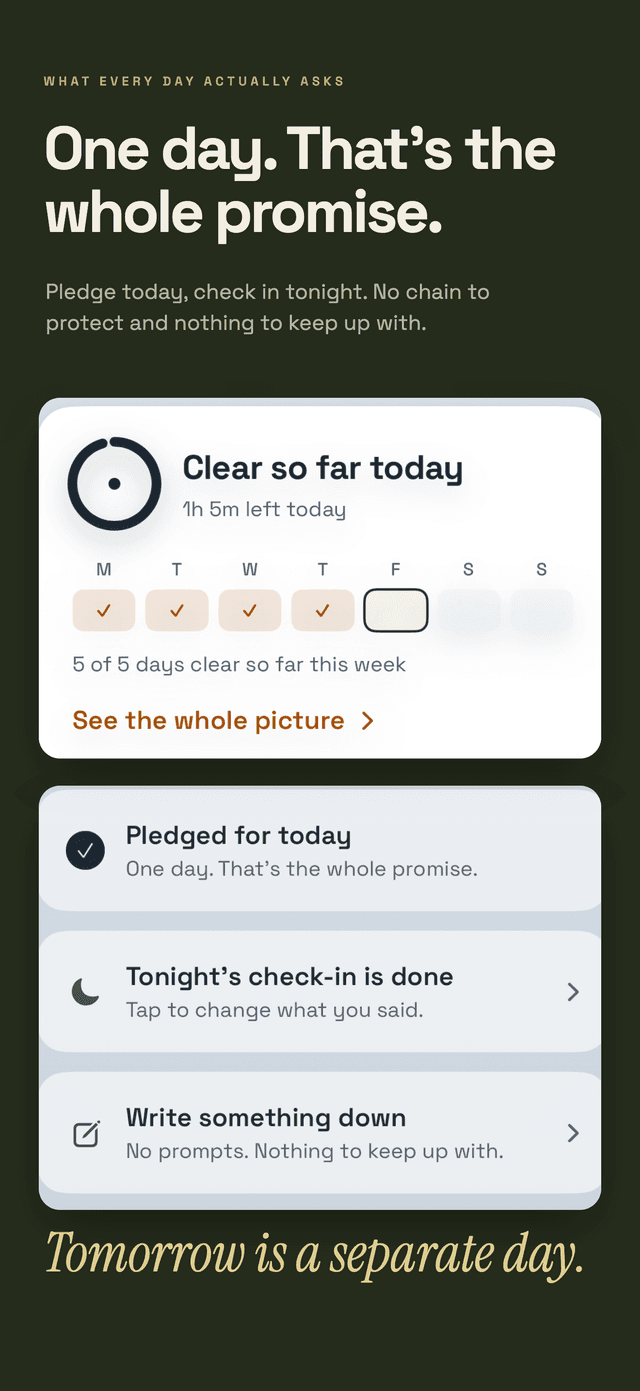

If you want to see gaming progress without streaks, replace the single all-or-nothing number with a small set of measures that survive an imperfect week: the ratio of clear days, how many hours you played, how late sessions ran, urges that ended without gaming, and how quickly you returned to your plan after a difficult night. Together these show direction even when no week is perfect.
This matters because a streak is the most fragile way to measure change. One late session deletes it, and the deleted number tells you nothing about the twenty-six good days before it.
Why a perfect streak is a weak measure
A streak answers exactly one question: how many days in a row since the last reset. It cannot tell you whether your sessions are shorter, whether you stopped playing at 2am, whether you spent less, or whether the urge at 9pm now passes without a login.
There is also an uncomfortable irony worth knowing. Streaks are a mechanic the gaming industry itself uses to keep people playing daily. Google Play's own documentation describes streaks that grow when you play at least five minutes a day, a longest-streak tally, rewards, and restore tokens to rescue a broken run. It is a design built to make missing a day feel costly. Borrowing the same design to measure your progress away from gaming imports its pressure, and for many people that pressure is part of what they are trying to leave.
None of this means streaks are useless for everyone. Some people find a simple counter motivating. The problem is making it the only measure, because then one difficult night erases the visible evidence of weeks of effort.
Decide what progress actually means for you
Before choosing numbers, choose the goal they serve. WHO defines gaming disorder, a formally recognised diagnosis in ICD-11, around impaired control, gaming taking priority over other activities, and continuing despite negative consequences, usually over at least twelve months. WHO also notes it affects only a small proportion of people who game. Most people looking to change their gaming are not in that diagnostic category; they want their evenings, sleep, or money back.
That means progress is personal, but it is rarely “days since last game” alone. More honest definitions include:
- Stopping entirely: clear days matter, but so does what replaces the time.
- Cutting down: shorter sessions, fewer sessions per week, no late-night play, spending within a set limit.
- Regaining function: sleeping before midnight on work nights, finishing study or chores first, seeing friends, keeping gaming from cancelling other plans.
Hard Bit supports both directions: you can choose to stop or cut down for each habit, and gaming keeps its own counter, logs, and units. The Hard Bit overview explains how each habit's record stays separate, which matters because progress in gaming should not be blurred together with anything else you track.
Track a set of measures instead of one number
Pick three to five measures and keep them stable for a month. Good candidates:
- Clear-day ratio. “24 of 30 days without gaming” keeps the six difficult days in the picture without pretending the other 24 vanished. The guide to measuring clear days without streak pressure shows how to count them inside a fixed window without hiding missed days.
- Total hours per week. A week at six hours is meaningfully different from a week at twenty, even if both contain a session you regret.
- Session length. “One more match” becoming the whole night is a different problem from a contained hour after dinner.
- Latest finish time. For many people the harm is not gaming itself but gaming that eats sleep.
- Spending, if relevant. In-game purchases deserve their own number.
- Urges handled. How often did an urge arrive and end without gaming? That is a skill improving, and it never appears on a streak.
You can keep these on paper or in a notes app. If you prefer a private log on your phone, tracking gaming without turning it into shame covers how to keep the record honest rather than punishing.
Measure the hours, not just the days
Where gaming sits in your day often matters more than whether it happened at all. A Sunday afternoon session with friends is a different signal from a solo session that starts at 11pm and ends at 3am.
So when you review, look at timing:
- Which hours does gaming occupy now, and which did it occupy a month ago?
- Are weeknights improving even if weekends lag?
- Did late-night sessions get earlier, shorter, or rarer?
This is also where preparation pays off. Changing the hours around your gaming shows how shifting dinner, exercise, or wind-down routines changes what the evening offers. When you change the hours, your timing measures are how you find out whether it worked.
Hard Bit's Plus features lean on the same idea: the app learns your difficult weekday and hour from your own logged history on-device, makes no prediction at all under five entries, and relies fully on your data only at about twenty. The restraint is the point. A pattern deserves some evidence before it is treated as one.
Count the recoveries, not just the clear days
Two measures are invisible on any streak and worth tracking deliberately.
Redirected urges. Each time an urge showed up and you did something else, note it. Over a month this count often rises before the clear-day count does, and it is direct evidence that a skill is developing. If you want a plan ready before the next one, making a craving plan for gaming before you need it walks through preparing one.
Speed of return. After a night that went wrong, how long before you were back on your ordinary plan? Shrinking that from a lost week to a lost evening to a single session is real progress. A streak counter records all three identically: zero.
A journal entry helps here. One honest line, “played until 1am after the match, back to normal routine the next morning,” is worth more than a reset counter, because next month you can compare it against itself.
Review weekly, and read the numbers generously
Set a short weekly review, ten minutes is enough, and ask:
- Is the clear-day ratio holding or rising across weeks, not days?
- Are hours and latest finish time moving the right way?
- Which evenings keep going wrong, and what do they have in common?
- Did anything get worse: spending, sleep, conflict at home?
Read the record the way you would read a friend's, not a rival's. A bad week after three good ones is a bad week, not a verdict. Equally, do not use “progress is more than a streak” as a way to avoid noticing a genuine slide. The measures exist to show reality in both directions.
When the numbers point to more support
Sometimes a month of honest tracking shows that willpower and planning are not the missing piece. Signs that deserve outside help include gaming you repeatedly cannot limit despite trying, escalating spending, lying to people close to you, or clear damage to sleep, work, study, or relationships.
In the UK, the NHS National Centre for Gaming Disorders is a specialist clinic for people aged 13 and over in England whose gaming feels difficult to control; its focus is gaining more control and increasing other activities, and it accepts self-referrals. Your GP is a reasonable first step anywhere. If you ever feel in crisis or at risk, contact your GP, local mental health team, or emergency services rather than relying on any app or article. The Hard Bit support page also lists routes to help.
A tracker, including Hard Bit, is a way to see your own pattern clearly. It cannot assess whether you meet criteria for a diagnosis, and it is not treatment. What a clear record can do is make a conversation with a professional much more concrete.
More practical guides on tracking, triggers, and planning are in the Hard Bit blog.
Frequently asked questions
Is a streak ever useful when cutting down gaming?
It can be, as one measure among several. The risk is letting it be the only one, because then a single late night erases weeks of shorter sessions, earlier finishes, and handled urges. Keep the streak if it motivates you, but keep the fuller record too.
What if I am cutting down rather than quitting?
Then a streak of clear days barely applies, and the other measures matter more: weekly hours, session length, latest finish time, spending against your limit, and whether gaming is crowding out sleep, work, or people. Define your limits in writing first so the numbers have something to be measured against.
How long before I can call it progress?
There is no fixed timeline, and honest measures beat calendar milestones. Look at trends across weeks rather than single days: a rising clear-day ratio, falling weekly hours, and earlier finish times over a month are progress even with imperfect days inside it. If nothing improves after a month or two of genuine effort, treat that as information and consider outside support.
Does tracking itself become another obsession?
It can if you check it constantly. Keep entries short, review once a week, and let the record sit quietly between reviews. If you notice the tracking creating more anxiety than clarity, simplify it to two or three measures or take a planned break from reviewing.