
The easiest way to track craving duration is to record it once the urge has passed, not while it is happening. Glance at the time once when you notice the urge, then put the clock away. Afterwards, write down what the craving lasted through, such as "through the shower" or "until I got back from the shop", and pick a rough band: under 5 minutes, 5–15, 15–30, or longer. Over a few weeks, those bands tell you more than a stopwatch would.
You are not measuring the craving like a lab experiment. You are building a rough record you can compare with your own later entries.
Why duration is worth recording at all
Many urge logs ask how long each craving lasted. SMART Recovery's Urge Log has a "length of urge" column next to date, time, strength, trigger and how you coped. Researchers describe craving in the same terms. A review of alcohol-craving measurement published in Addictive Behaviors in 2013 describes cravings as events with frequency, duration and intensity. It suggests tracking the peak strength of craving each day, along with how often episodes happen and how long they last.
For you, duration answers a practical question that intensity misses. Two urges can both feel like 7 out of 10. One might fade while the kettle boils. The other might hang around all evening. Those call for different plans.
What this does not mean: no reliable source gives a fixed length that all cravings follow. Some websites quote neat figures, but duration varies between people, habits and situations, and from one day to the next for the same person. Your log describes your own pattern. It does not set a deadline the craving has to meet.
Why watching the clock can backfire
A countdown sounds disciplined, but it keeps your attention on the urge. Every check on the timer is another moment spent asking "Is it still there?" For some people that question becomes the hardest part of the craving.
There is a quieter problem too. If you expect a craving to end by a certain minute and it doesn't, it is easy to conclude that the plan has failed. For some people, that can make giving in feel more justified. NIAAA describes riding out an urge by accepting it as normal and temporary rather than fighting it. A ticking timer makes that kind of acceptance harder.
So collect the information without making the clock part of the coping. During the urge, your job is the next action. Recording comes later.
If you need something to do during those minutes, How to Handle a Craving in the Moment gives a short sequence that doesn't involve a timer.
Step 1: mark the start with a single glance
When you notice the urge, glance at the time once. Your lock screen, a microwave display or a station board will do. Then stop checking.
If even that feels like too much, skip it. You can usually rebuild the start time afterwards from things that left a timestamp:
- the time of the message or notification that came just before,
- when you left work, finished a meal or got home,
- the time on a log entry made near the start,
- when the match, show or shift ended.
A start time accurate to within ten minutes is plenty. You are looking for broad patterns, not exact measurements.
Step 2: let ordinary events mark the middle
Instead of minutes, notice what the urge lasted through. Events are easier to remember than numbers, and they give you a natural point to check in that isn't a clock.
Examples:
- "Still strong after I made tea. Weaker once I was in the shower."
- "Lasted the whole walk to the bus stop, gone by the time I sat down."
- "Came back twice during the film, quiet after it finished."
The last example matters. Cravings don't always rise once and fade. They can return several times. Writing "came back twice" is more accurate than forcing it into one start and one end.
If you practise urge surfing, these event markers fit well with it. You notice the urge rising and falling without timing it. What Is Urge Surfing and How Can You Practise It? explains the technique. Remember it is a way of coping, not a promise about how long the urge will last.
Step 3: record a band, not a number
Once the urge has eased, or at the end of the day, put the episode in a band:
| Band | What it might look like |
|---|---|
| Brief | Under 5 minutes; gone before the first action finished |
| Short | 5–15 minutes; lasted through one ordinary task |
| Long | 15–30 minutes; needed more than one action |
| Extended | Over 30 minutes, or came back repeatedly |
Bands are honest about how rough memory is. "Short" is a claim you can stand behind. "Eleven minutes" usually isn't. Bands are also quicker to write, which makes it more likely you will keep recording on difficult days.
Use the same bands every time. Like a 1–10 strength scale, they only need to be consistent with your own earlier entries, not scientifically precise.
A complete entry might read: Thursday, about 9:15pm, after the late shift. Strength 7. Long, through tea and a shower. Came back once around 10. Phone on charge in the kitchen helped.
Step 4: add the context that explains the length
On its own, a duration says very little. Next to the band, record:
- Peak strength, on your usual scale.
- What came just before: the cue, place, feeling or routine.
- What you did, and whether it seemed to help.
- Whether you used, written plainly and without judgement.
That last point matters. If a craving ended because you acted on it, the band still goes in the log, marked as such. Leaving those entries out would make your typical craving look shorter or more manageable than it is. An honest record is more useful than a flattering one.
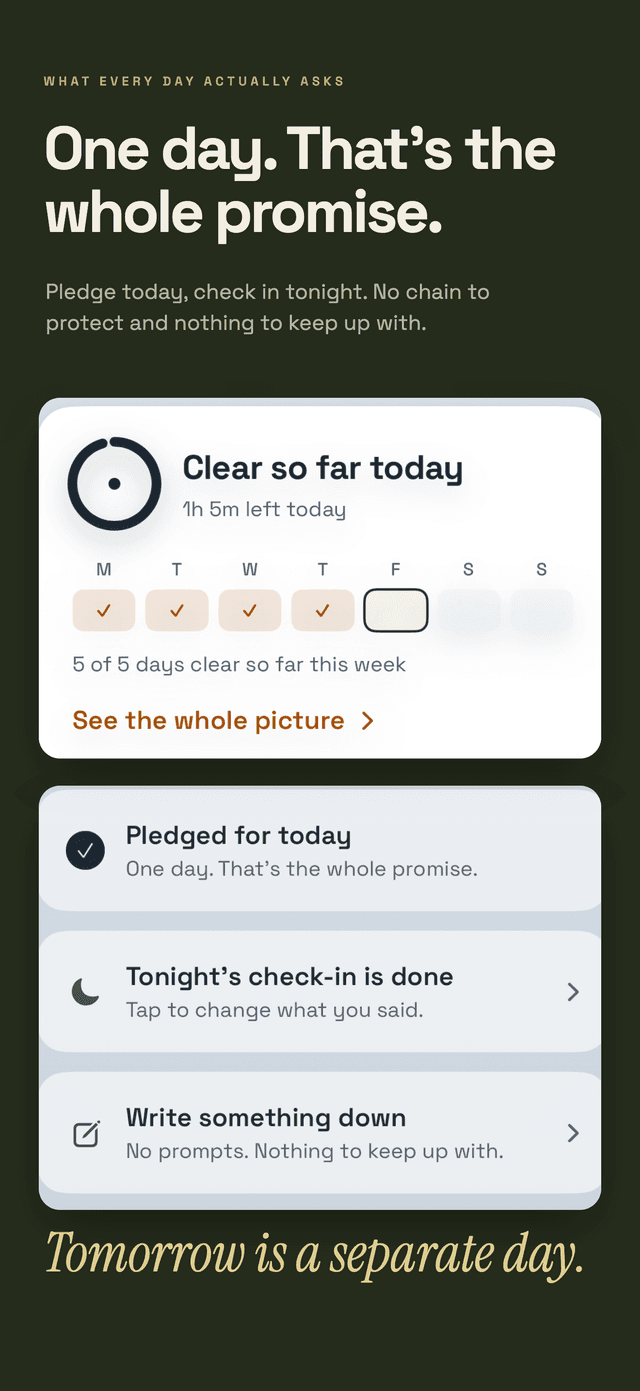
If you use Hard Bit, each habit keeps its own logs, so a drinking urge and a vaping urge stay in separate records. Log the urge as usual and keep the band and event anchor in the journal. Logging and the journal are free. The timestamps also feed the difficult-hour forecast, which is part of the subscription and makes no prediction until you have at least five entries. The Hard Bit overview explains how it works. A paper notebook works for the same method. What matters is using the same bands every time.
Step 5: review duration alongside time and frequency
After a week or two, look at the bands together with the rest of the log. SMART Recovery presents its Urge Log as a way to notice patterns that only show up across several entries. Useful questions include:
- Do long or extended urges cluster at a particular hour or weekday?
- Does one action keep showing up next to brief or short bands?
- Are there fewer urges overall, even if some are still long?
- Do repeated cravings that come back follow the same cue?
Read changes carefully. A move from mostly "long" to mostly "short" over several weeks may be worth noticing. A single short week may be a holiday, an illness or a quieter schedule. How Many Logs Do You Need Before a Pattern Means Anything? explains why early patterns should stay provisional.
For a structured review, How to Review a Week of Craving Logs walks through one sitting from start to finish.
NIAAA notes that going back over the details of past urges can itself set off an urge. If reviewing feels risky, keep it short, do it at a calmer time of day, or go through it with a trusted person or clinician.
Use what you learn to plan the next difficult stretch
The practical payoff is planning for the length your cravings actually tend to have. If your Thursday-evening urges are usually "long", one quick distraction probably won't cover them. You may need two or three actions in a row, or a change of place that lasts. How to Choose One Action for a Difficult Twenty Minutes can help you build that sequence.
Smokefree.gov recommends having strategies ready before a craving arrives. Its options include contacting someone for support, keeping busy, moving, slow breathing and changing what you are doing or where you are. For nicotine, an official quit service can also explain evidence-based support and medicines. A log can show where you need that support, but it can't replace it.
Some patterns call for more than a better plan: extended urges alongside shaking, sweating or confusion; cravings tied to rising debt; or urges that come with thoughts of harming yourself. If you might be physically dependent on alcohol or sedatives, get medical advice before stopping, because sudden withdrawal can be dangerous. If gambling is putting money at immediate risk, bank gambling blocks, self-exclusion schemes and specialist gambling support services can help faster than any log. In an emergency, contact emergency services.
Our editorial policy explains how we separate general guidance from product information.
Frequently asked questions
Is it wrong to use a timer at all?
No. If a timer genuinely helps you stay with a plan, keep it. The method here is for people who find that watching the clock makes the urge louder or feels like waiting for it to "expire". Either way, treat the reading as information, not a deadline.
What if I can't remember how long it lasted?
Use the nearest event anchor and a broad band, or write "unsure". An honest gap is better than a guessed number, and one missing duration won't spoil a week of entries.
Should cravings get shorter over time?
They might, but there is no guaranteed timeline, and length can change with stress, sleep, routine and access. Look at duration together with frequency and strength. Fewer urges, or ones that are easier to get through, can matter as much as shorter ones.
How do I record a craving that keeps coming back?
Record it as one episode with a note such as "came back twice", or as separate entries if the gaps were long. Choose one approach and stick to it so your weeks stay comparable.