To track gambling without shame, record what happened without turning the entry into a statement about who you are. Note the time, situation, urge, money and time involved, and what you did next. Include urges that passed without gambling and keep difficult days in the same history as gambling-free days.
Review the record at a planned time rather than whenever regret appears. Its purpose is to reveal one changeable part of the pattern, not to score your character.
Build the record for facts, not verdicts
Gambler's Help distinguishes guilt about an action from shame directed at the whole person. “I did something I regret” leaves room for repair. “I am a bad person” turns an event into an identity.
That distinction matters when you design a gambling log. Compare:
- “Pathetic. Lost again.”
- “Saturday, 9:40pm; alone after the match; deposited £60; stopped after about forty minutes.”
The second entry does not minimise the money or the consequences. It records details that can inform a decision. The first contains no time, cue, amount or next step.
Research also gives a reason to take this seriously. A 2022 review in Current Addiction Reports found that shame and fear of stigma are common barriers to seeking help for gambling problems. It also reported associations between self-stigma, lower self-esteem and reduced help-seeking. A 2024 PLOS ONE study of UK peer-support forum posts identified self-stigma and anticipated stigma as prominent themes, with recurrence periods linked to heightened stigma and distress.
These findings do not prove that a particular diary format reduces shame. They do support avoiding language that reinforces concealment or self-attack.
Use a short entry you can complete honestly
Gambling Help Queensland suggests recording the situation, thoughts and feelings before gambling, the decision to play, what happened while playing, and how you feel about gambling. GamCare also provides a free gambling diary, mood diary, and Access, Time and Money worksheet.
A practical entry can use these fields:
- Date and time
- Situation: where you were and what you were doing
- Immediate cue: what happened just before the urge
- Urge strength: using the same personal scale each time
- Action: what you did next
- Money: deposited, staked or lost, using the clearest figure available
- Time: approximate session length
- What helped: even if it helped only slightly
A copyable version is:
Time:
Situation and cue:
Urge:
What I did:
Money and time involved:
What helped or needs to change:
Do not force uncertain figures into false precision. A bank transaction may show when money moved, not exactly when a session began. Label estimates as estimates and use operator records where they provide clearer amounts or times.
If privacy affects what you are willing to record, check the private gambling tracking guide for iPhone before choosing an app, notebook or exported file.
Write the event in neutral language
Neutral does not mean vague or forgiving about harm. It means describing the event without adding an insult.
Try changing:
- “No self-control” to “Checked my balance during a work break; urge 5/10; closed the app; £0.”
- “Ruined the month” to “Third session this month; two occurred on payday; £185 lost in total.”
- “I always do this” to “This happened on the last two Saturday evenings.”
Feelings can remain in the record. “Felt ashamed and frightened afterwards” describes your experience. “I am a disgrace” assigns a permanent trait.
Gambler's Help recommends naming the emotion without judgment and moving from repeated analysis toward a plan. After describing the event, add one practical question:
What is the earliest part of this sequence I could change next time?
That might be a notification, an available balance, being alone after a match, or opening an account before the urge became strong.
Record what did not happen too
A log containing only gambling sessions gives you an incomplete picture. Add brief entries for:
- an urge that passed without gambling,
- a day you observed and did not gamble,
- a barrier you used,
- a support contact you made,
- a situation that usually leads to gambling but did not this time.
Gambling Help Queensland specifically recommends recording non-gambling days and achievements such as resisting an urge or finding enjoyment elsewhere.
Keep missing days separate from observed gambling-free days. If you cannot reliably say what happened, mark the day as unobserved rather than filling the gap with the result you hoped for.
Several progress measures can sit beside one another:
- gambling-free days out of observed days,
- sessions per week or month,
- money and time involved,
- urges that did not become sessions,
- barriers or support contacts used,
- how quickly you returned to the plan.
This preserves difficult entries without pretending earlier progress disappeared. The broader guide to responding after a slip without erasing your progress explains that approach.
Review on a schedule and use a stopping rule
Reviewing can reveal patterns. Re-reading every entry whenever shame appears can become rumination.
Choose one regular review period, such as ten minutes each Sunday. Ask:
- Which situation repeated?
- What happened immediately before the urge?
- What was different when gambling did not happen?
- Is money, time or distress increasing?
- What one change will I make before the pattern returns?
Then stop. Write the next action and close the record.
Gambling Help Queensland recommends reviewing a diary weekly and using it for at least twelve weeks. Treat that as one service's suggested routine, not a universal threshold. Useful information may appear earlier, while sparse or disrupted records may need longer.
Do not declare a pattern from a few entries. The guide to tracking the hours you are most likely to gamble explains how to compare repeated periods without treating them as predictions.
If reviewing repeatedly increases distress, compulsive checking or avoidance, simplify the entry, review less often, pause the exercise, or discuss another approach with a gambling counsellor.
Turn one pattern into one practical change
Tracking is useful only when it informs action. Convert the clearest repeated sequence into an if-then plan:
If match alerts arrive on Saturday evening, I will turn them off and put my phone outside the living room before the match ends.
The next step may instead be:
- removing stored payment methods,
- asking your bank about a gambling-payment block,
- paying essential bills on payday,
- arranging company during a repeated high-risk period,
- using self-exclusion or blocking software,
- contacting a gambling service or debt adviser.
The NHS recommends options including GAMSTOP, Gamban, bank gambling blocks, paying important bills on payday, and addressing debt rather than ignoring it. These are stronger barriers than a diary because they can limit access. A record should help you choose and test barriers, not replace them.
If an urge is already intense, prioritise safety, access barriers and support. Complete the entry later. The guide to handling a craving in the moment provides a shorter response sequence.
Where Hard Bit fits
Hard Bit is an optional iPhone craving tracker. It is not a gambling blocker, treatment service, diagnostic tool or betting-performance tracker.
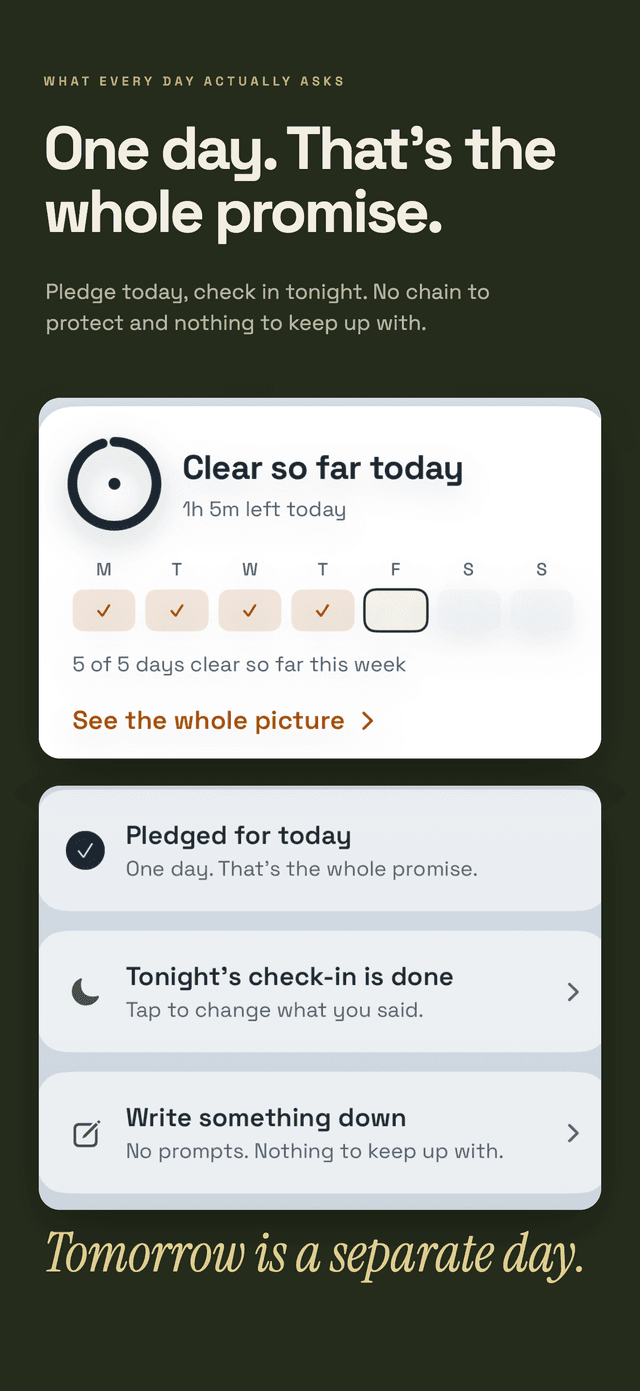
It keeps each habit in a separate on-device record. You can choose to stop or cut down, and logging a session keeps earlier gambling-free days in the history rather than erasing them.
The counter, hard-moment flow, personal sentence, logging, journal, milestones, help links, export and deletion are free. Hard Bit Plus adds the on-device difficult-hour forecast and warning, patterns and calendar, widgets, and short reads. The forecast makes no prediction below five entries and relies fully on your own history at around twenty.
Hard Bit requires no account and has no social feed, advertising, third-party analytics or server copy of your entries. An exported file becomes a separate copy under your control.
The Hard Bit overview explains the workflow. The support page documents the app lock, privacy controls, export, deletion, and free and subscription features.
Know when tracking should lead to help
Act promptly if the record shows rising spending, chasing losses, borrowing, missed bills, relationship conflict, severe distress or repeated failure of protective barriers.
The NHS publishes a nine-question gambling self-check. It says a score of 8 or more means gambling-related harms are likely for you or those close to you. A score from 1 to 7 may still indicate a negative effect. The result is a prompt to consider support, not a diagnosis.
In Great Britain, the National Gambling Helpline run by GamCare is free on 0808 8020 133, 24 hours a day, seven days a week. The NHS also lists specialist gambling clinics in England that accept self-referrals and points to National Debtline for debt advice. Elsewhere, contact an appropriate local gambling-support, health or debt-advice service.
If gambling is seriously affecting your mental health, seek urgent mental-health support. Contact emergency services if you are in immediate danger or thinking about suicide.
Our editorial policy explains how Daily Life Apps separates health guidance from product information.
Frequently asked questions
Can tracking gambling make shame worse?
It can if entries become insults, grades or material for repeated self-criticism. Keep the wording factual, limit reviews to a planned time, and stop or simplify the exercise if it consistently increases distress without supporting action.
What should I write after a gambling session?
Record the time, situation, immediate cue, urge, money and time involved, what happened next, and one possible earlier change. One factual paragraph is enough.
Should I keep an entry I regret?
Keeping it usually makes the history more accurate, but privacy and safety come first. If you remove an entry, do so deliberately and remember that exported files or backups may contain separate copies.
How long should I keep a gambling diary?
There is no universal minimum. Gambling Help Queensland recommends at least twelve weeks, but useful patterns may appear sooner. Review the quality and coverage of your observations rather than treating a fixed duration as proof.
Is a tracker enough to stop gambling?
No. A tracker can show patterns, but it does not block access or assess your situation. Use self-exclusion, blocking tools, bank controls, debt advice, trusted support and professional care where appropriate.