To track time of day cannabis use, record when each session starts and how long the first session came after waking. At the end of the day, mark equal two-hour windows to distinguish the first session, later use, urges that did not lead to use, clear periods, and hours you did not reliably observe.
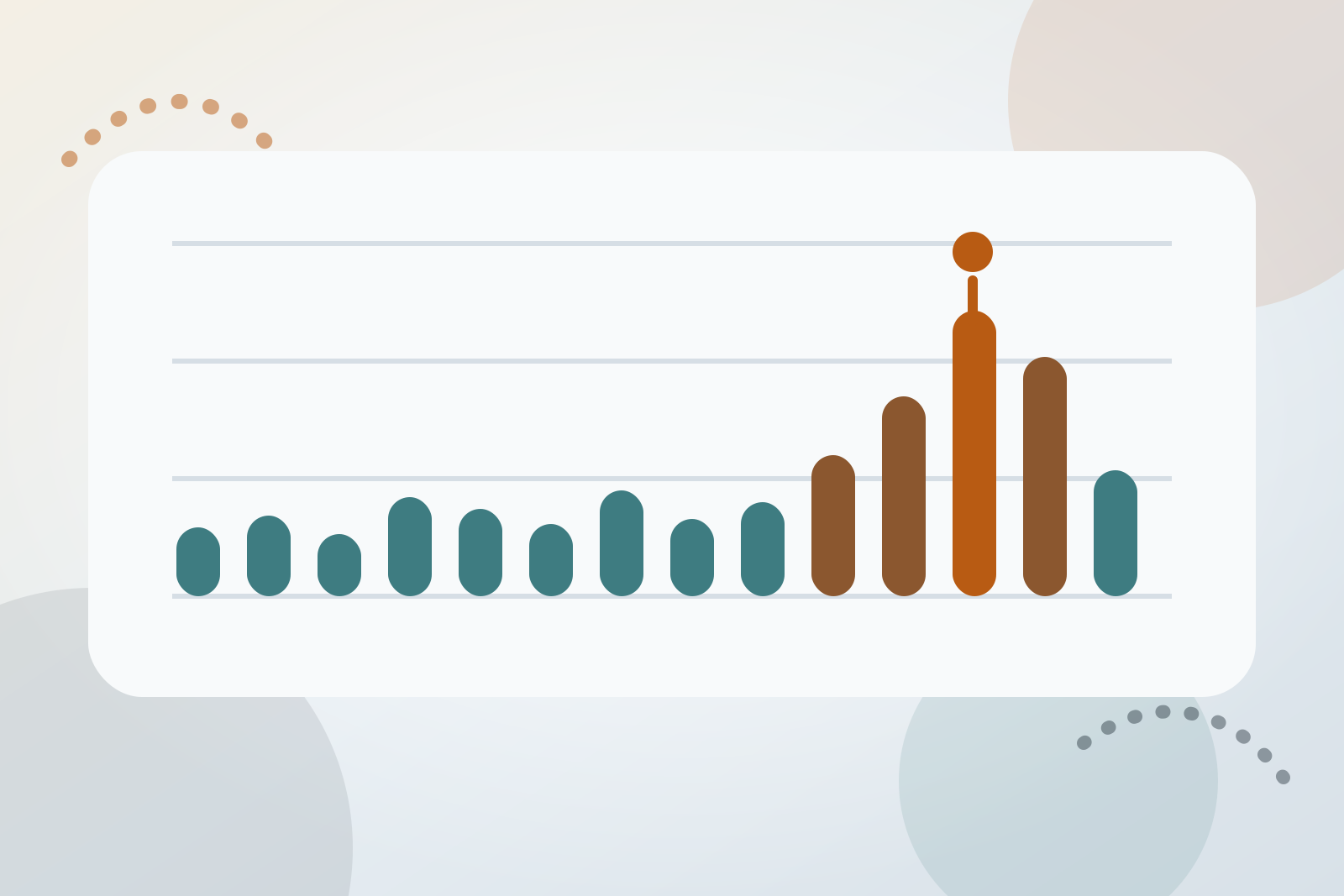
Review the record after about two weeks. Instead of concluding that you use “all evening,” you may find that your first session began between 6pm and 8pm on 9 of 13 observed evenings. That is a recent pattern you can prepare for, not a prediction.
Decide which time you want to understand
Start with three separate questions:
- When does the day's first session begin?
- When does later use happen?
- How close is the last session to sleep?
The first session is often the clearest planning target because it marks where use begins that day. Later sessions show how use continues, while the final session may reveal a connection with bedtime.
Define “session” before you begin. You might count each separate occasion when you intentionally smoke, vape, or consume cannabis. There is no universal personal-log definition, so choose a rule you can apply consistently.
If cannabis is prescribed, use the log to inform a conversation with your prescriber. Do not change a prescribed dose or schedule based only on this worksheet.
Record each session close to the event
WithYou recommends keeping a simple cannabis diary for about a week and recording the day and time, place, people present, amount used, and feelings before and after. This method adds a more detailed time comparison and can be continued for about two weeks.
Record:
- Start time, to the nearest fifteen or thirty minutes.
- Time since waking, for the first session.
- First or later session, using the same definition each day.
- Immediate context, such as “home alone after work.”
- Urge strength, using one consistent personal scale.
Record when you consumed cannabis, not when you first felt an effect. FRANK says smoked cannabis is normally felt within a minute or two, while eaten cannabis takes about 45 minutes on average. Logging an edible by its later effect would put the decision in the wrong window.
If you mix cannabis with tobacco, add a tobacco field. Nicotine use and withdrawal may follow a different pattern, so keep the habits in separate records even when they occur together.
Never log while driving. FRANK warns that driving while high can double the chance of a serious or fatal crash. Attend to safety and make the entry later.
Mark observed and unobserved windows differently
At the end of each day, divide your waking hours into equal two-hour windows. Two hours is a practical choice, not a clinical standard.
Use five marks:
- F: the first session started,
- L: later use occurred,
- U: an urge occurred without use,
- C: observed and clear,
- —: asleep or not reliably observed.
| Day | Woke | First session | Gap after waking | Later sessions | Last session | Context |
|---|---|---|---|---|---|---|
| Monday | 7:10am | 6:45pm | 11h 35m | 2 | 10:20pm | Home after work |
| Tuesday | 7:00am | 8:15am | 1h 15m | 3 | 11:15pm | Before commuting |
| Wednesday | 7:05am | — | — | 0 | — | Ate out with friends |
Clear and urge-only windows prevent the record from presenting use as inevitable. An unobserved period is not a clear period.
Use the broader trigger guide if places, people, feelings, or events appear more important than the clock.
Compare each window with observed days
After about two weeks, summarize the entries:
| Window | Days observed | First sessions | Later use | Urge only | Common context |
|---|---|---|---|---|---|
| 7–9am | 14 | 2 | 0 | 4 | Before leaving home |
| 4–6pm | 13 | 1 | 1 | 3 | Finishing work |
| 6–8pm | 13 | 9 | 2 | 1 | Cooking alone |
| 8–10pm | 12 | 1 | 8 | 1 | Watching television |
Describe the result as a fraction: “The first session began from 6pm to 8pm on 9 of 13 observed evenings.” This keeps the small sample visible.
Compare weekdays and weekends separately. Two weeks provides only two examples of each weekday, so it cannot establish a permanent pattern. Continue for another week if illness, travel, visitors, shift changes, or missed entries made the period unusual.
A steady gap after waking may matter even when clock times vary. For example, changing work shifts could move the first session from 10am to noon while leaving it consistently about an hour after waking.
Interpret morning use without diagnosing yourself
A peer-reviewed study examined cannabis-use timing in four independent samples of US college students. Each analysis produced five groups: daily-morning, daily-non-morning, weekend-morning, weekend-night, and weekend-evening use. Groups involving daily or morning use reported greater use and more negative consequences on average.
Those findings describe associations within particular student samples. They do not establish that timing caused the consequences, apply equally to everyone, or show what one morning entry means for you.
NHS inform says prolonged daily cannabis use may lead to tolerance, a need for more to obtain the same effects, or dependency. A log may reveal that use has become more frequent or moved earlier. It cannot diagnose dependence or determine the support you need.
Test one change before the repeated window
Choose one small change that starts before the busiest first-session window:
- eat before the window begins,
- change the first activity after arriving home,
- arrange a call or walk,
- prepare a specific alternative activity,
- make access less immediate without creating risk for anyone else.
Write one if-then plan:
If I arrive home before 6pm, I will eat and walk around the park before sitting down.
WithYou suggests delaying a session by five minutes while doing something else, then gradually trying ten or fifteen minutes. Treat delay as space to decide, not a promise that an urge will end on schedule.
You can also practise urge surfing while calm. Keep logging for another week and compare the same windows. If the plan does not hold, retain the entry and review the slip without erasing earlier progress.
Allow for withdrawal when the pattern changes
Cutting down or stopping can temporarily change the hours that feel most difficult. WithYou says cannabis withdrawal symptoms usually peak about four days after cutting down or stopping. It says most symptoms stop by ten days, although some people experience them for up to four weeks. Individual experiences vary.
Possible symptoms listed by WithYou and NHS inform include sleep problems, vivid or unusual dreams, irritability, anxiety or restlessness, low mood, concentration difficulty, appetite changes, and cravings. If you also stop tobacco, nicotine withdrawal may overlap.
Mark a change in use on the log so you do not mistake a temporary cluster of late-night urges for a permanent pattern. Pause or simplify tracking if it increases distress or constant checking.
Where Hard Bit fits
Paper or a notes app is enough for this exercise. Hard Bit is an optional iPhone companion that keeps cannabis in a private record separate from other habits. You can choose a goal of stopping or cutting down.
The counter, logging, journal, milestones, hard-moment flow, personal sentence, help links, and export and deletion tools are free. Hard Bit Plus adds the on-device difficult-hour forecast, advance warning, patterns and calendar, widgets, and short reads.
The forecast makes no prediction below five entries and relies fully on your history at around twenty. It describes an hour that has been difficult before; it does not predict that you will use. There is no account, advertising, social feed, third-party analytics, or server copy of your entries.
The Hard Bit overview explains the workflow. The support page documents the privacy and subscription boundaries.
Know when a timing log is not enough
Speak to a GP or drug service if cannabis is affecting your mental health, work or study, finances, or relationships, or if changing your use feels difficult to manage. NHS inform notes that cannabis can worsen some existing mental-health symptoms.
The NHS says a GP can discuss a drug problem and usually refer you to a local drug service. You can also approach a service directly or call the FRANK helpline on 0300 123 6600 in the UK. Outside the UK, use an appropriate local health or drug service.
Seek urgent help for severe confusion, hallucinations, intense paranoia, thoughts of harming yourself or someone else, or any immediate danger. A tracker cannot assess those situations.
Our editorial policy explains how health and product claims are reviewed. More practical articles are available in the Hard Bit guide library.
Frequently asked questions
Does a morning session mean I have a problem?
Not by itself. Research has found group-level associations between daily or morning use and more negative consequences, but one entry cannot diagnose an individual. Discuss concerns about your pattern with a GP or drug service.
How should I log an edible?
Record when you consumed it and keep the amount in a separate field. Because effects are delayed, logging only when you feel them would shift the entry into a later window.
What if I use throughout the day?
Focus first on the initial session and its distance from waking. Keep later use in separate windows. If no time stands out, compare place, activity, company, mood, and access instead.
Should I track amount as well as time?
You can, but use separate columns. Amount and timing answer different questions, and a daily total can hide a first session that is moving earlier.
Do I need to stop before tracking?
No. Tracking is observation. If you later decide to change your use, plan appropriate support and consult your prescriber before changing prescribed cannabis.