
To track cannabis money saved, record what you actually paid, build a weekly baseline from several purchase cycles, and compare that baseline with current cannabis and replacement spending. Use non-overlapping weekly rows for your cumulative figure. A rolling four-week total can show the trend, but do not add overlapping rolling totals together.
Keep calculated savings separate from money actually transferred. A number in a ledger is not automatically money in your account.
Record payments rather than sessions
One cannabis purchase may cover several days or weeks. The simplest cash-flow rule is:
Record the full payment on the day the money left you.
For each purchase, write down:
- the date,
- the product type and quantity,
- the total paid,
- card, cash, or transfer,
- fees or purchase-only travel costs,
- how much another person contributed.
Do not substitute a national price for your own spending. Health Canada's 2024 survey reported Canadian averages of $8.41 CAD per gram of dried flower, $5.20 per edible serving, and $37.14 per vape cartridge. Those figures describe one market and period, not your budget.
A peer-reviewed Canadian study reported another dried-flower average and found substantial quantity discounts. Its authors also noted that self-reported prices can be affected by recall and uncertainty about taxes or delivery costs. Your payments remain the more defensible baseline.
Build a baseline from several purchase cycles
Choose a period containing several examples of your normal buying rhythm. Three complete purchase cycles or about six weeks can be a practical starting point, but this is not a clinical or statistical threshold.
Calculate:
baseline weekly spending = total comparable spending ÷ complete weeks observed
If you have already stopped, reconstruct the period immediately before the change using statements, receipts, messages, and memory. Mark remembered cash amounts as estimates instead of filling gaps with a tidy guess.
Handle unusual purchases explicitly:
- Cash: record it the same day or label it estimated.
- Shared purchases: count only your final share after repayments.
- Free cannabis: record £0 and note that it was free.
- Stock already held: do not invent a current payment for using it.
- Refunds or credits: subtract them in the week received.
Free and social sourcing are not rare enough to ignore. Health Canada's 2024 survey found that 15% of consumers named a social source as their usual source. Among people who had obtained cannabis in the previous 30 days, 10% received dried flower and 14% received edibles free.
For neutral log wording, see how to track cannabis without turning it into shame.
Decide which costs belong in the total
Create two totals and keep their definitions stable.
The core total can include:
- cannabis products,
- taxes and delivery fees,
- membership or service fees attached to buying,
- travel made only for the purchase.
A separate linked-cost total might include papers, filters, cartridges, coils, lighters, or extra food and transport that would not otherwise have been bought.
Do not count the full price of an ordinary meal or journey merely because cannabis was also involved. Apply the same rules to the baseline and current period.
Hardware can distort a short comparison. Record it, but decide before calculating whether equipment belongs in your headline figure.
Calculate weekly and four-week differences correctly
Use one row for each non-overlapping week:
weekly difference = baseline weekly spending − current cannabis spending − replacement spending
Replacement spending means a purchase made specifically instead of the old spending, such as a paid evening activity. Keep a gross cannabis reduction column as well if you want to see both figures.
Suppose six baseline weeks contain £204 of comparable spending:
£204 ÷ 6 = £34 baseline per week
During the next four weeks, cannabis purchases total £46 and replacement costs total £12:
(£34 × 4) − £46 − £12 = £78 estimated avoided spending
For the cumulative figure, add the four individual weekly differences. Keep negative weeks. If one week costs £50 against a £34 baseline, that week's difference is −£16.
A rolling four-week version can smooth lumpy purchases:
rolling four-week difference = (£34 × 4) − cannabis spending in the latest four weeks − replacement spending in those weeks
Update that view weekly, but never add consecutive rolling results together because their dates overlap.
Expect amount and spending to move differently
Using less cannabis does not necessarily reduce spending by the same proportion. Product changes, delivery fees, bulk buying, and unit prices can all change the relationship.
The Canadian price study found that a person buying 3.50 grams paid about 47% less per gram on average than someone buying 1 gram. That result comes from self-reported Canadian purchases and should not be treated as a universal discount. It shows why amount and money deserve separate columns.
Track use days, sessions, or rough quantities in the habit record and currency in the ledger. Measuring cannabis progress beyond a perfect streak covers other indicators that spending cannot show.
Separate calculated savings from moved money
Label the ledger result estimated avoided spending until the money remains available or is transferred.
Keep two columns:
- Calculated: the weekly difference from the baseline.
- Moved: money actually transferred to savings, debt, or another goal.
Move only what is genuinely available after food, housing, utilities, transport, and other essentials. If the ledger calculates £78 but an essential bill absorbs it, the moved amount is £0.
Your notes may also reveal that purchases cluster around payday, after work, or another repeated transition. If after-work timing appears, use the guide to planning for cannabis cravings after work.
Use Hard Bit for the habit record, not the arithmetic
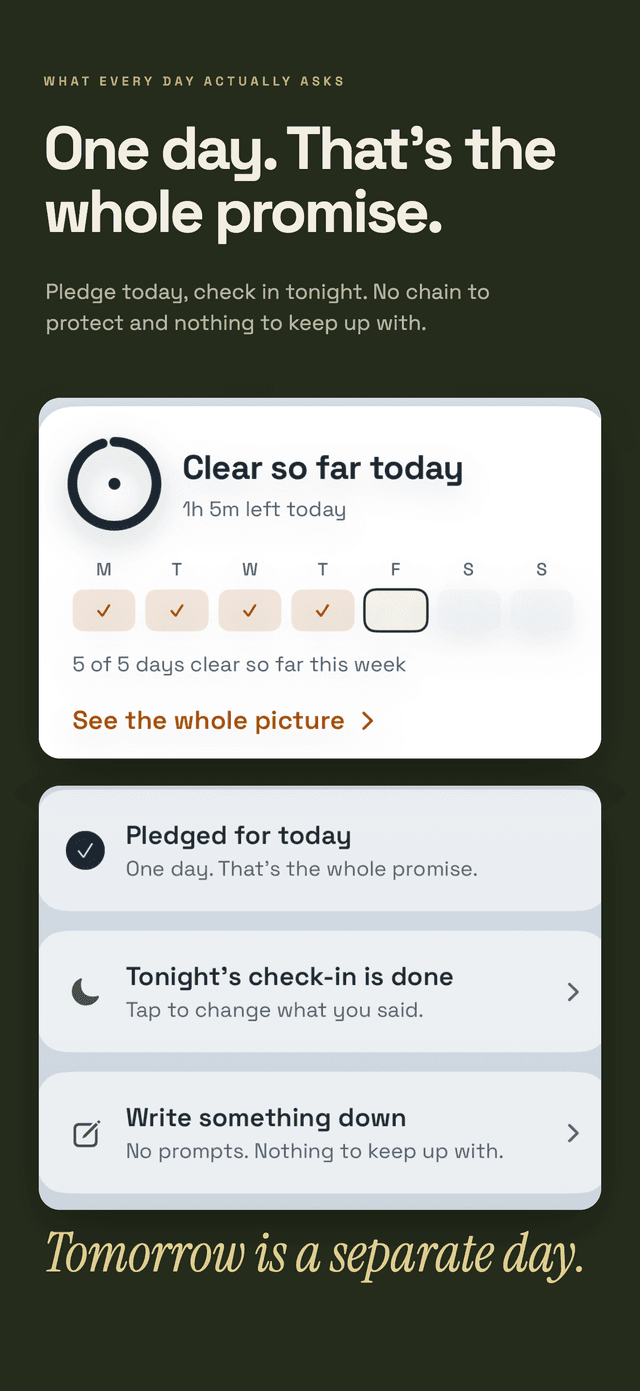
Hard Bit is an iPhone craving tracker, not a cannabis spending calculator. Keep the financial ledger in a spreadsheet, notebook, or banking tool.
Hard Bit can hold the related habit history, journal notes, difficult moments, and your reason for changing. The counter, logging, journal, milestones, hard-moment flow, help links, export, and deletion are free. A subscription adds the on-device forecast and warning, patterns and calendar, widgets, and short reads.
The forecast makes no prediction below five entries and relies more fully on your history at around twenty. Those are product rules, not clinical thresholds.
There is no account, advertising, social feed, third-party analytics, or server copy of your entries. An export becomes a separate file under your control. The Hard Bit overview and support page describe the current features and privacy boundaries.
Know when the ledger is pointing to support
Borrowing, missed bills, hidden purchases, selling possessions, or losing money needed for food, housing, utilities, or transport are reasons to seek help rather than refine the spreadsheet.
In the UK, StepChange provides free debt advice online and by freephone on 0800 138 1111. The NHS says a GP can discuss drug use and usually refer someone to a local drug service. You can also approach a service directly or call FRANK on 0300 123 6600. Outside the UK, use an equivalent local health, drug, or debt service.
Cannabis withdrawal can occur after stopping or substantially reducing regular or dependent use. A clinical review describes common symptoms including irritability, anxiety, disturbed sleep or dreams, low mood, and reduced appetite. Symptoms often begin within 24 to 48 hours and peak around days two to six, but some can continue for three weeks or longer after heavy use. This is a general pattern, not a deadline for recovery.
Speak to a clinician or drug service if symptoms are severe, worsening, or difficult to manage. Seek urgent local help for severe confusion, hallucinations, intense paranoia, thoughts of self-harm, or immediate danger. If cannabis is prescribed, discuss any change with the prescriber.
Our editorial policy explains how health and product claims are reviewed.
Frequently asked questions
How do I track bulk cannabis bought with cash?
Record the full cash payment on the purchase date. Use several complete purchase cycles to build the baseline, and mark any amount reconstructed from memory as estimated. Do not divide the purchase into invented daily payments.
Should I use a cannabis spending calculator?
A calculator can provide a first estimate. The Indiana University Indianapolis calculator uses purchase frequency, purchase quantity, and amount paid to estimate annual use and spending. Replace that estimate with your own records when possible.
Why has spending barely changed even though I use less?
Smaller quantities can cost more per unit, and fixed fees can take a larger share of each purchase. Product changes also matter. Compare amount and spending separately before deciding that no progress occurred.
Is calculated savings the same as money in my account?
No. It is an estimate against a baseline. Keep calculated savings and money actually moved in separate columns, and do not transfer money needed for essentials.
Does lower spending prove my cannabis use is under control?
No. Spending cannot assess sleep, mood, safety, work, relationships, withdrawal, or impaired control. Treat the ledger as budgeting information and seek qualified support for health or safety concerns.