To track gambling money saved, you need three things: an honest baseline of what gambling actually cost you, a clear rule for what counts as saved, and a real place for the money to go. Once those exist, the weekly habit is simple: move the amount you did not gamble, and record it.
The point is not an impressive number. It is a number you can trust, because a trustworthy figure keeps working as evidence on the weeks when motivation runs low.
Step one: calculate an honest baseline
Start with records, not memory. Most people underestimate what gambling costs them, and memory tends to round down.
Pull together:
- bank and credit card statements from the last three to six months,
- deposit and withdrawal history from each betting account (operators will provide this on request),
- e-wallet and PayPal activity,
- cash withdrawals you can reasonably attribute to gambling.
Add up the deposits and stakes, then subtract what genuinely came back as withdrawals. What remains is your net spend. Divide it by the number of weeks the records cover to get a weekly figure.
If the number swings wildly between months, use the lower end. A conservative baseline produces a savings total you can defend to yourself. GambleAware's anonymous spend calculator can also help you estimate the time and money involved if your records are incomplete, though it is a guide rather than a diagnostic tool.
Step two: define what counts as saved
Decide the rule before you start, and write it down. A workable definition is:
Money saved is the stake and deposit money that would previously have left my account in this period, net of what typically came back.
Two rules keep the tally honest:
- Count money you did not deposit. If your baseline was £40 a week and this week you deposited nothing, you saved £40.
- Never count imagined winnings. “I would have won £200 on that accumulator” is not savings. NHS inform's self-help guidance reminds readers that gambling is not a way to make money, and a savings tally built on hypothetical wins will collapse the first time you feel tempted.
If you are cutting down rather than stopping, count the difference between your baseline and what you actually spent. A week at £15 against a £40 baseline is £25 saved, and it should be recorded as such.
Step three: give the money a real destination
A total that only exists in a notes app is easy to spend twice in your head. GambleAware's budgeting guidance points to a practical fix: many UK banks offer savings pots, which let you separate money for a specific purpose inside your existing account.
Set a fixed day; payday works well for most people. Transfer that week's avoided amount into the pot. Give the pot a name that means something to you: a deposit, a holiday, an emergency buffer, or simply “money gambling doesn't get.”
If money is tight and there is nothing spare to transfer, the destination can be a specific debt instead. Overpaying a credit card or a loan by the weekly amount is the same principle: the money goes somewhere visible, and the balance moves in the right direction.
If you are already missing essential bills or carrying gambling debt you cannot repay, skip ahead to the support section below before building any savings plan.
Step four: keep the record honest after a slip
At some point a week may not go to plan. The instinct is often to delete the whole tally and start again, or to quietly stop looking at it. Neither helps.
Subtract instead. If your pot has grown by £160 over four weeks and you spend £60 in week five, your total saved is £100. The four clear weeks still happened. This is the same principle behind keeping a counter honest after a lapse, and it applies to money just as much as days. How to Track Gambling Without Turning It Into Shame covers why an honest record outperforms a perfect-looking one.
Record the slip with the same detail as the savings: when it happened, what it cost, and what came before it. That turns the expensive week into information rather than just damage.
Step five: use the total as information, not permission
A growing saved figure can quietly turn into a gambling fund in disguise. Watch for thoughts like “I've saved £500, so I can afford one bet” or “I'm up overall, so this is free money.” That is the total being spent before it exists, and it is a close cousin to the logic of chasing losses, which NHS inform lists among the warning signs of problem gambling.
Two habits protect the tally:
- Keep the pot separate from any account linked to gambling. If moving money back takes effort, the impulse has time to cool.
- Read the figure as evidence, not balance. It answers the question “what has stopping been worth?” It does not answer “what can I risk?”
If urges tend to follow a loss or a near miss, Gambling Urges After a Loss: Pause Before Chasing is a practical companion to this method.
Where a private tracker fits
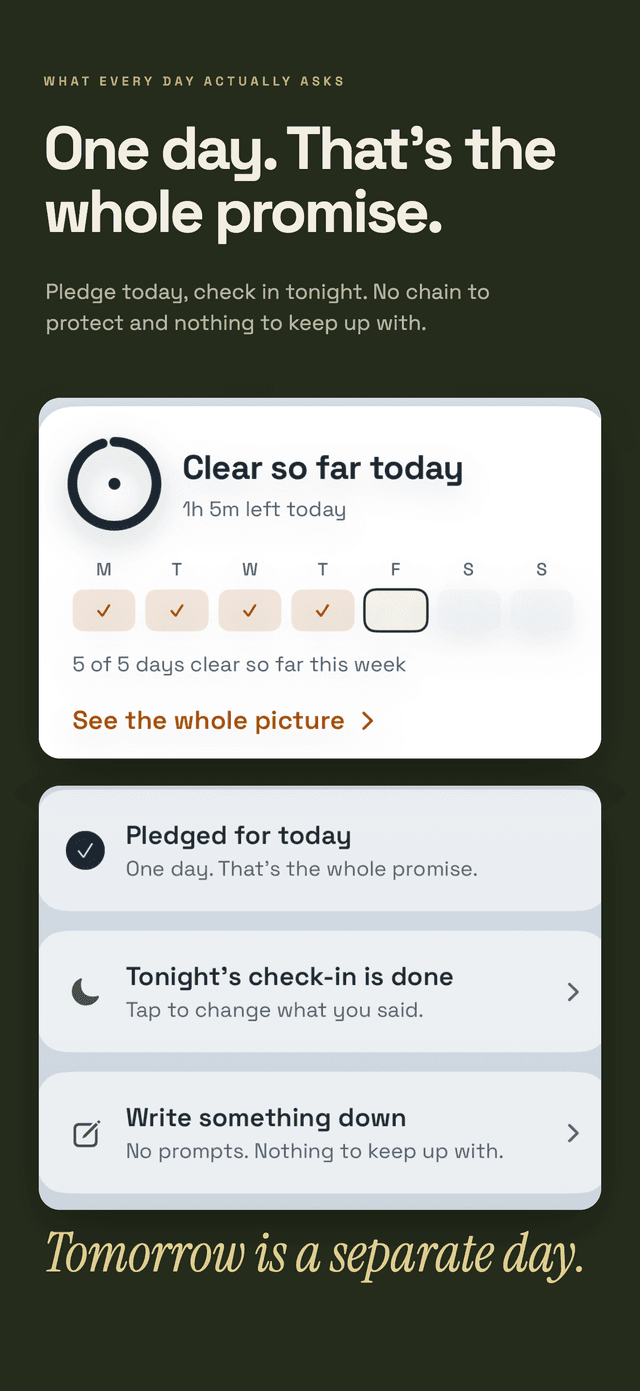
You can run this whole system on paper or in a spreadsheet. If you want it on your phone without an account or a shared record, Hard Bit tracks a gambling habit with money as its unit, keeps the counter honest after a logged use instead of resetting it, and stores everything on the device. The Hard Bit overview explains the workflow; the method in this article works with or without it.
Whatever tool you use, review the figures weekly rather than daily. A weekly review shows the trend; a daily check mostly shows noise. If you want a broader set of measures alongside the money, How to Measure Gambling Progress Beyond a Perfect Streak suggests frequency, clear days, and speed of returning to the plan as companions to any single total.
When money worries need more than a tracker
A savings tally is a motivational tool. It cannot repair debt, and it is the wrong instrument for a crisis. Get specialist help if:
- you are missing rent, bills, or food because of gambling,
- you are borrowing, using credit, or hiding statements to keep gambling,
- the debt feels unmanageable or you are avoiding opening letters,
- you feel at risk of harming yourself.
GambleAware's finances page points to free, confidential routes: Citizens Advice for general money and debt help, MoneyHelper for gambling debt specifically, and StepChange for structured debt advice, free on 0800 138 1111 and online. Practical barriers matter too: many UK banks let you block gambling transactions, and GAMSTOP lets you self-exclude from online gambling sites and apps.
For anything beyond the money itself, GamCare runs the National Gambling Helpline on 0808 8020 133, free and open 24 hours a day. If you are in immediate danger, call emergency services. More source-reviewed guides sit in the Hard Bit guide library, and our editorial policy explains how health and safety claims on this site are checked.
Frequently asked questions
How far back should I go when calculating my baseline?
Three to six months of statements usually gives a fair picture without becoming a forensic project. If your spend changed a lot during that period, use the most recent typical months and take the lower figure. A conservative baseline beats a precise-looking one you cannot verify.
Does one bet wipe out everything I have saved?
No. Subtract what you spent from the running total and keep going. The earlier clear weeks still happened, and the saved money that already reached a separate pot is still there. Resetting to zero hides progress and, over time, makes the record less honest.
What if I cannot afford to move money into a pot?
Then the tally can track debt reduction or simply be a written record for now. Even a note that says “week 12, £40 not gambled” has value. If essentials are going unpaid because of past or current gambling, contact StepChange, Citizens Advice, or MoneyHelper before building any savings plan.
Is tracking the money enough to keep me stopped?
Usually not on its own. A tally shows you what stopping is worth, but urges still arrive at specific hours and situations. Combine it with practical barriers such as bank blocks and self-exclusion, a plan for your difficult times, and specialist support where the pattern keeps repeating.