The practical response to holiday drinking triggers is to make the important choices before the event. Write down whether you will drink, your limit if you will, what you will order first, one refusal line, how you will get home safely, and when you will leave.
NIAAA advises planning ahead because alcohol can impair judgment and driving skills before obvious signs of intoxication appear. The aim is not to predict the whole evening. It is to reduce the number of decisions left for a noisy or pressured moment.
Check withdrawal risk before changing your drinking
If you drink heavily or regularly, suddenly stopping or reducing may be unsafe. The NHS states that withdrawal can begin within 6 to 12 hours of the last drink and may include anxiety, nausea, sweating, shaking, a racing heartbeat, confusion, hallucinations, or seizures.
Get medical help before changing your drinking if you develop withdrawal symptoms when you delay, reduce, or miss alcohol. A GP, clinician, or alcohol service can assess the risk and explain safer options.
Visible shaking, severe agitation, confusion, hallucinations, or a seizure after stopping require emergency care. Do not drive yourself. The plan below is for an ordinary social cue, not an unsupervised detox plan.
Name the event's specific trigger
"The holidays" is too broad to plan around. Identify one or two moments that may matter at this event:
- receiving a drink as soon as you arrive,
- a public toast,
- a host repeatedly topping up your glass,
- a free bar or unfamiliar mixed drinks,
- an unstructured period after the meal,
- tension with a particular person,
- the group's move to a second venue,
- grief, loneliness, or a changed family tradition.
Write the cue plainly: "After dinner, when the bottles stay on the table," or "When colleagues suggest another bar."
If your own records show a repeated difficult time, compare that window with the event schedule. Tracking the hours you are most likely to drink explains how to make that comparison without treating one entry as a prediction.
Write a six-line decision card
Complete this card before you leave:
- Drink choice: not drinking, or drinking within a limit that is medically safe for you.
- Limit: a specific number counted using the standard-drink guidance where you live.
- First order: the exact drink you will request on arrival.
- Refusal: one sentence you can use without improvising.
- Transport: a sober driver, booked ride, public transport, or another safe route.
- Exit: a leaving time and whether you will go to a second venue.
NIAAA notes that mixed drinks and topped-up glasses can contain more alcohol than people realize. If you are keeping a limit, ask the host not to top up your glass and record each drink before starting the next one.
The NHS also recommends setting a limit and budget before drinking, eating and drinking water first, alternating alcohol with non-alcoholic drinks, and choosing smaller or lower-strength options. Keep transport money or a backup payment method separate from any drinks budget.
If you are the designated driver, plan to drink no alcohol. If that plan changes, do not drive; use the backup transport written on the card.
Prepare a short refusal
NIAAA recommends having a prompt, convincing "No, thanks" ready. Alcohol Change UK similarly suggests keeping the first answer short and preparing any explanation in advance.
Choose wording that sounds natural to you:
- "No thanks, I'm good with this."
- "I'm not drinking tonight."
- "No more for me, thanks."
- "I'm switching to water."
Say the line aloud once before the event. You do not owe anyone your medical history or a detailed explanation. If someone continues pushing, repeat the answer, change the subject, move elsewhere, or speak to a supportive person.
Plan the arrival and departure
For arrival, decide what you will do before an offer appears. You might order a non-alcoholic drink immediately, ask a trusted person for support, or move away from the bar after greeting people.
If you expect to drink, eat beforehand and have water first. Food can slow alcohol absorption, but it does not prevent impairment or make driving safe.
For departure:
- tell one supportive person when you intend to leave,
- book a ride or note the last train beforehand,
- decide in advance whether a second venue fits your plan,
- set a quiet alarm if you tend to lose track of time.
Leaving at the planned time does not require an elaborate excuse. A simple "Thanks, I'm heading home" is enough.
Prepare for the hardest part of the event
Match one response to the cue you identified:
- Toast: fill your chosen glass before speeches begin.
- Top-ups: keep the glass in your hand and ask for no refill.
- Second venue: say goodbye before the group starts arranging transport.
- Family tension: move rooms, take a short walk, or contact someone outside the event.
- Unstructured waiting: offer practical help or begin a prepared activity.
- Strong urge: step away from the alcohol, read your reason for changing, and message your support contact.
NIAAA includes reminding yourself of your reasons, talking to someone, using a distracting activity, and riding out an urge among possible responses. Cravings vary, so do not rely on a promise that one will end after a fixed number of minutes. The in-the-moment craving guide provides a short sequence for the next decision.
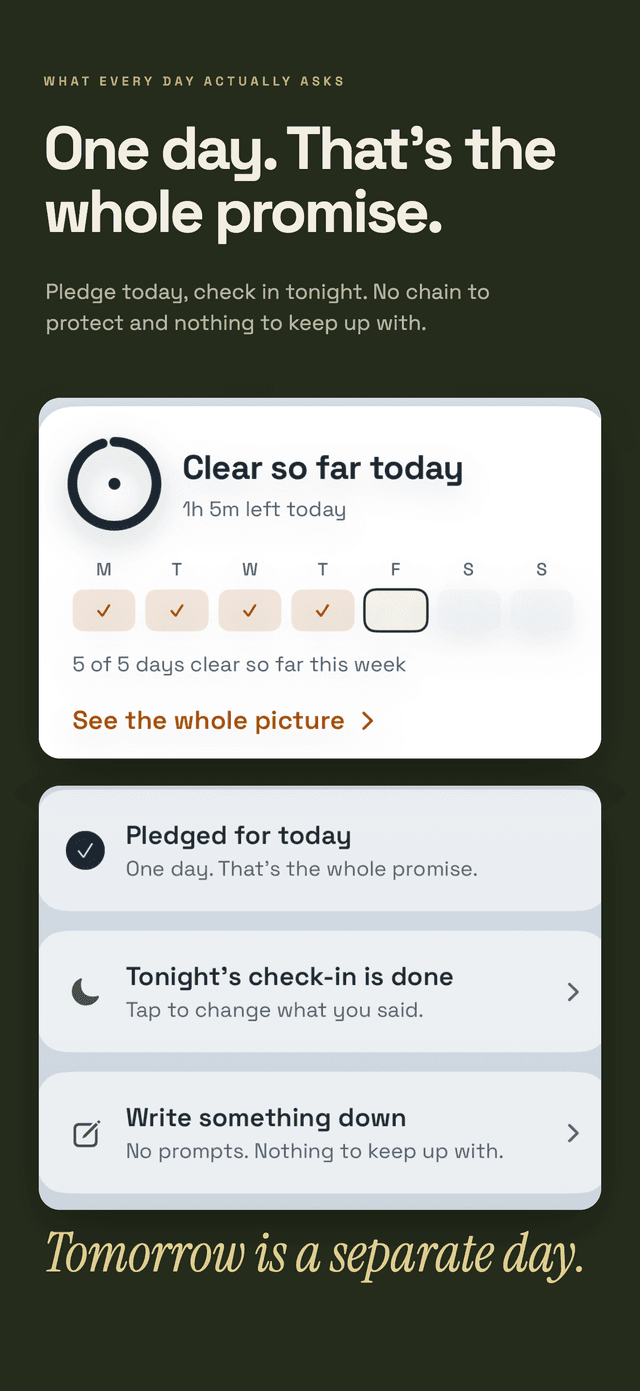
Hard Bit can keep drinking in its own private log on an iPhone. The counter, logging, journal, personal sentence, and hard-moment flow are free. Hard Bit Plus adds the on-device difficult-hour forecast and warning, patterns, calendar, widgets, and short reads.
The forecast makes no prediction below five entries and leans fully on personal history at around twenty. It describes a repeated weekday and hour, not what will happen at one holiday event. The Hard Bit overview explains the workflow.
Decide what happens if the plan changes
If you drink more than intended, deal with immediate safety rather than declaring the whole night lost.
Do not drive. Do not rely on coffee, a cold shower, or fresh air to restore judgment or coordination; NIAAA states that only time sobers someone up. Move away from the bar, tell a trusted person what has happened, and arrange sober transport.
Call local emergency services for suspected alcohol poisoning, loss of consciousness, breathing problems, a seizure, thoughts of self-harm, or another immediate danger. Do not wait for every possible sign of an overdose before seeking help.
When you are safe and clear-headed, keep the event in your record. Responding after a slip without erasing earlier progress explains how to identify the earliest point where the plan stopped fitting.
Review facts, not your character
Later the next day, record:
- when the first urge appeared,
- what happened immediately beforehand,
- what and how much you drank,
- which refusal wording you used,
- what helped,
- when and how you left.
Use neutral language. "Two drinks after the toast; left at 10:30 by taxi" gives you something to adjust. A personal insult does not.
Change one condition for the next event, such as the first order, the person you contact, or the departure time. Tracking alcohol without turning the record into shame offers a fuller review method.
Know when an event plan is not enough
Contact a clinician or alcohol service if you experience withdrawal symptoms, repeatedly drink more than intended, find it difficult to stop once you begin, or alcohol is affecting your health, work, relationships, or safety.
Support may include medical withdrawal care, talking therapies, peer support, or medicines. A qualified service can assess which options fit your circumstances. A written card or tracking app cannot diagnose dependence or choose treatment.
Our editorial policy explains how health guidance and product descriptions are reviewed separately. More cue-specific planning articles are available in the Hard Bit guide library.
Frequently asked questions
What if I do not want to tell anyone I am cutting down?
You do not have to disclose your reasons. Order your chosen drink and use a short refusal such as "No thanks, I'm good with this." If you want support without a wider discussion, tell one trusted person privately before the event.
How should I handle a toast?
Arrange your chosen drink before speeches begin and raise that glass. Sparkling water or another non-alcoholic option can take the same practical role. If alcohol-free versions of familiar drinks are a cue for you, choose something unrelated instead.
Can I set a number instead of avoiding alcohol completely?
For some people, a measurable limit is an appropriate goal. Decide it before drinking and count accurately. If dependence may be possible, seek medical guidance before reducing. If limits repeatedly become difficult to keep, discuss that pattern with a clinician or alcohol service.
What if the last holiday event did not go to plan?
Check that any immediate risk has passed, record the sequence, and change one earlier condition for the next event. A difficult evening does not erase earlier clear days, but it may show that you need a firmer boundary, different transport, or more support.