
A gambling urge after losing can make the next bet feel urgent and necessary. The immediate response is practical: end the session, prevent another deposit or bet, leave the cue, and tell someone if you can. Do not try to recover the money in the same rush that followed the loss.
Chasing losses is a recognized gambling pattern, not a verdict about your character. If essential bills, debt, safety, or mental health are affected, involve a gambling support service or debt adviser rather than relying only on a personal pause.
Why slowing down is a useful first target
A 2022 PLOS ONE study examined more than 2,500 players and over 10 million rounds from one online commercial gambling game. It considered three possible signs of within-session chasing: when people stopped, how much they staked, and how quickly they played.
After winning, players were less likely to stop and increased their stakes. After losing, both higher- and lower-involvement groups played more quickly. The authors suggest that the faster pace may reflect an urge to continue gambling.
This was an exploratory study of one product. It cannot show what every person will do after every kind of bet. It does, however, identify one changeable feature: the speed of the next decision.
End the session and protect access to money
Reflection is harder while the account, venue, or payment method remains open. Start with barriers:
- close and log out of the gambling app or site,
- leave the venue or room if it is safe to do so,
- do not deposit more, raise a limit, borrow, or use credit to cover the loss,
- move your phone, card, or cash out of immediate reach,
- contact someone you trust and state plainly that you are trying not to return,
- use an account, device, self-exclusion, or bank block that you have been postponing.
Only hand over money or a device when it is safe, voluntary, and part of an arrangement you trust.
NHS guidance recommends measures including GAMSTOP, Gamban, gambling-payment blocks from a bank, paying important bills first on payday, and addressing debt rather than ignoring it. Coverage differs by country and service, so use the self-exclusion and financial controls available where you live. One barrier may not cover every account or route.
If the urge is already intense, use a five-minute plan for the start of a craving while the stronger barriers take effect.
Use a prepared post-loss pause
Gambler's Help recommends taking a break after a loss, clearing your mind, and reminding yourself that further bets are unlikely to repair the situation. A short sequence could be:
- Stand up and move away from the screen or venue.
- Say, “I am not placing another bet as part of this session.”
- Walk, wash up, make food, or begin another familiar activity.
- Send a prepared message such as, “I lost money and want to go back. Can you stay in contact with me?”
- Set a specific later time to review what happened.
The later time is not a scientifically proven waiting period. Its purpose is to prevent the review from becoming another bet. Choose a boundary that is realistic for you and add another person or support service when a private rule is not holding.
Gambler's Help also describes urge surfing: notice the urge, describe it without judgment, and use distraction or self-soothing during the hardest part. It is not a timer or a guarantee that the urge will disappear. The broader urge-surfing guide explains how to try it without promising a fixed duration.
Answer the thought behind chasing
A post-loss urge often comes with a sentence such as, “One more win will put this right.” The Royal College of Psychiatrists lists the belief that gambling more can win back losses among common gambling-related beliefs.
Gambler's Help also warns that a near-miss can create hope or a feeling of control even when the result was largely determined by chance. Prepare a factual reply before the next loss:
- “The previous loss does not turn the next bet into repayment.”
- “Feeling close does not make the next outcome owe me a win.”
- “Another deposit can increase the shortfall.”
- “I will review the loss at the time I chose, not inside this session.”
Keep the wording direct rather than insulting. The point is to guide the next action, not to win an internal debate.
Write a five-line script before you need it
A script reduces the number of choices in the difficult moment:
When a session ends down, I will log out and put my phone on the hall shelf. Then I will walk to the end of the road and back, message Priya with the word “down,” and make no further gambling or borrowing decision tonight.
Use steps that remain possible when you are tired, alone, or upset. Rehearse the sequence once while calm. If one step repeatedly fails, replace that step and strengthen the barrier around it.
Log the post-loss window, not only the amount
A brief immediate entry can capture:
- when the session ended,
- an estimated amount or range,
- when the urge to return appeared,
- how strong it felt on your usual scale,
- whether you deposited or gambled again,
- what barrier or support you used.
Later, check operator histories and bank statements for an accurate financial picture. GamCare recommends reviewing gambling spend, creating a budget that puts essential costs first, and contacting free debt-advice organizations when needed.
Distinguish an urge that appears minutes after a loss from one that returns the next morning or on payday. Chasing can occur within one session or across separate sessions, and each pattern needs a different earlier barrier. The guide to tracking the hours you are most likely to gamble provides a fuller time-based method.
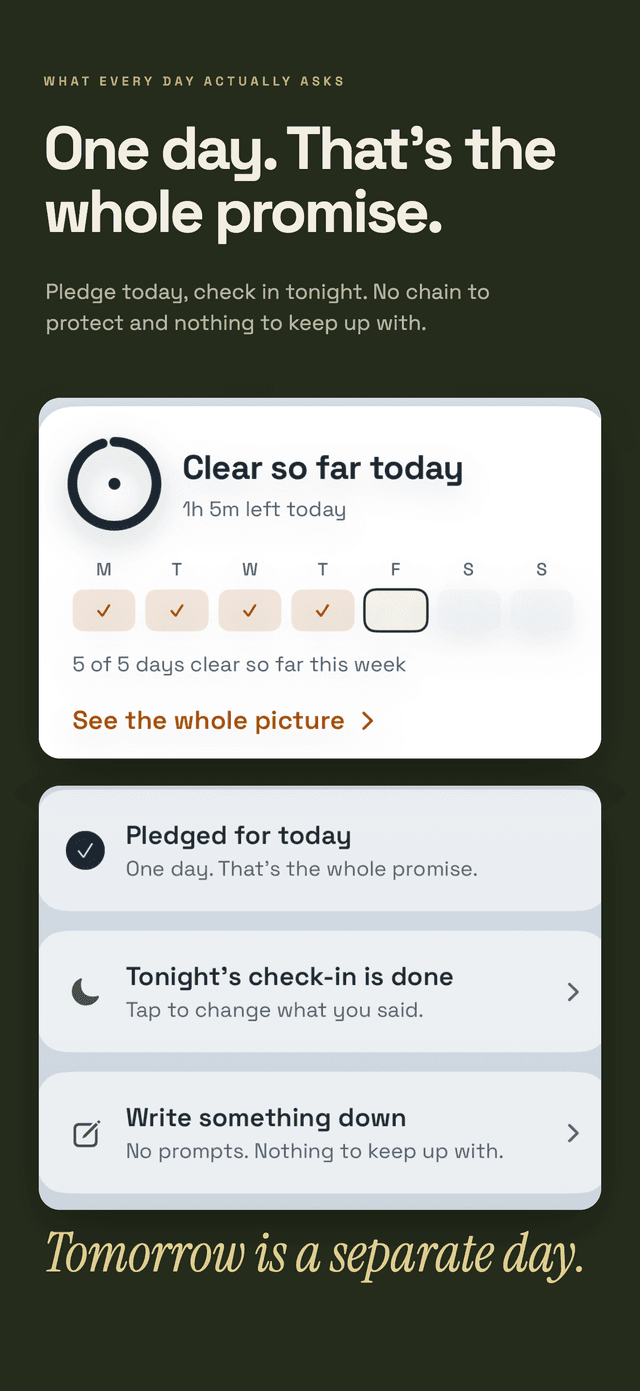
Hard Bit is an optional iPhone craving tracker, not a gambling blocker, financial safeguard, or treatment service. Logging, the counter, journal, personal reason, hard-moment flow, milestones, help links, export, and deletion are free. Hard Bit Plus adds the on-device forecast and advance warning, pattern and calendar views, widgets, and short reads.
The forecast makes no prediction below five entries and relies more fully on your own history at around twenty. These are product rules, not clinical thresholds or promises about your next decision. The app requires no account and has no social feed, advertising, third-party analytics, or server copy of your entries. The Hard Bit overview explains the workflow, and Hard Bit support documents the current feature and privacy boundaries. A notebook can support the same exercise.
If you chased the loss, keep the event in context. Responding to a slip without erasing your progress shows how to update the plan without minimizing the consequences.
Deal with the financial effect separately
Once the immediate urge has shifted, establish what the loss changed. Check the amount against rent or mortgage payments, utilities, food, transport, and other essential costs. Do not use another bet as the financial plan.
GamCare points to free UK debt advice from StepChange, PayPlan, National Debtline, and Citizens Advice. The NHS also recommends dealing with debts rather than ignoring them. Elsewhere, use a regulated or recognized debt-advice service in your country.
Measures such as money not gambled, barriers used, and speed of returning to the plan can sit beside a streak. Measuring gambling progress beyond a perfect streak explains those distinctions.
Get more support when the risk is growing
Act promptly if you are borrowing or selling things to gamble, missing bills, hiding losses, returning despite barriers, or experiencing serious distress.
The NHS gambling self-check includes trying to win back lost money. It says a score of 8 or more means gambling-related harms are likely for you or those close to you, while a score from 1 to 7 may still indicate a negative impact. The score is a prompt to seek support, not a diagnosis.
In Great Britain, the National Gambling Helpline run by GamCare is free on 0808 8020 133, 24 hours a day, seven days a week. NHS specialist gambling clinics in England accept self-referrals. In Victoria, Australia, Gambler's Help is available on 1800 858 858. Elsewhere, contact a local gambling-support, health, or debt-advice service.
If gambling is seriously affecting your mental health, use urgent mental-health support. In the UK, call 999 in an emergency. Samaritans can be reached free at any time on 116 123. Use the emergency or crisis service for your country if you are elsewhere.
Our editorial policy explains how health guidance and product information are reviewed.
Frequently asked questions
Is it common to want to bet again immediately after losing?
Yes, support services recognize the urge to recover losses as a common pattern, and chasing losses appears in the NHS gambling self-check. That does not diagnose you or show how serious the situation is. Pay attention to the money, frequency, failed barriers, and effect on your life.
How long should I wait after a gambling loss?
There is no universal evidence-backed number. End the current session and move the review to a specific later time when gambling access is closed and support is available. If the urge repeatedly defeats that boundary, add self-exclusion, bank controls, and specialist support.
Should I record the exact amount immediately?
Not if checking it would keep you inside the gambling account or trigger another bet. Record an estimate or range, then use operator records and bank statements later for an accurate budget. Mark estimates clearly.
Can an app stop me chasing a loss?
No. A tracker cannot close an account, stop a payment, protect essential money, or assess your mental health. It can help reveal repeated post-loss windows. Keep it alongside self-exclusion, blocking tools, bank controls, debt advice, and human support. More source-reviewed planning articles are available in the Hard Bit guide library.