
When friends want to bet together, the hardest version of your gambling trigger arrives wearing a friendly face. The short answer: decide your line before anyone asks, say it in one plain sentence, offer a different plan rather than a refusal alone, make your money harder to reach before you go out, and have an exit ready if the pressure keeps building.
None of this requires you to lecture your friends or disappear from their lives. It requires preparation, because the group version of an urge behaves differently from the private one.
Why the group version hits harder
Gambler's Help, the Victorian state gambling support service in Australia, notes that gambling often starts as a social activity, and that seeing friends gamble can trigger associations with your own past gambling and increase the urge to join in. That is the friends gambling trigger from the inside. The urge is not just about the bet. It is the accumulator being built on the table, the shared screen, the jokes about odds, and the unspoken question of whether you are still part of the ritual.
There is also a speed problem. A private urge gives you time to notice it. A social one arrives with a countdown: "We're putting it on in five minutes, are you in?" Fast decisions favour the habit. Our guide on replacing the fast decision when boredom and gambling urges combine covers the same mechanism in a quieter setting.
Knowing this changes the goal. You are not trying to feel nothing while your friends bet. You are trying to get through the invitation with your plan intact.
Decide your line before anyone asks
Gambler's Help recommends reflecting on your boundaries before social situations: what you are willing to be around, how much gambling talk you tolerate, and whether you are stopping entirely or cutting down. Do this at a calm moment, not in the pub.
Write the line down in concrete terms:
- "I do not bet at all now," or
- "I watch, but I do not put money on," or
- "I do not join group bets or sweepstakes."
A vague intention ("I'll try to be sensible") collapses under the first round of friendly pressure. A specific line gives you something to repeat. If you are cutting down rather than stopping, be honest with yourself about whether a group betting setting fits that goal at all. For many people, the social accumulator is exactly the situation where limits dissolve, so it belongs on the "not for now" list even if other situations do not.
Carry one sentence, not an argument
When the invitation comes, you need words you can say while your heart rate is up. Prepare one short sentence and practise it once out loud:
- "I'm not betting these days, but I'll watch with you."
- "I'm skipping the bets, too expensive a hobby for me."
- "Not for me tonight. Who's getting the next round?"
Gambler's Help suggests using non-judgmental "I" statements, and that matters for two reasons. First, it keeps the friendship intact because you are describing your own choice, not their behaviour. Second, a short sentence ends the negotiation. Every justification you add ("the odds are bad value anyway") invites a reply. A calm, brief, slightly boring answer does not.
Expect the second ask. "Come on, just a fiver." Repeat the sentence almost word for word. Repetition feels awkward but reads as settled, and friends usually drop a settled answer faster than a fresh argument each time.
Offer a different plan, not just a no
A refusal leaves a gap in the evening. Filling it works better. Gambler's Help recommends proposing social activities that do not revolve around gambling, and you can do this at two levels.
For one occasion: "I'll come watch the match, I'm just not in on the bet." Then actually participate: food, commentary, the pool table, the darts board.
For the longer term: suggest fixtures for the friendship that are not betting fixtures. Five-a-side, a quiz night, a round of golf, watching the match at yours with dinner. The NHS advises spending more time with family and friends who do not gamble, and if your whole social circle bets every weekend, widening the circle is a legitimate part of the plan rather than a betrayal of it.
Make the money hard to reach before you go out
Willpower is weakest exactly when the group is loudest, so do the work earlier. Practical friction, suggested across Gambler's Help, the NHS, and GambleAware:
- Leave debit and credit cards at home and take a set amount of cash for the evening.
- Remove betting apps from your phone, or at minimum log out and remove saved payment details.
- Ask your bank to switch on its gambling transaction block. GambleAware notes many banks offer this in the app, and some add a cooling-off period before the block can be removed, which is exactly what you want before a Saturday.
- If online betting is the pattern, register with GAMSTOP (free, blocks online gambling accounts across Great Britain) or install blocking software such as BetBlocker or Gamban.
- If betting shops or casinos are the venue, the MOSES and SENSE schemes let you self-exclude in person.
None of these steps touches your friends or requires an announcement. They just mean that "fine, just this once" is no longer a five-second decision.
Handle the moment itself
When the bet starts being built around you, shrink your task to the next few minutes. Move physically: go to the bar, the toilet, the fresh air. Hold your prepared sentence. If the match itself is the amplifier, the techniques in handling gambling urges during live sport apply directly here.
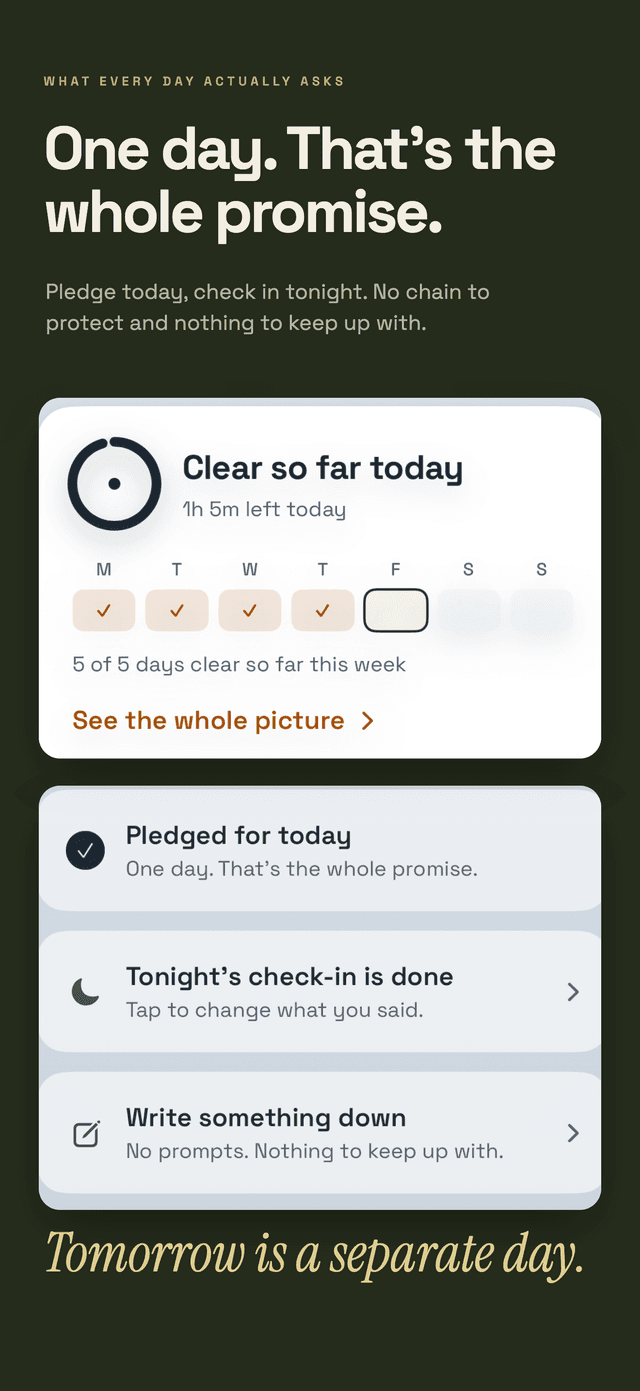
If you use Hard Bit, the hard-moment flow exists for exactly this: it surfaces the personal sentence you wrote earlier, when you were calm and on your own side, instead of asking you to improvise one under pressure. Logging the evening afterwards (urged or acted, rough time, who was there) is what lets the app learn your difficult weekday and hour from your own history. The Hard Bit overview explains how that on-device pattern works; a notebook does the same job more slowly.
Gambler's Help also suggests keeping an exit line ready, and it is worth having one: "I'm going to head off, early start tomorrow, but this was great." Leaving at 80 minutes is a success, not a defeat.
Manage the group chat between fixtures
The invitation rarely starts at the venue. It starts on Thursday in the group chat with a screenshot of odds. Practical steps:
- Mute the betting thread or the whole chat during your difficult windows.
- Write one standing reply you can paste: "Still not betting, enjoy lads."
- Do not follow the bet's progress ironically. Half-watching an accumulator you "didn't join" keeps the trigger fed.
If the same fixture, the same chat, and the same hour keep producing urges, that is a trackable pattern, not a mystery. Tracking the hours you are most likely to gamble shows how a few weeks of honest entries turn "Saturdays are hard" into something you can actually plan around.
If you joined in after all
Some nights the plan loses. If you bet, treat it as information: log it honestly, note where the sequence started (the chat, the second ask, the third drink), and change one condition before the next fixture. Do not delete the evening or declare the whole effort finished. Tracking gambling without turning it into shame covers how to keep the record useful instead of punishing.
When the pattern points to more support
Sometimes the honest conclusion is that social gambling is not currently a willpower problem but a control problem. The NHS lists warning signs: betting more than you can afford, chasing losses, borrowing to gamble, and people close to you criticising your betting. If several of those ring true, self-help structure is not the right ceiling.
Free, confidential routes include the National Gambling Helpline run by GamCare (0808 8020 133, 24 hours), NHS specialist gambling clinics which accept self-referral, Gamblers Anonymous groups, GambleAware's support finder, and the National Debtline if money owed is part of the picture. If gambling is seriously affecting your mental health and you need help urgently, the NHS urgent mental health routes apply. Telling one trusted friend from the group what you are doing also tends to change how the invitations arrive.
More source-reviewed planning guides are in the Hard Bit blog.
Frequently asked questions
Is it rude to refuse a bet with friends?
No. A short, friendly, non-judgmental refusal is socially ordinary, and most groups absorb it quickly when it is repeated calmly. What strains friendships is unpredictability: joining sometimes, being tense other times. A settled "I'm not betting these days" is easier on everyone.
What if betting is the main thing my friend group does?
Then one refusal is not enough structure. Add non-betting fixtures you initiate, widen the time you spend with people who do not gamble, and consider skipping the highest-pressure outings for a while. Protecting your goal is not a verdict on your friends.
Should I tell my friends I am trying to stop gambling?
That is your choice. Some people find one honest conversation stops the repeated invitations; others prefer a low-key "not for me" with no explanation. Both are valid. If you do share, Gambler's Help suggests "I" statements focused on your own decision rather than their gambling.
What if I keep saying yes in the moment anyway?
Stop treating it as a surprise. Add friction earlier (no cards, GAMSTOP, bank blocks), shorten the evening, mute the chat, and log each occurrence so the pattern is visible. If it still keeps happening, that is a reason to involve the National Gambling Helpline or an NHS clinic, not a reason to rely on more willpower.