If you've been offered cannabis and you're wondering what to do, the answer has three parts. First, say a short, clear no, give a reason only if you want to, and ask the person not to offer again. Second, do something different straight away: let it pass you by, get water or a soft drink, move to another room, or leave. Third, once things are quiet, write down when, where and from whom the offer came. Offers tend to come back in the same settings, and a record lets you prepare for them.
Tonight's goal is modest. You only need to get past the next few minutes without making a decision you didn't plan to make.
What makes a cannabis offer different from an urge on your own
An urge you notice alone has one source. A cannabis offer usually comes with several. A joint going round a circle reaches you whether you asked for it or not. The smell fills the room. Everyone pauses for your answer, and the person offering may be someone you've smoked with for years. Saying no can feel like rejecting them, not just the cannabis.
WithYou's guidance on triggers suggests spending more time with friends and family who don't use. That's useful advice, but it isn't always possible. The person offering might be your partner, a housemate, a sibling or an old friend. So this guide assumes you'll sometimes be offered cannabis anyway and need a way through that doesn't depend on avoiding everyone.
Say a short no and stop there
HealthLink BC's guidance on turning down alcohol and drugs gives a simple structure: say no firmly, give a reason if it helps, and ask the person not to offer again. Childline's advice on peer pressure adds the "broken record" technique: calmly repeat the same answer instead of getting pulled into an argument.
Childline writes for young people, but the method works at any age. The lines below are our own examples, not scripts from either source. Change them until they sound like you:
- "No thanks, I'm not smoking at the moment."
- "Not tonight. I'll grab some water instead."
- "I'm taking a break from it. Can you not offer for a while?"
- "I'm good, honestly."
Keep the first answer short. A long explanation gives people more to argue with and can make you feel you owe them a justification. If they ask again, repeat the same line. You don't need a new reason each time.
Be careful with excuses like "I've got an early start". They work once, but they tell the other person you'd say yes another night. If you want the offers to stop, a plain request lasts longer: "I'd rather you didn't offer for now."
Change the next physical step
A spoken no is easier to hold if your body does something different straight away. This is our practical advice, not a clinical protocol:
- if it's being passed round, say "skip me" before it reaches you so it carries on round the circle,
- stand up and get water, tea or a soft drink,
- go to the kitchen, the balcony or the bathroom for a few minutes,
- start something that keeps your hands busy, like cooking, dealing cards or choosing music,
- suggest a different activity: a walk, food, a film, a game,
- sit further away from where people are rolling or smoking.
Turn down "one for later" as well. An edible or a pre-roll in your pocket just moves the decision to a time when you may be alone, tired and less prepared.
WithYou describes cravings as waves that build to a peak and then fade. It suggests delaying use by five minutes and distracting yourself. Treat this as a coping technique, not a promise. How long an urge lasts varies from person to person and from one evening to the next. For a short routine to use once the urge has started, try a five-minute plan for the start of a craving.
If the pressure continues after you've said no clearly, leaving is a reasonable choice. Childline makes the same point. You can be polite without staying.
Adjust the words for the person offering
The same no can land differently depending on who you're talking to. Here are suggestions for some common situations.
A close friend you usually smoke with. Tell them once, away from any offer: "I'm cutting down, so if I say no, it's not about you." Then use your short no on the night. Childline notes that a real friend should accept your decision. If someone keeps pushing after a clear request, that tells you something about the setting.
A partner or housemate. Offers at home tend to come at the same times. Rather than relying on a no every evening, agree on practical things together: where cannabis is kept, whether it's used in shared rooms, and what you'll do together on the nights that used to involve it.
A group or party. Hold a soft drink, stay near someone who isn't smoking, and decide in advance when you'll leave. If you have a whole weekend of social plans, preparing for a cannabis-free weekend goes through the days in more detail.
Someone you don't know well. "No thanks" is enough. You don't have to explain your health, your history or your goals to anyone.
Wherever you are, keep yourself safe. Don't drive after using cannabis, don't get into a car with someone who is impaired, and leave any situation that feels threatening.
Decide your answer before the night if you're cutting down
If you've stopped completely, the answer is always the same. Cutting down is harder, because every offer becomes a negotiation: "Does this count? Is this my one?"
Make that decision earlier, while you're calm. WithYou suggests setting small, achievable cut-down goals and moving to the next step once you're confident with the current one. You could apply the same idea to offers:
- "On weeknights, I say no to every offer."
- "At Saturday's gathering, I'll stay within the limit I set this morning, then switch to a soft drink."
- "I don't accept offers after a certain hour."
Write the rule down before you go out. Then, when someone hands you a joint, you're following a decision you've already made instead of starting a new debate.
Record the offer, not just whether you said yes
When the moment has passed, write one short note. WithYou recommends keeping a cannabis diary of when and where you used, who you were with and how you felt. Two more details are useful for offers:
- Who offered, and did you expect it?
- What did you do next, and did it help?
Include the offers you turned down. Over a few weeks, the notes often show a pattern: the same friend, the same day, the same stretch after work or after a gaming session. If gaming keeps coming up, see how to break the link between gaming and cannabis.
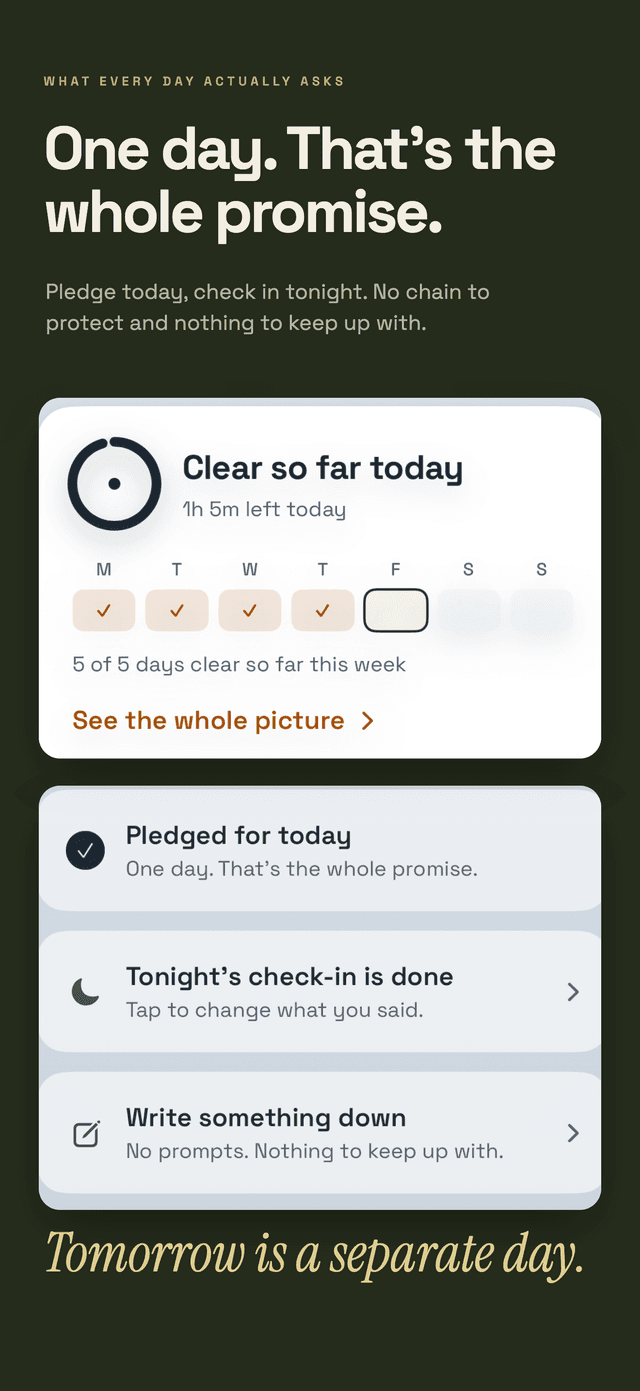
Hard Bit is built around this kind of record on iPhone. You can log a hard moment or a use against your cannabis habit and keep it separate from any other habit you track. When you tap the hard-moment button, it shows the sentence you wrote about why you're stopping. With Hard Bit Plus, the app works out your difficult hours from your logs on your phone and warns you before one arrives. It makes no prediction until you have five entries, and it relies fully on your own history at around twenty. Nothing leaves your phone, and there's no account or social feed. The Hard Bit overview explains how it works. A paper notebook works too. What matters is an honest record.
To narrow down when offers usually come, read how to track the hours you're most likely to use cannabis.
If you said yes
Saying yes to an offer doesn't erase your earlier clear days or prove the plan was pointless. Look after your immediate safety first: don't drive, and plan a safe way home. Then make a note of what happened just before you said yes: the setting, the person, how tired or stressed you were, and whether you'd decided your answer in advance.
Next time, change one thing. You might leave an hour earlier, eat before going out, tell your friend about your plan beforehand, or set a clearer cut-down rule. To keep a single yes in proportion, read how to measure cannabis progress beyond a perfect streak.
When to get more support
Offers can be harder to turn down in the early days, when you may be dealing with withdrawal effects like irritability or poor sleep. WithYou's withdrawal guidance notes that telling a close friend or family member how you're feeling can be a good source of support.
If cannabis is affecting your mental health, relationships, work or sleep, or you keep saying yes when you don't want to, you may need more help than a set of lines to say. In England, the NHS says a GP can refer you to a local drug service, and many services also let you contact them directly. FRANK can help you find support 24 hours a day on 0300 123 6600, or by text on 82111. If you need help urgently, the NHS suggests contacting your GP, calling 111 or going to A&E. If you're under 19 in the UK, you can talk to Childline free on 0800 1111. Outside the UK, contact your local health service. If you feel unsafe, are having thoughts of harming yourself, or are in immediate danger, contact emergency services.
Hard Bit is a private self-tracking tool. It isn't treatment, therapy or emergency support. Our editorial policy explains how we keep health information separate from product information.
Frequently asked questions
Do I have to explain why I'm not smoking?
No. "No thanks" is a complete answer. Some people find a short reason makes things easier socially, but you don't have to share your health, history or goals. If someone keeps asking, repeat the same answer and change the subject, or leave.
What if the person offering is my partner?
Talk about it at a calm moment, not in the middle of an offer. Agree on practical arrangements, such as where cannabis is kept and whether it's used in shared spaces, and on something you'll do together instead. Notice whether your request is respected. If the pressure keeps coming, it's worth talking it through with a support service.
I'm cutting down, not stopping. Can I accept some offers?
That depends on the limit you've set. Decide in advance which situations, days or amounts are within your plan, write it down, and stick to it on the night. If every offer turns into a debate, it may help to make the rule simpler or stricter for a while.
Will people stop offering eventually?
Often they do once they know you mean it, but there's no guarantee. A clear request not to be offered, the same answer every time and a visible alternative, like a soft drink in your hand, usually work better than excuses that hint you'd say yes another time.