When stress gaming urges feel automatic, the answer is not to win an argument with yourself while your hands are already reaching for the controller. Catch the one step that still happens before the game opens, interrupt it briefly, give the stress one other outlet, and prepare for the hour when this usually repeats.
The problem is rarely the game itself. It is the missing decision between a hard day and the login screen. This guide helps you put that decision back.
Why stress sends you to the game before you decide
The NHS notes that stress can change how you behave and make decisions harder to reach. Under load, attention narrows, and the brain leans on rehearsed routines because they cost nothing to start. A familiar game is a very well-rehearsed routine: fast to open, clear rules, immediate feedback, and a feeling of control that the stressful day did not provide.
There is research interest in this link. A 2021 study in Psychiatry Investigation surveyed 400 adults in South Korea and found a positive correlation between perceived stress and a tendency toward problematic internet game use. A survey the authors cite found that online game users ranked relieving stress as the most common reason for playing. Treat this carefully: it is correlational, self-reported, and from one country. It supports the everyday observation that stress and gaming travel together. It does not prove that stress causes a problem for you.
It also helps to hold two ideas at once. The World Health Organization recognises gaming disorder in ICD-11 as a specific pattern of impaired control and continued play despite serious consequences, and notes that it affects only a small proportion of people who game. Most stress-driven autopilot is not that. It is an ordinary coping habit that has become too fast to notice, and that is exactly the kind of habit you can work with.
Find the exact step where it stops being a choice
“Automatic” usually means the decision happened earlier than you think. Reconstruct the last two or three times and write down the sequence:
- What was the stressor? A difficult email, a bill, a deadline, a tense message.
- What did you do in the two minutes before the game opened?
- Where were you sitting, and what was already in your hand?
A typical sequence looks like this: you close the work laptop, carry your phone to the sofa, sit in the same spot, and the launcher is open before any thought you would call a decision. In that chain, the decision point is not the “Play” button. It is carrying the phone to the sofa. Earlier steps are far easier to change than the last click.
Some stressors have their own specific plan. If conflict is the trigger, Gaming After an Argument: Pause Before Logging In covers that situation directly. This guide handles the more general case: stress from anywhere, gaming as the default response.
Interrupt the sequence, not your whole evening
The goal of an interrupt is modest: reintroduce one decision. You are not committing to never playing tonight. You are making tonight a choice instead of a reflex.
- Name the state, not the failure. Say something plain: “I am stressed and reaching for the game on autopilot.” That describes a moment. “I have no self-control” describes nothing you can act on.
- Change your body briefly. Stand up, get a glass of water, and let one or two exhales run longer than the inhales. The NHS suggests breathing exercises as one way to take the edge off stress. This is a pause, not a cure.
- Ask one question. “If I play now, is that a choice or a default?” There is no wrong answer. The question is the interrupt.
- Decide on a length, either way. If you play, set the end condition before the session starts. If you do not, pick one replacement from the next section.
If you want a fuller version of this in-the-moment sequence, A Five-Minute Plan for the Start of a Craving breaks it down step by step.
Give the stress another job to do
The game is doing work for you: decompressing, numbing, delivering a win, or simply filling the space where the stressful feeling would sit. A replacement that does none of that work will lose every time, no matter how worthy it is.
Match the replacement to the type of stress:
- Wired and restless: something physical with a clear end. A walk around the block, stairs, a shower, ten minutes of tidying one surface.
- Flat and numb: contact or sensation. Message one person, cook something with steps, hold a hot drink somewhere away from the screen.
- Pressured by one specific problem: write down the smallest next task for tomorrow morning, then stop. Parking the problem on paper often softens the urge to escape it.
The NHS stress guidance points in the same direction: talking to someone, breathing exercises, small achievable targets, and planning ahead for stressful days. None of these needs to feel inspiring. The honest test of a replacement is not whether it is as fun as the game. It is whether the evening ends with less stress than it began. A replacement that is merely adequate, used most stressed evenings, beats a perfect one you never start.
Log the stress as carefully as the sessions
“I game when I am stressed” is too vague to plan around. “Thursdays after the weekly review call, around nine, intensity eight out of ten” is a time and a place you can prepare for.
For a couple of weeks, record four things after any stressed evening, whether or not you played:
- stress level on a simple scale,
- the likely source,
- whether gaming followed and for roughly how long,
- how you felt afterwards.
Keep the record neutral. The entry “played for three hours, felt behind and annoyed” is data, not a confession. If logging has ever felt like building a case against yourself, How to Track Gaming Without Turning It Into Shame shows how to keep the record honest and kind at the same time.
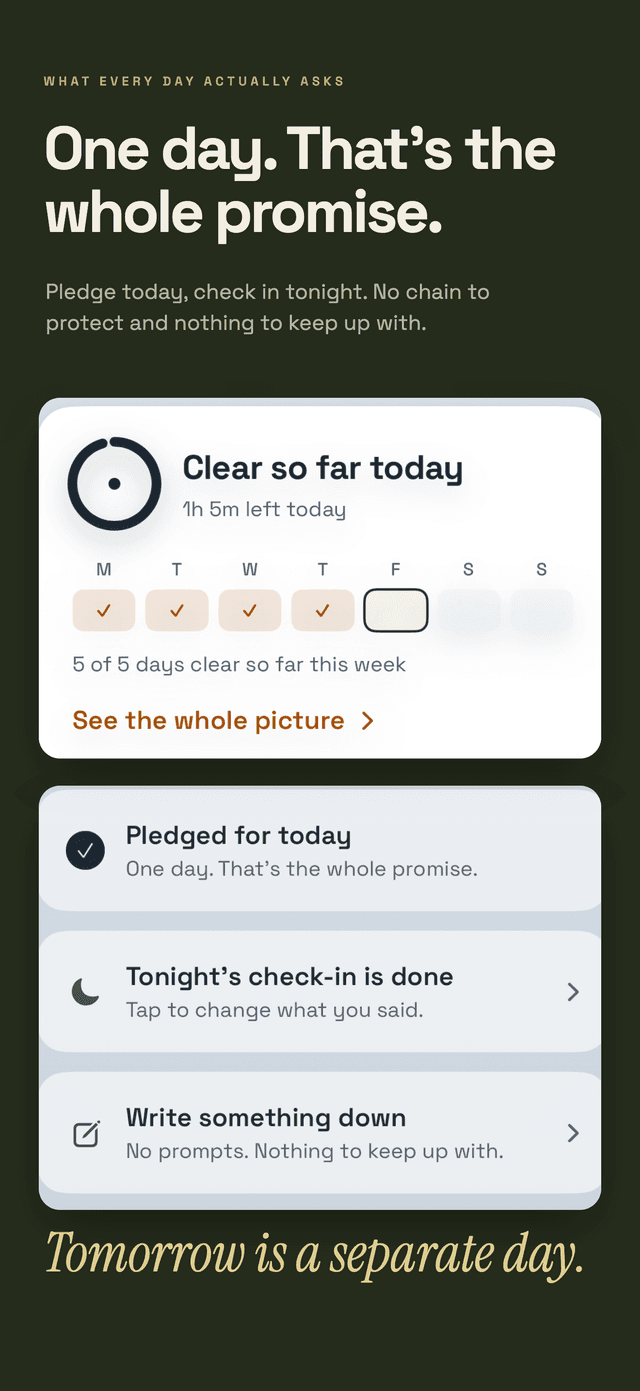
Hard Bit, the iPhone craving tracker from Daily Life Apps, is built around this separation. A gaming habit keeps its own counter, logs, and learned difficult hour, and logging a session changes the wording of your count rather than wiping it, so the pattern stays accurate on the hard weeks. The Hard Bit overview explains the on-device approach: no account, and nothing leaves your phone.
Prepare for the stressed hour while you are calm
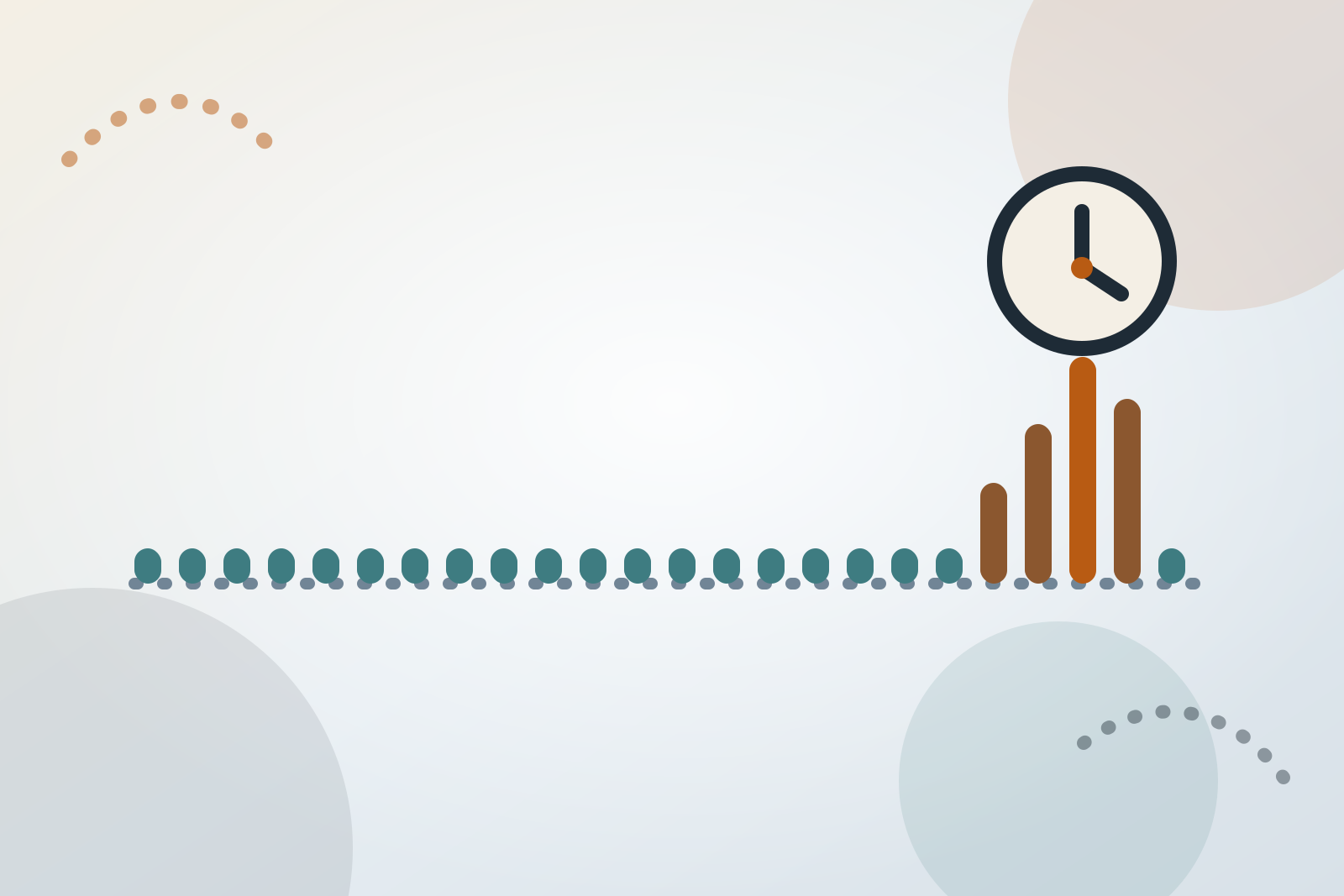
Stress patterns are often more predictable than they feel. Deadlines cluster, difficult meetings recur, Sunday evenings carry their own weight. Once your log shows a repeated slot, write an if-then plan for it:
If I finish the weekly review call on Thursday, then I eat before I sit on the sofa, and the console stays off until nine.
Change the setup around that hour too: log out of the launcher, move the controller out of the room, charge the phone in the kitchen, and put the replacement activity within arm's reach. Each small piece of friction protects the decision point you identified earlier.
This is also where a prepared craving plan earns its keep. Make a Craving Plan for Gaming Before You Need It walks through building one. If you use Hard Bit, the free hard-moment flow gives you one guided sequence for the moment itself, and a Hard Bit Plus subscription adds the learned forecast: it reads your own logged history and warns you before a difficult hour arrives. It makes no prediction below five entries and leans fully on your data at around twenty, so it will not invent a pattern during your first week.
When the stress itself needs more support
Sometimes the log shows something bigger than a habit: stress most days for weeks, sleep or appetite changes, a problem you are avoiding growing worse, or gaming that continues despite real costs at work, in studies, or in relationships. That is not a reason to hide the record. It is a reason to add support.
- Your GP is a reasonable first stop for ongoing stress or for gaming that feels difficult to control.
- NHS talking therapies for anxiety and depression accept self-referrals in England for adults, and for 16 and 17-year-olds in some areas.
- The National Centre for Gaming Disorders is an NHS clinic for people in England aged 13 and over whose gaming is hard to control. It accepts self-referrals and focuses on gaining more control so gaming does not take over other areas of life. It does not provide crisis care; in a crisis it directs you to your GP, A&E, or emergency services.
- Samaritans (116 123 in the UK and Ireland) will listen at any hour if you need to talk.
If you are in immediate danger or have seriously harmed yourself, call 999 or go to A&E. For urgent help that is not an emergency, call NHS 111.
Seeking help is not an admission that you meet any diagnosis. The WHO notes that only a small proportion of people who game develop gaming disorder, and that anyone who plays should stay alert to changes in their health and daily functioning. Asking early is the sensible version of that advice. Our editorial policy explains how this site separates general information, evidence, and product facts.
Frequently asked questions
Is using games to unwind after stress always a problem?
No. The National Centre for Gaming Disorders notes that gaming can be a good way to relax, de-stress, and socialise. The questions that matter are practical: can you stop when you planned to, and what is it costing you in sleep, money, work, or relationships?
Why do I play even when I know tomorrow will be worse?
Because the relief is immediate and the cost is delayed, and stress narrows attention toward whatever works fastest. The Korean study described above discusses this as avoidant coping: doing something unrelated to escape the stressful feeling. Naming the pattern is a useful first step, not a verdict on your character.
Do I have to quit gaming completely to fix this?
Not necessarily. You can choose to stop or to cut down, and neither is morally better. A cut-down goal works best with a measurable line, such as set days or a firm end time, rather than a vague intention to play less. Hard Bit supports both goals and tracks each habit separately.
How is this different from gaming disorder?
Gaming disorder, as the WHO defines it in ICD-11, involves impaired control, gaming taking priority over other interests and daily activities, and continuation despite negative consequences, severe enough to impair important areas of life and normally evident for at least 12 months. Only a clinician can assess that. This guide covers the far more common experience of stress-driven autopilot, and it points to professional routes if you suspect something more.