When one habit triggers another, the useful move is to map the sequence before trying to fight it. Log each habit separately with a time. Then check three things: which habit usually comes first, how long the gap is, and whether something earlier sets off both. Once you can see the chain, change the earliest link you can realistically reach. That is usually easier than stopping the second habit once the first is already under way.
A drink that leads to a cigarette, a bet that leads to an hour of scrolling, or a late game session that leads to porn are all sequences. They are not random events, and they are not failures of character.
Why one habit can become the cue for the next
Habit research gives a plain explanation. In a widely cited review, psychologists Wendy Wood and David Neal describe habits forming as responses become linked to the contexts and preceding actions they have repeatedly occurred with. Once formed, those cues can prompt the response directly, without you consciously choosing a goal first.
A previous habit is part of that context. If the second habit has followed the first often enough, starting the first can be enough to prompt the second. This is the same mechanism behind "habit stacking" advice for building new routines. It simply works for unwanted pairings too.
Some pairings also have a more specific mechanism. Smokefree.gov, run by the US National Cancer Institute, says that for many people alcohol is a trigger that makes them want to smoke. It adds that alcohol makes people more likely to act without thinking things through, which can raise the chance of a slip. So the first habit can do two things at once: supply the cue, and weaken the pause that might have stopped the second.
What this means in practice: the second habit may not be the right place to put all your effort.
Chain or shared cue? Know the difference
Two habits that appear together are not always a chain. There are two common shapes:
- A true chain. Habit A reliably comes first, and habit B follows within a fairly consistent gap. Example: a bet is placed during the match, and scrolling starts soon after the result.
- A shared upstream cue. Something earlier sets off both habits, in either order. Example: getting home tired and alone on a Friday leads to both drinking and gaming, sometimes one first, sometimes the other.
The difference matters because the fixes are different. In a true chain, changing habit A, or the moment just after it, may weaken habit B. With a shared cue, cutting habit A alone may simply let habit B start first. The better target is the upstream situation.
WithYou notes that triggers can be external, like a place, person, or time of week, or internal, like a mood. A shared upstream cue is often one of these. Habit A is just the first visible thing you notice.
Step 1: Keep each habit in its own timed record
You cannot see order or gaps in a single combined score. Give each habit its own log and record, at minimum:
- the time,
- where you were,
- what happened just before,
- whether you acted on the urge or it passed.
Keep the entries short. "Fri 8:40pm, sofa, second drink, vape urge, used" is enough.
If you already track several habits, how to track more than one habit without mixing the data explains why separate records keep the pattern readable.
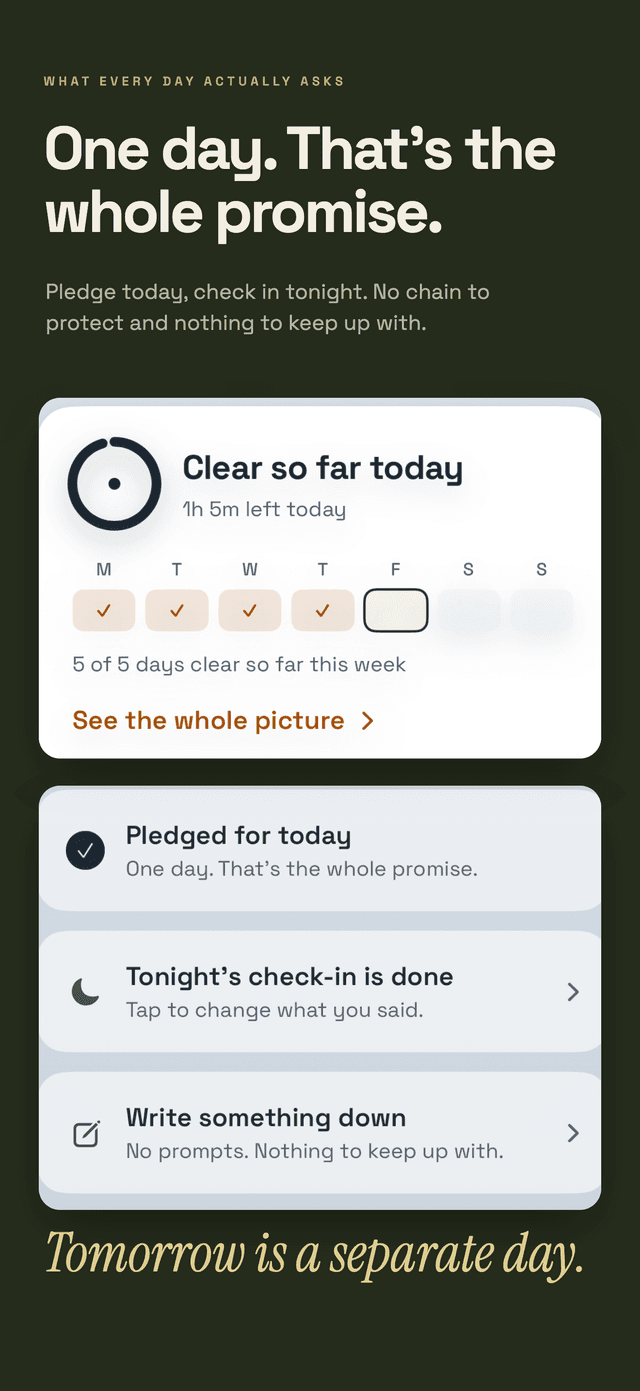
In Hard Bit, each habit already keeps its own counter, log, difficult hour, and reason for stopping, so the times for each habit stay separate. The app does not automatically detect links between habits. Comparing the two timelines is your job, and you can do it just as well on paper.
Step 2: Lay the two timelines side by side
After a week or two, put the entries for both habits next to each other, by day. You can use a notebook, a spreadsheet, or an export of your logs. How to export a habit log for your own records covers keeping a copy you control.
For each day where both habits appear, mark three things:
- Order: which came first?
- Gap: roughly how long between them? Minutes, an hour, the next morning?
- Before: what was happening before the first one?
Then look across the days. You are looking for answers like these:
- "Gaming almost always comes first, and scrolling follows within half an hour." This looks like a chain.
- "Drinking and smoking both start around 7pm, in either order, always after a difficult shift." This looks like a shared cue.
- "They overlap on a few days, but on most days they don't." This may be a coincidence.
Be honest about how much data you have. A handful of overlapping days suggests a question, not a rule. How to separate a pattern from a coincidence offers a practical test before you rebuild your week around a hunch.
Step 3: Check the days when the chain did not happen
Days when habit A happened without habit B are some of the most informative entries you have. Ask:
- What was different? Company, location, food, sleep, time of day?
- Was the gap interrupted by something, such as a phone call, leaving the venue, or going to bed?
- Did you plan anything in advance?
Do the same for days with neither habit. Smokefree.gov points out that smoking triggers can still bring on cravings even after a long time smokefree, so a clear day is not proof the link is gone. But clear days still show you which conditions protect you, and those are the conditions you can deliberately recreate.
Step 4: Change the earliest link you can reach
Now write the sequence as a simple line, starting with the cue at the far left. For example:
Payday → home alone → open betting app → lose → scroll for two hours → late night
Look for the first point where a realistic change is possible. Changes early in the chain often take less effort than resisting in the middle of it, when the first habit may already have lowered your guard.
Some examples of earlier links:
- Drinking leads to smoking: decide before you go out how much you will drink, or choose a place where smoking is awkward. Smokefree.gov suggests staying away from alcohol in the first few weeks of quitting smoking, and notes that drinking is often social and being around smokers can bring on the urge. How to prepare for an alcohol-related smoking trigger goes deeper on this pairing.
- A betting session leads to scrolling: turn off match and odds notifications, so the first link has nothing to start it.
- Late gaming leads to porn or endless feeds: set an end time for the game and move the phone out of the bedroom before you start.
- A shared cue (tired, alone, Friday) leads to both habits: plan the first hour after you get home, with food, a call, or a set activity, instead of tackling either habit head-on.
Write the change as an if-then plan: "If it is payday evening, I will move money to savings before I get home." Then test it for a week and keep logging both habits separately, so you can see whether the gap widens or the second habit drops away.
If two urges still hit together on the night, how to handle two difficult habits at the same hour covers how to decide which to answer first.
Decide which habit the plan should centre on
Mapping can reveal that one habit carries more risk than the other. That doesn't automatically make it the right first target. Sometimes the safest route is to change the habit that opens the chain, even if it is the less harmful of the two.
Weigh safety, harm, and how much leverage each link gives you. How to choose which habit to change first walks through that decision in more detail.
A few safety points come before any tracking plan:
- Alcohol or sedatives: if you may be physically dependent, stopping suddenly can be dangerous. Get medical advice before cutting the first link by stopping all at once.
- Smoking or vaping: general cue-planning is useful, but official stop-smoking services can explain evidence-based support and medicines. A plan for the drinking-to-smoking link works best alongside that support.
- Gambling: if one link involves money, practical barriers such as bank gambling blocks, self-exclusion, and specialist gambling support may matter more than any log. In Great Britain, the National Gambling Helpline offers free, confidential advice.
- Crisis: if you feel at risk of harming yourself or someone else, contact emergency services or a local crisis line.
Keep the record honest when the chain repeats
You will probably see the chain again, especially early on. When it happens, log both habits as they were, including the gap. Don't delete the entry, and don't merge the two habits into one "bad night".
An honest repeat shows whether your change targeted the right link. What to do after a slip without erasing your progress covers how to update the plan without treating one evening as proof that nothing has worked.
Hard Bit keeps the counter running after a logged slip rather than resetting it, so the full history stays visible for each habit. The Hard Bit overview explains how the difficult-hour forecast is calculated on your device from your logged entries, makes no prediction below five entries, and relies fully on your own record at around twenty. It is a tracking tool, not treatment, and it cannot judge whether you need more support.
Our editorial policy describes how we separate research findings from practical suggestions.
Frequently asked questions
How do I know if one habit really triggers another?
Look for a consistent order and a fairly consistent gap across many days. If habit A usually comes first and habit B follows within a similar window, that suggests a chain. If the order varies but both follow the same situation, the real trigger is probably that shared situation.
Should I quit both habits at the same time?
There is no single right answer. Some people find it easier to work on a linked pair together; others need to start with one. Safety comes first. Get medical advice before suddenly stopping alcohol or sedatives, and talk to a stop-smoking or gambling support service if those habits are involved.
What if cutting the first habit makes the second one worse?
Record it rather than guessing. A rise in the second habit can mean the link was actually a shared cue, or that the second habit is filling a gap. Either way, look further upstream for the situation that sets off both, and consider adding outside support.
Can I track the sequence without an app?
Yes. Two columns in a notebook, one per habit, with times and a short note about what happened before, are enough to show order and gaps. An app can make logging quicker, but the method is the same.