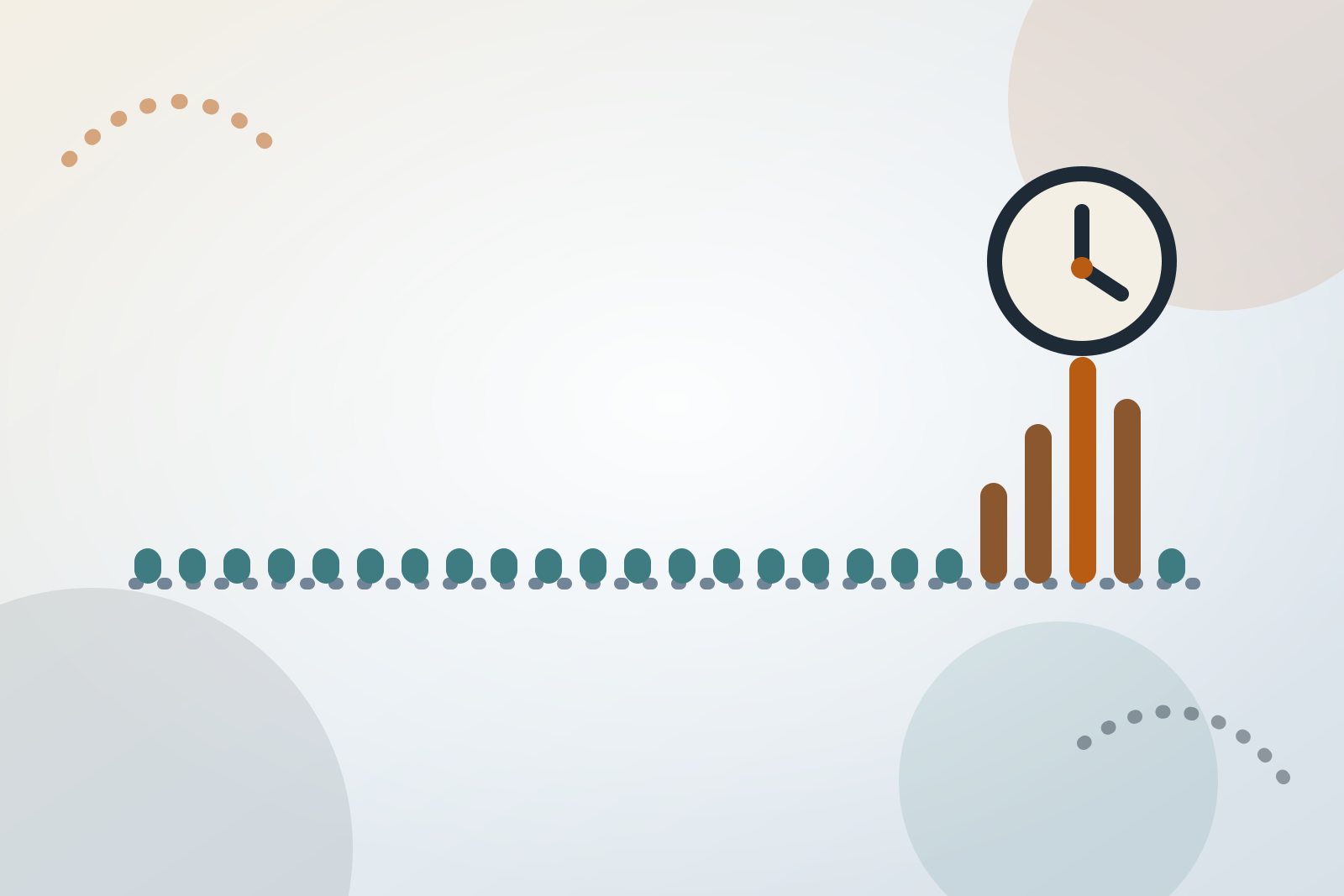
The most useful way to handle alcohol cravings is to stop treating them as a surprise. For most people cutting down or stopping, cravings cluster around a repeatable time: after work, with dinner, late in the evening, at the weekend. Plan for that hour. Work out when it happens, change one thing about it in advance, keep one default action ready for the urge itself, and review what happened afterwards.
You do not need a perfect evening. You need the next hour to go differently.
Check safety before planning anything
One warning belongs before every coping technique: if you may be physically dependent on alcohol, stopping suddenly can be dangerous. Alcohol Change UK warns that people who are clinically alcohol dependent can die if they suddenly and completely stop drinking. The NHS advises that someone who is physically dependent and wants to stop should get advice first, because stopping overnight could be harmful.
Signs that suggest dependence and the need for medical guidance include:
- anxiety after waking,
- sweating and mild tremors,
- nausea, retching, or vomiting in the morning,
- finding it hard to fully control your drinking.
Severe withdrawal symptoms, including hallucinations, severe tremors, seizures, or fits, are an emergency. Call 999 in the UK or your local emergency number.
If any of this applies to you, a GP or local community alcohol service can help you cut down safely. The rest of this article still applies, but alongside professional support rather than instead of it.
Find your difficult hour
A craving plan is only as good as its timing. Generic advice to “stay busy” fails because the urge does not arrive at random. It arrives after a trigger, and triggers repeat.
NIAAA's Rethinking Drinking programme separates triggers into two types: external ones, such as people, places, and times of day, and internal ones, such as a flash of frustration, excitement, tension, or a passing thought. It suggests tracking your urges for a couple of weeks to learn when and how they show up.
Keep the record small. For each urge, note:
- the time and day,
- where you were and what had just happened,
- how you felt,
- how strong the urge felt,
- what you did next.
After a week, look for the combination that repeats. “Evenings” is too broad to act on. “Thursday and Friday, between 6 and 8, after work, before dinner” is something you can prepare for. The method in How to Identify Your Craving Triggers and Difficult Times walks through this review step by step.
Hard Bit is built around exactly this idea. It keeps a private log for your drinking habit on your iPhone and, with enough entries, learns your difficult hour from your own history and warns you before it arrives. The Hard Bit overview explains how the on-device forecast works and why it makes no prediction until you have logged real entries.
Prepare the hour before it arrives
The best time to handle a craving is an hour or two before it starts, while you are calm and the decision is still cheap.
Change the route in. If the difficult hour follows a pattern, interrupt the pattern earlier. Eat before leaving work instead of arriving home hungry. Take a route that does not pass the shop where you usually buy. NIAAA notes that external triggers are often the most predictable and avoidable ones, and that keeping little or no alcohol at home removes the easiest option.
Write one default action. When attention narrows, a menu of ten ideas is useless. Choose one action that fits the actual hour: cooking something you look forward to, a walk around the block, a bath, a phone call you arrange in advance, a film you have already picked. Alcohol Change UK suggests “making a switch”: giving the craving a consistent alternative so the association starts to attach to the new thing instead of the drink.
Write your reason down. NIAAA recommends carrying your main reasons for changing, on a card or in your phone, so they are available when you need them. Keep it concrete: “I want clear mornings,” or “I want to remember the whole evening.” Hard Bit lets you save your own sentence and brings it into the hard-moment flow, but a note on paper works the same way.
Arrange one person. Tell someone which hour is hard for you and agree that you can call or text them during it. Knowing the option exists changes the hour before you use it.
A short sequence for the urge itself
When the craving arrives, shrink the task. You are not deciding about the rest of your life. You are deciding about the next few minutes.
- Name it. “I am having an urge to drink.” This describes the moment instead of obeying it.
- Move. Leave the kitchen, step outside, change rooms. Make the automatic next step less automatic.
- Pause. Five slow breaths, feet on the floor, exhale longer than inhale. The point is a pause, not instant calm.
- Ride it. Urge surfing treats the craving like a wave that builds, crests, and eases while you watch it rather than fight it. It is a coping technique, not a promise that the urge will pass by a particular minute; cravings vary, and some return in waves. What Is Urge Surfing and How Can You Practise It? explains the practice in more detail.
- Do the default action. The one you wrote down earlier, not a new decision made mid-craving.
- Challenge the thought if one is driving it. NIAAA gives the example of catching “one little drink couldn't hurt” and answering it honestly: you have seen what “just one” leads to, and you are sticking with your choice.
For a fuller version of this sequence, see How to Handle a Craving in the Moment.
Review the hour honestly afterwards
However the hour went, record it while it is fresh: what happened before the urge, what you tried, what helped even slightly, and whether you drank.
If you drank, do not delete the week. A drink after a planned sober evening is information, not erasure. Ask where the plan stopped fitting reality: Was dinner skipped? Was the bottle already in the house? Did the urge arrive an hour earlier than expected? Then change that one thing. What to Do After a Slip Without Erasing Your Progress covers how to do this without collapsing into a “start again Monday” reset.
If the hour went well, note what made the difference. Clear evenings teach you as much as difficult ones, and they are easier to repeat when you know which parts to repeat.
When a self-help plan is not enough
A craving plan is a self-management tool. It cannot assess withdrawal risk, and some situations need more than a good evening routine. NIAAA advises consulting a healthcare professional if urges remain very difficult, or if you make no progress with strategies like these after a few weeks. It also notes that non-addictive medications exist that can reduce the desire to drink, which a clinician can discuss with you.
Routes to support include:
- your GP, who can assess your drinking and refer you to local services,
- local community alcohol services, which the NHS lists in its service finder,
- Drinkline, the free and confidential UK alcohol helpline on 0300 123 1110,
- mutual aid groups such as Alcoholics Anonymous and SMART Recovery.
Reaching out is not an admission that the plan failed. It is the plan working: you noticed a limit and added the missing support. Our editorial policy explains how we separate general health information from product promotion.
Frequently asked questions
How long does an alcohol craving last?
There is no reliable fixed duration. Cravings vary between people and situations, can rise and fall in waves, and can return later in the evening. Techniques like delay, distraction, and urge surfing create space to make the next decision; treat any time estimate as a rough guide, not a guarantee.
Is it better to distract myself or sit with the craving?
Both approaches appear in mainstream guidance. NIAAA includes distraction alongside “riding it out,” and Alcohol Change UK describes urge surfing as a way of noticing the craving without fighting it. Use whichever is safer and more workable in the moment, and keep professional support in reach if cravings feel unmanageable.
Can I just use willpower for the difficult hour?
Willpower is part of it, but a craving at the end of a long day is exactly when it runs lowest. Preparation moves the effort earlier: remove the alcohol, change the routine, write the default action, and arrange the phone call while you are calm. The hour itself then asks much less of you.
Should I cut down or stop completely?
That depends on how much you drink, whether dependence is involved, and your own goal. Neither choice is automatically better. If you may be physically dependent, ask a GP or alcohol service before making a plan, because stopping suddenly can be harmful. More guides for planning around cravings are in the Hard Bit guides.