A reason for quitting gambling helps most when it is short, specific, and written in words you would still believe at your hardest moment. Build it from one real scene, such as a hidden payment or a missed bedtime story. Write it in the present tense and leave out any insults. Then test it against a loss or a live match, keep it where urges actually happen, and pair it with a practical barrier and a support route.
The goal isn't a perfect motivational line. It's a sentence that still makes sense to you at 11pm, after a loss, with your phone in your hand.
Why many reasons go flat when the urge arrives
Most people write their reason on a calm day, often just after something painful. At that point the reason feels obvious. Weeks later, an urge shows up with its own story: one bet to win it back, this match is different, you've earned it.
Gambling Help Online's guidance on urges notes that when an urge arrives, people often think about the positive consequences of gambling. Separately, it suggests carrying a personal list of the benefits of change to read when an urge appears. A reason that only works when you're already calm can't push back against that pull.
Three patterns often weaken a reason:
- It is too general. "I want to be a better person" is true, but it gives you nothing to picture.
- It is written as punishment. "I'm pathetic if I bet again" can add shame to the stress that may already be driving the urge.
- It is about a distant future. "Be debt-free in five years" can feel unreal when the urge is about the next ten minutes.
None of this means reasons are useless. It means the wording matters.
Start from one moment you actually remember
Research on why people try to resolve gambling problems is a useful starting point. A review in the Journal of Gambling Studies found that people mostly sought help because of harms that had already happened or were close: money problems, relationship strain, and difficult emotions. The review didn't test how to word a reason, but it suggests that concrete experiences, more than abstract values, are what tend to move people.
Use that. Instead of starting with a value, start with a scene:
- Think of one specific moment gambling cost you something. Maybe it was checking your balance in a car park, an excuse you gave someone, or a morning you woke up dreading your phone.
- Write down what you saw, felt, or had to do in that moment.
- Then write what you want instead, in the same concrete terms.
A general reason, "I want to stop losing money," might become: "I want to open my banking app on payday without my stomach dropping."
A general reason, "My family matters," might become: "I want to be listening when my daughter talks at dinner, not checking a live score under the table."
If you have records of what gambling cost, the method in tracking the money gambling used to cost can give you a real figure to anchor the sentence. Keep the amount honest rather than dramatic.
Write it in words you would believe at your difficult hour
Once you have the scene, shrink it into one or two sentences. Some practical rules:
- Use "I want" or "I am" rather than "I must" or "never". "I want to keep Saturday mornings free" is easier to come back to than "I will never bet again".
- Write in the present tense. "I'm protecting the rent money" feels closer than "I'll eventually be financially stable".
- Keep it under about 25 words. You may be reading it on a lock screen with your heart racing.
- Use your own words. If it sounds like a poster, rewrite it the way you would say it to a friend.
- Leave out insults and threats. They add pressure at a moment that is already hard.
You can also add a second line about what you'd lose in the next hour, not just in the long run. For example: "If I bet tonight, I'll spend tomorrow hiding it." Gambling Help Online's reminder-card approach includes the negative consequences of acting on an urge as well as the benefits of not acting. Having both on hand gives you two angles.
This is our editorial suggestion, not a clinical technique: draft three versions and keep the one that makes you pause, not the one that sounds most impressive. If you're working on more than one habit, keep this sentence specific to gambling. Keeping a separate reason for each habit explains why one shared reason tends to blur.
Test the sentence before you rely on it
A reason you have never tested is a guess. Before you depend on it, try it against the situations where you most often gamble:
- After a loss. Does it still make sense when part of you wants to win it back? If chasing losses is a pattern for you, read how to pause before chasing after a loss next to this.
- During live sport or a promotion. Does it compete with the excitement, or does it sound like homework?
- At your usual difficult hour. Read it at the time of day you most often bet. Late at night, tired, bored, alone.
- On payday. Does it still hold when money is suddenly available?
If it falls flat in one of these, change one thing. Make the scene more specific, move it closer in time, or add the cost of the next hour. Some people end up with one reason for nights and another for match days. That's fine.
Put the reason where the urge happens
Gambling Help Online suggests carrying your benefits list and keeping a reminder card, printed or on your phone, to read when an urge appears. Think about where your urges actually begin:
- If urges start on your phone, keep the sentence as the first thing you see before a betting app or browser. A lock-screen note, a pinned message to yourself, or a widget can all work.
- If urges start near a bookmaker or a machine, keep a card in the wallet slot where your bank card sits.
- If urges start with a notification, the reason should be there before the odds are.
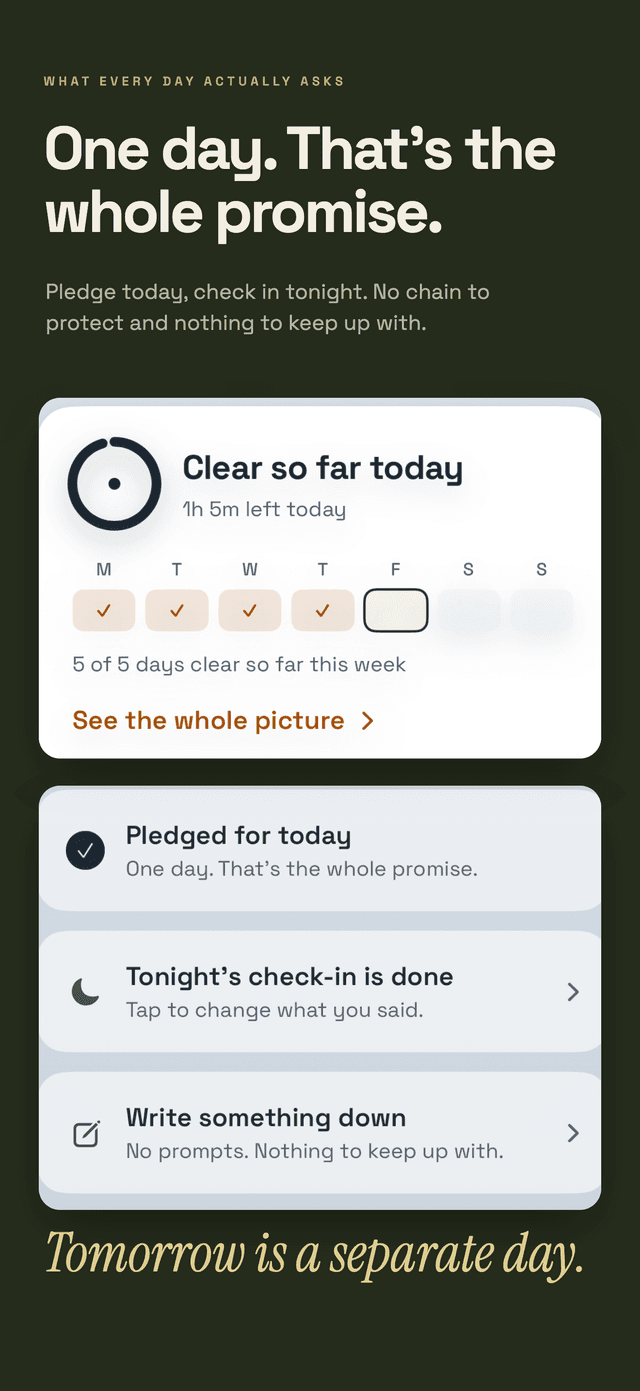
Hard Bit stores one reason for stopping per tracked habit, privately on your iPhone, and shows it as part of the hard-moment flow alongside a breathing circle and what the habit has already cost you. Your sentence and the hard-moment button are free. The Hard Bit overview explains how that sits next to the learned difficult hour. A sticky note does the same basic job. The point is that the reason is already there when you need it.
For the minutes after you read it, use the steps in handling gambling cravings in the moment.
Pair the reason with a barrier, not just a feeling
A sentence can create a pause. A barrier makes the pause last longer. The NHS suggests practical steps such as:
- registering with GamStop to block gambling sites and apps (UK),
- installing blocking software such as Gamban,
- asking your bank to block gambling payments,
- scheduling essential payments, such as rent or mortgage, to go out on payday before any gambling, and dealing with debts.
Your reason and your barrier can support each other. "I want to keep the rent money safe" sits well next to a bank gambling block you set up on a calm day. If a reason keeps losing to the same situation, that usually points to a missing barrier, not missing willpower.
To bring the reason, your barriers, and a support contact together in one place, use a gambling craving plan made before you need it.
Update the reason after a slip or a quiet month
A reason isn't a contract. It's worth revisiting:
- After a slip. Ask what the reason was competing with. Was it too distant, too vague, or not where you were? Rewrite it based on what actually happened. Don't delete the old version as if it failed you. What to do after a slip with gambling covers the rest of that review.
- After a calm month. As the original crisis fades, so can the reason's pull. Some people add what they've gained, such as savings, sleep, or a repaired conversation, so the reason looks forward as well as back.
- When your goal changes. If you move from cutting down to stopping completely, or the reverse, the reason should reflect that honestly.
A lived-experience suggestion people often share in peer support is to read the reason at a set time each day, not only in a crisis, so it stays familiar. Try it and keep it if it helps.
When a reason is not enough on its own
A good sentence can help you pause. It can't settle a debt, stop a lender calling, or replace specialist support. If gambling is causing serious money problems, secrecy, or distress, reach out:
- UK: the National Gambling Helpline, run by GamCare, is free on 0808 8020 133, 24 hours a day. NHS gambling clinics accept self-referral, and a GP can point you to local services.
- Australia: Gambling Help Online offers free, confidential counselling, including a 24/7 helpline on 1800 858 858.
- Elsewhere: look for your national or regional gambling helpline.
If you're thinking about harming yourself, you can call Samaritans free on 116 123 in the UK, or a crisis line where you live. If you're in immediate danger, call 999 in the UK or your local emergency number.
Hard Bit is a private tracker, not treatment or crisis support. Our editorial policy explains how we separate general guidance from product information.
Frequently asked questions
What are common reasons people give for quitting gambling?
Research and support services repeatedly point to money problems, strain on relationships, and difficult emotions such as stress, guilt or low mood. Your reason will be stronger if you turn one of these broad themes into a specific moment from your own life.
Should I write one reason or a long list?
Both can help. A longer list of benefits is useful for reflection on a calm day. For the moment of an urge, one or two short sentences are usually easier to read and believe. Some people keep the list in a journal and the short version on their phone.
What if my reason stops working?
That's common and doesn't mean you've failed. Test it against the situation where it stopped working, then make it more specific, move it closer in time, or add the cost of the next hour. If it keeps losing to the same situation, add a barrier or contact a support service rather than just pushing harder.
Is it helpful to write about my lowest point?
For some people, remembering a painful moment adds weight. For others it brings back shame that makes urges worse. If you include it, describe what happened plainly rather than judging yourself, and pair it with what you want instead. If revisiting it causes significant distress, talk to a gambling support service or counsellor.