If you're having a difficult night after quitting drinking, start by checking it isn't a medical problem. Shaking, heavy sweating, confusion, hallucinations or a seizure need urgent help, not a coping technique. If it's a craving, a bad mood or a long empty evening, make tonight smaller. Get alcohol out of reach, find out who you can contact at this hour, and get through the night in short stretches. The only goal is reaching the morning.
You don't have to feel good tonight. You only have to get to tomorrow.
Check first: is this a withdrawal night?
Some hard nights are cravings. Others are your body reacting to the alcohol stopping, and those need a different response.
The NHS says it can be very dangerous to stop drinking suddenly if you're dependent on alcohol. It says withdrawal symptoms can begin within 6 to 12 hours of your last drink. So if you drank heavily most days and stopped this morning, tonight may be when symptoms begin.
Get medical advice tonight if you notice:
- shaking hands or a trembling body,
- heavy sweating, nausea or vomiting,
- a racing heart or strong anxiety that feels physical,
- feeling confused, or seeing or hearing things that aren't there.
Seizures, hallucinations or severe confusion are an emergency. In the UK, call 999. For urgent advice that isn't an emergency, call NHS 111. In the US, call 911. Elsewhere, use your local emergency number. Don't drive yourself, and try not to be alone.
If you might be dependent, a GP or alcohol service can help you cut down safely. A plan for a hard evening doesn't replace that.
Name which kind of hard night this is
If it isn't a withdrawal night, give it a plain label. Different nights need different responses.
- A craving night: the pull towards a drink at your usual time and in your usual place.
- An emotional night: bad news, an argument, grief, or a day that went wrong.
- An empty night: loneliness, boredom, or no plans.
- A sleepless night: awake at 1am, with drinking as the old answer.
Say it in one sentence: "This is an empty night, and the urge is about filling time." The label tells you where to aim. Craving nights call for distance from alcohol. Emotional nights need contact with another person. Empty nights need structure. Sleepless nights call for lower expectations.
If an argument started it, what to do about alcohol cravings after an argument deals with that situation directly.
Shrink the goal to reaching the morning
At 9pm, "I'm never drinking again" is too big to hold. "I won't drink before I wake up tomorrow" is something you can actually do.
The structure below is our editorial suggestion rather than clinical guidance. Split the night into three or four stretches with a clear end to each:
- Until the easy way to buy alcohol is gone. That might be when your nearest shop closes or delivery stops. If somewhere near you is open all night, pick a time yourself, such as 10pm.
- Until food is eaten and the dishes are done.
- Until one film, one episode or one long bath is finished.
- Until bed. That can be early. You don't have to stay up to prove anything.
At the end of each stretch, check in for a moment, then start the next. If an urge spikes partway through, a five-minute plan for the start of a craving gives you a short sequence for those minutes.
Urges vary. Some fade quickly and some come back later in the evening. Riding one out is a coping technique, not a guarantee, so have your next stretch ready either way.
Put real distance between you and a drink
The NIAAA's Rethinking Drinking programme suggests keeping little or no alcohol at home, so the easiest option isn't there when an urge arrives. Tonight, that might mean:
- pouring away whatever is in the house, or handing it to a neighbour,
- leaving bank cards in another room, or using any spending controls your banking app offers for the evening,
- deleting a delivery app, or logging out of it until tomorrow,
- not taking the route past the shop if you go out for a walk,
- putting your keys somewhere awkward if driving to buy alcohol is part of your pattern.
None of this means you lack willpower. You're making the drink take more steps, at a time of day when you have the least energy to resist.
NIAAA also suggests reminding yourself of your reasons for changing, for example by carrying them on a card or in your phone. Read the sentence you wrote on a calmer day, not one you write now in a bad moment. "I want to remember tomorrow morning" is more useful tonight than anything harsh.
Find out who you can reach at this hour
Many people plan to "call someone" and then find, at 10pm, that nobody is available. Check now, while you can still think clearly.
Alcohol Change UK lists Drinkline, the free and confidential national alcohol helpline, on 0300 123 1110. When we checked, its hours were weekdays 9am to 8pm and weekends 11am to 4pm, so it may be closed during your hardest hour. Confirm the current hours on their page. Other support is open around the clock:
- Samaritans (UK and Republic of Ireland): 116 123, free at any time, day or night, if you're struggling to cope.
- SAMHSA's National Helpline (US): 1-800-662-4357. It's free, confidential and open 24/7, 365 days a year. It gives treatment referrals and information rather than counselling.
- NHS 111 (UK): for medical worries, including possible withdrawal.
Then choose one person you know. Send a simple message now rather than waiting for the worst moment: "Rough night. Not drinking. Can I call you at 9?" Some people find online recovery meetings help late in the evening. That's lived experience, not clinical evidence, but it costs little to try.
If any thoughts of harming yourself come up tonight, contact a crisis line or emergency services straight away.
If you can't sleep
Lying awake is a common reason people drink late at night, and sleep can be unsettled for a while after cutting down or stopping. If you're also shaking, sweating or feeling very anxious, treat it as a possible withdrawal night and go back to the first section.
If not, these lower-pressure moves may help:
- Get up after a while, go to another room with low light, and return to bed when you feel sleepy.
- Have a warm, alcohol-free drink and something small to eat if you're hungry.
- Put your phone face down outside the bedroom. Leave it there unless you need it for support.
- Accept that one short night is uncomfortable but survivable. Resting quietly still counts.
If sleep stays poor for weeks, talk to a GP rather than working it out alone.
If you drink anyway tonight
This happens, and one drink isn't a reason to finish the bottle. Safety comes first:
- don't drive, swim or look after anyone alone while drinking,
- stop where you are rather than telling yourself the night is already ruined,
- drink water, eat something, and put the rest out of reach,
- if you feel very unwell, can't stay awake, or are with someone who is unresponsive, call emergency services.
If you've been drinking heavily for some time, don't stop abruptly again tomorrow without advice. Talk to a GP or alcohol service about doing it safely.
Then go to sleep. The review can wait until tomorrow.
Use the morning to make the next hard night easier
Write down a few facts while they're fresh: when the urge peaked, what kind of night it was, what helped even a little, and whether you drank. Keep the tone of a weather report, not a verdict. Tracking alcohol without turning it into shame explains why an honest log is more useful than a flattering one.
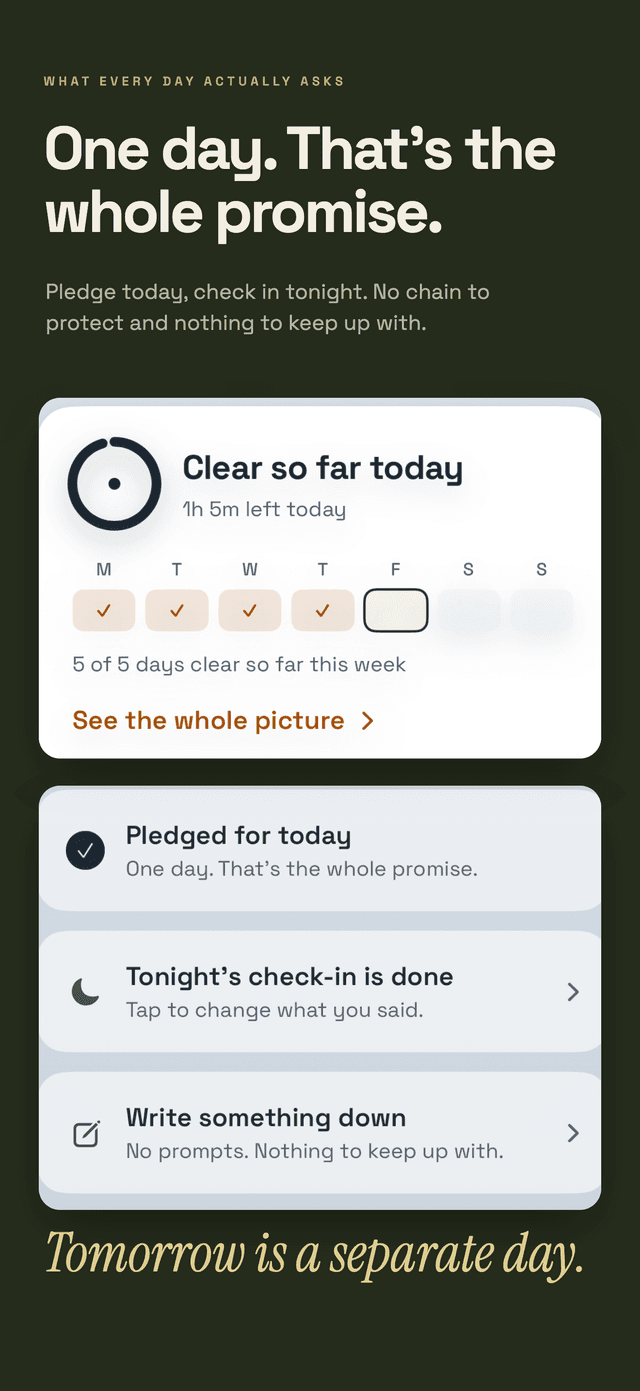
If you use Hard Bit, you can tap the hard-moment button during the night and see the sentence you saved earlier. You can log a drink without the counter resetting to zero, and the free version includes help links. With Hard Bit Plus, the app learns your difficult hours from your own entries on your iPhone and can warn you in advance. It makes no forecast until you've logged at least five entries. It's a private log, not treatment, and a notebook works on the same principle.
After a few hard nights, look for the pattern. Tracking the hours you're most likely to drink shows how to do that. Once you know the hour, a practical plan for the difficult hour helps you prepare for it before it arrives.
If several nights go the same way despite a changed plan, add support. NIAAA suggests talking to a healthcare professional if urges stay very difficult. Our editorial policy explains how we choose and check the health sources behind these guides.
Frequently asked questions
Why are nights so much harder than days after quitting drinking?
For many people, evenings carry the strongest cues: the end of work, being tired, being alone, and years of a drink marking the end of the day. Fewer people and services are available late, too. Possible withdrawal symptoms also matter if you drank heavily, so rule those out first.
Is it normal to crave a drink badly weeks after stopping?
Urges are a common part of changing how you drink, and they can come back unexpectedly, sometimes after a quiet stretch. A strong night doesn't mean your progress is gone. If cravings stay intense or keep increasing, talk to a GP or alcohol service about further support, including medicines that some people find helpful.
Should I go to bed early just to end the night?
Yes, if that's what gets you to the morning. An early night is a legitimate plan, not avoidance. If lying in bed makes the urge louder, get up, do something quiet in another room, and go back when you're sleepy.
When is a difficult night an emergency?
Seizures, hallucinations, severe confusion, being unable to stay awake, or thoughts of harming yourself need emergency help immediately. Shaking, sweating, nausea or strong physical anxiety after stopping need medical advice the same night, for example from NHS 111 in the UK. More practical guides are in the Hard Bit guides.