To record a slip without shame, write down what happened as an event, not as a verdict about who you are. Note when it happened, what you used or did and how much, what came just before, what you told yourself, and what happened next. Leave out words like "weak", "pathetic", or "hopeless". Don't round the amount down, and don't delete the entry because it feels embarrassing. Add one line about what you will try next time, then close the page.
If the slip involves physical danger, withdrawal, unaffordable spending, or a crisis, deal with that first. The record can wait.
Get safe first, then write while it is still fresh
An entry is usually easier to get right soon after the event. Later on, mood can reshape the memory. A bad evening can look worse the next morning, or a relieved morning can make it look smaller than it was.
Write once you are safe and settled, ideally the same day. Don't write while driving, during an argument, or while you are still noticeably affected by alcohol or another drug. In those cases a two-line placeholder is enough: "Friday, around 10pm, drank. Will write it properly tomorrow."
If you may be physically dependent on alcohol or sedatives, stopping suddenly after a slip can be dangerous, so speak to a doctor or local service before making a new plan. The wider response to a slip, including safety checks and preventing a repeat, is covered in what to do after a slip without erasing your progress. This article is only about the entry itself.
Separate the event from the verdict
A useful slip entry describes something you did. A harmful one passes judgement on who you are.
There is some research behind this distinction, though it is still emerging. The Association for Psychological Science reported a small study of newly sober adults who described a time they drank and felt bad about it. People whose body language showed more shame were more likely to relapse in the following months. People's own ratings of their shame did not predict the outcome, and guilt about specific behaviour was not linked to worse outcomes. The researchers suggested that shaming people for hard-to-curb behaviours may be the wrong approach.
That study does not prove a harsh diary line causes relapse. It is one modest sample in one setting. Still, it matches a practical point: you can act on "I did this", but you can't act on "I am this".
Compare:
| Verdict | Event |
|---|---|
| "I'm pathetic. Couldn't even last a week." | "Day 6. Vaped twice in the car park after the 4pm meeting overran." |
| "Total failure again." | "Bet £35 on a second-half market after the group chat started sharing tips." |
| "No self-control whatsoever." | "Scrolled from 11:40pm to 1:15am. Phone was charging next to the pillow." |
Each event line has a time, a place, and a cue you could change. The verdicts have none of these.
Use five plain fields and nothing more
A long confession is hard to write and harder to reread. Five fields cover what matters:
- When. Day and approximate time.
- What and how much. Use the unit that fits the habit: drinks, cigarettes, puffs, money, minutes, sessions.
- What came just before. Where you were, who was there, what you were doing, how you felt, and what made it easy to get.
- What you told yourself. The thought that gave you permission, in your own words: "Just one, it's been a rough day" or "I'll stop at half-time."
- What happened next. Did you stop, carry on, or contact someone? How did you feel an hour later?
Feelings belong in field three or five. "Restless, lonely, ashamed" is an honest description. "I'm disgusting" is a verdict pretending to be a feeling.
You can add one optional line: something that went better than it could have. Maybe you stopped after two, left early, or told a friend. That isn't a consolation prize. It is evidence about what already works.
Watch for three ways a record gets bent
Even careful people tilt their records. There are three common ways to do it.
Deleting. Removing the slip makes the history look cleaner and less accurate. When you review it later, you will be studying a story that didn't happen. Deleting for privacy is a different matter. If someone else could see your phone, removing an entry may be the safer choice, and how to delete a craving log you no longer want covers that. Ask whether you are deleting because the entry is unsafe to keep or because it is uncomfortable to read.
Shrinking. Writing "a couple" when it was five, or "a quick look" for ninety minutes, feels kinder in the moment. It also hides the size of what happened. If you don't know the exact amount, write your best estimate and mark it "about". Don't round down.
Inflating. This is the opposite tilt: "whole week ruined", "back to square one", "might as well finish the pack." Marlatt's relapse prevention model calls part of this the abstinence violation effect. As the overview in Alcohol Research & Health explains, the guilt and sense of failure after a lapse can raise the chance of a full relapse. The same model treats a lapse as a mistake to learn from rather than proof of personal failure. Writing "the day's gone anyway" can turn the entry itself into permission.
An honest entry is neither generous nor cruel. It is simply the right size.
Close with one next-time line, then stop
End each entry with a single practical sentence:
Next time the meeting overruns, I'll leave the vape in the glovebox and walk to the shop for water first.
Keep it small and specific. Avoid vows like "never again" or "I'll be stronger". They give you nothing to do at 4:15pm next Tuesday.
Then stop writing. Going over the same evening again and again late at night can easily turn into rumination rather than insight. You don't have to understand the whole pattern tonight. Save the analysis for a calmer time, such as a weekly review of your craving logs, when several entries sit side by side.
If the same next-time line keeps appearing and nothing changes, that is useful information too. How to change the plan after the same slip happens again explains how to move the change earlier or add support.
Keep the slip inside the whole record
One slip entry sits among all the days that went differently. Both are true, and both belong in the same record.
Public-health guidance takes a similar view. Smokefree.gov treats a slip as something you can get back on track from rather than the end of a quit attempt, and notes that many people need several tries before quitting for good. WithYou says a lapse or relapse is not the end of the journey, and describes it as a natural part of making changes and a chance to learn.
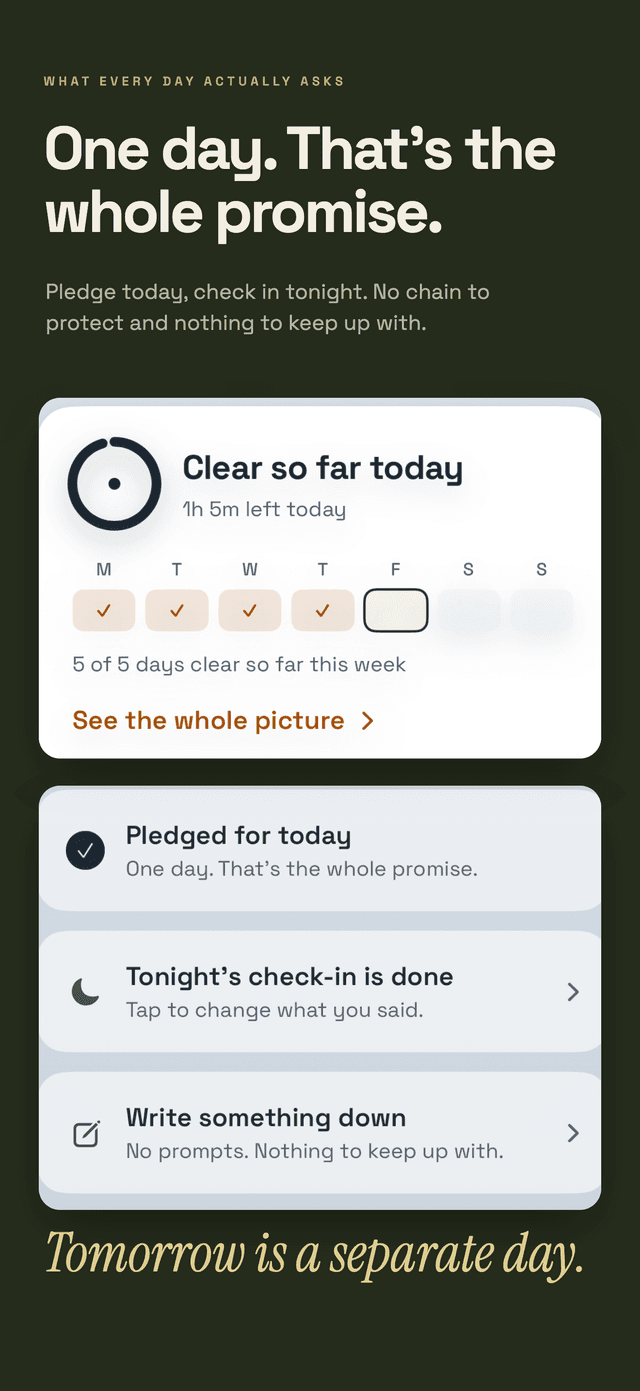
In practice, "27 of 30 days clear" with three honest entries says more than a counter wiped back to zero. Measuring clear days without worshipping a streak suggests other measures that hold up when the record is imperfect.
Hard Bit is built around this idea. Logging a use adds it to that habit's history instead of resetting the counter, and each habit keeps its own log. Logging and the counter are free. With a subscription, the difficult-hour forecast is calculated on your phone from what you have logged, so a hidden slip means it works from an incomplete picture. There is no account, feed, or server-side history, so the honest version has no audience but you. The Hard Bit overview explains how this works. A paper notebook can do the same job if you keep everything in one timeline.
Notice when the record says you need more than a log
Sometimes an honest record reveals something a log can't handle. Watch for slips that come closer together, amounts that keep rising, withdrawal symptoms, spending you are hiding, or entries you would be frightened for anyone to read.
- Alcohol or sedatives: ask a doctor or local service about withdrawal before any abrupt change.
- Smoking or vaping: official quit services can explain evidence-based support, including medicines, that general coping ideas don't replace.
- Gambling: practical barriers such as bank gambling blocks, self-exclusion, and specialist gambling support may matter more than a better diary, especially if debt is involved.
- Immediate danger, overdose risk, or thoughts of harming yourself: contact emergency services now.
An honest log can help you explain the pattern to a professional, and you can export your own records if you choose to. It cannot assess risk or decide what level of care you need. Our editorial policy explains how Daily Life Apps handles health information and product claims.
Frequently asked questions
Should I write down how I felt, or only the facts?
Both. Feelings are facts about the moment. "Tired, anxious, wanted the evening to end" helps you spot patterns later. Leave out character judgements such as "I'm useless". They describe a verdict, not an experience.
What if I genuinely can't remember the amount?
Write your best estimate and mark it "about". An honest approximation is more useful than a confident number you rounded down. If you often can't remember, note that as well. It may be worth discussing with a professional.
Do I have to record every slip?
No. It is your record and your choice. A missing entry does leave a gap, though, and gaps tend to fall on the hardest days. If writing a full entry feels unbearable, use the two-line minimum: when, and what. You can fill in the rest later or leave it.
Should I tell someone about the slip as well?
That is up to you. WithYou notes that telling someone is a personal choice, and that for some people talking about a lapse could put their safety or living situation at risk. If you have a trusted person or support worker, a short factual message can help them help you, and saying it out loud can make the slip feel less like a secret to hide.