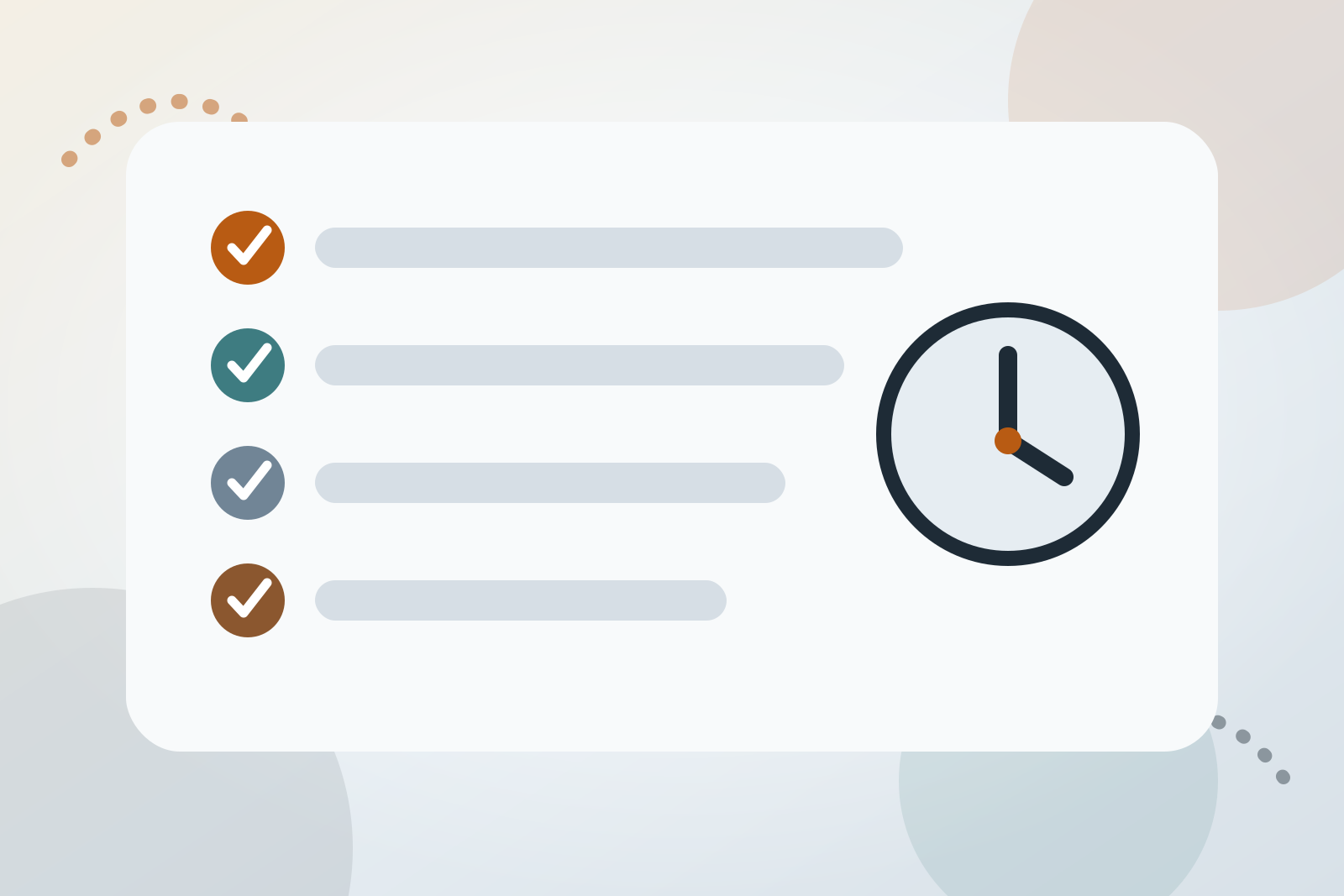
Alcohol cravings after work are often less about one powerful moment and more about a familiar route: you finish a task, leave the building or close the laptop, pass the usual shop, open the fridge. To handle them, prepare a small move for each part of that route. Eat before you leave, change the stop on the way, swap the drink-pouring ritual for another one at the door, and put off the decision until you have changed clothes and sat down somewhere different.
If you drink every day or feel unwell when you don't, read the safety section before changing anything.
Why the end of the workday pulls so hard
For many people, the first drink of the evening does a job. It marks the line between "work" and "mine". Drinkaware suggests breaking the link between alcohol and unwinding, setting a clear end to the working day, and using a transition ritual that tells your brain it's time to switch off.
Several things often pile up at the same time:
- The day has no clear ending. Without a ritual, the drink becomes the ritual.
- Your body is depleted. A late or skipped lunch and a long afternoon can feel a lot like "I need something."
- The story is ready. "I've earned it" or "today was awful" is a thought you've probably rehearsed many times.
- Access is easy. The route home passes a shop, or the fridge is the first thing you see.
NIAAA's Rethinking Drinking guidance names activities, times of day and feelings among the things that can trigger an urge, alongside people and places. It suggests planning something else to do when they come up. After work often brings several of those together, so one generic tip rarely covers it.
This is general information, not a diagnosis. The aim is to see the shape of your own after-work hour clearly enough to plan for it.
Map your handover in one evening
Before you try anything new, write down what usually happens between the end of work and the first drink. Keep it plain and in order. One example:
5:40 finish the last call. 5:55 leave, tired, haven't eaten since 12:30. 6:15 pass the corner shop. 6:25 home, bag down, fridge open. 6:30 first beer, standing in the kitchen.
That sequence has at least four places you could step in. The pour at 6:30 is the hardest one to change, because by then everything else has already happened.
If you don't know your pattern yet, log the next few weekday evenings: the time the urge started, where you were, what you'd eaten and what happened next. NIAAA suggests tracking urges for a couple of weeks to learn what sets them off. Our guide to tracking the hours you are most likely to drink shows a simple way to keep that record without it becoming a chore.
Checkpoint one: before you leave work
The best time to deal with the after-work urge is often before the workday ends.
- Eat something in the last hour of work. A sandwich, fruit, yoghurt or something more substantial. It won't remove a craving, but it takes hunger out of the mix.
- Close the day on purpose. Write tomorrow's top task on a sticky note, shut the laptop and say "done". This gives the day a finish line that isn't a glass.
- Send one message. Text a friend: "Leaving work now, call you at 6:30?" A fixed point later in the evening gives the next hour some structure.
- Decide now, not later. Write tonight's plan in one line while you're still calm: "No alcohol tonight" or, if you're cutting down, "Two drinks, after dinner, sitting down."
If you're cutting down rather than stopping, deciding the limit before you leave work makes it a decision you already made, not one you have to negotiate at the fridge.
Checkpoint two: the route home
The route home is where an intention often turns into a purchase. NIAAA suggests avoiding the people and places that make you drink when you don't want to, where you can. On a commute, that can be very literal.
- Change one turn. Take a street that doesn't pass the shop, or get off at a different stop.
- Pay differently. If tapping a card at the shop is too easy, leave that card at home on weekdays for a while.
- Fill the gap. Use the journey for something that ends at the door: a podcast episode, a phone call or a walk for the last stretch.
- Name the urge if it shows up. "I'm wanting a drink because I'm tired and it's 6pm." Saying it describes what's happening without obeying it.
If colleagues usually go for drinks, have a sentence ready: "Not tonight, but I'm up for coffee on Thursday." You don't have to explain yourself.
Checkpoint three: the first ten minutes through the door
These minutes often decide the evening. Change what your hands do first.
- Change your clothes straight away. It's a physical signal that work is over.
- Make a different drink in a glass you like. Sparkling water with citrus, tea or a non-alcoholic option, if that doesn't act as a cue for you. Keep the ritual and change what's in the glass.
- Sit somewhere other than your usual drinking spot. If you always drink standing in the kitchen, take your drink to another room.
- Delay the decision. Tell yourself: "I'll decide after I've eaten." NIAAA describes accepting an urge and riding it out without giving in as one option. How long an urge lasts varies, so treat a delay as a way to make space for a better decision, not a promise that the urge will be gone by a certain time.
If dinner prep is part of the cue, try the ideas in cooking without the usual drink.
If you work from home or work shifts
Remote work removes the commute, and with it a natural buffer. The kitchen may be ten steps from your desk.
- Create a pretend commute. Walk around the block before you go into the kitchen, so there's still a gap between work and home.
- Shut down the workspace properly. Close the laptop, put it in a bag or drawer and turn off the desk light.
- Keep alcohol out of sight of the place where you work.
For shift workers, "after work" might be 7am or 2am. The same three checkpoints apply, but the alternatives need to fit that hour: a shower and food instead of a gym, or a message to a friend who's awake at that hour. Plan for the hour you actually finish, not a standard 6pm.
When the after-work urge flows into a long evening, build a plan before evening cravings start covers the hours after dinner. For when the urge is intense right now, use the practical plan for the difficult hour.
Use your own record to see the pattern
After a week or two of notes, look for repeated combinations, not one cause. "Tuesdays and Thursdays, after the late meeting, when I skipped lunch" is far more useful than "work is stressful."
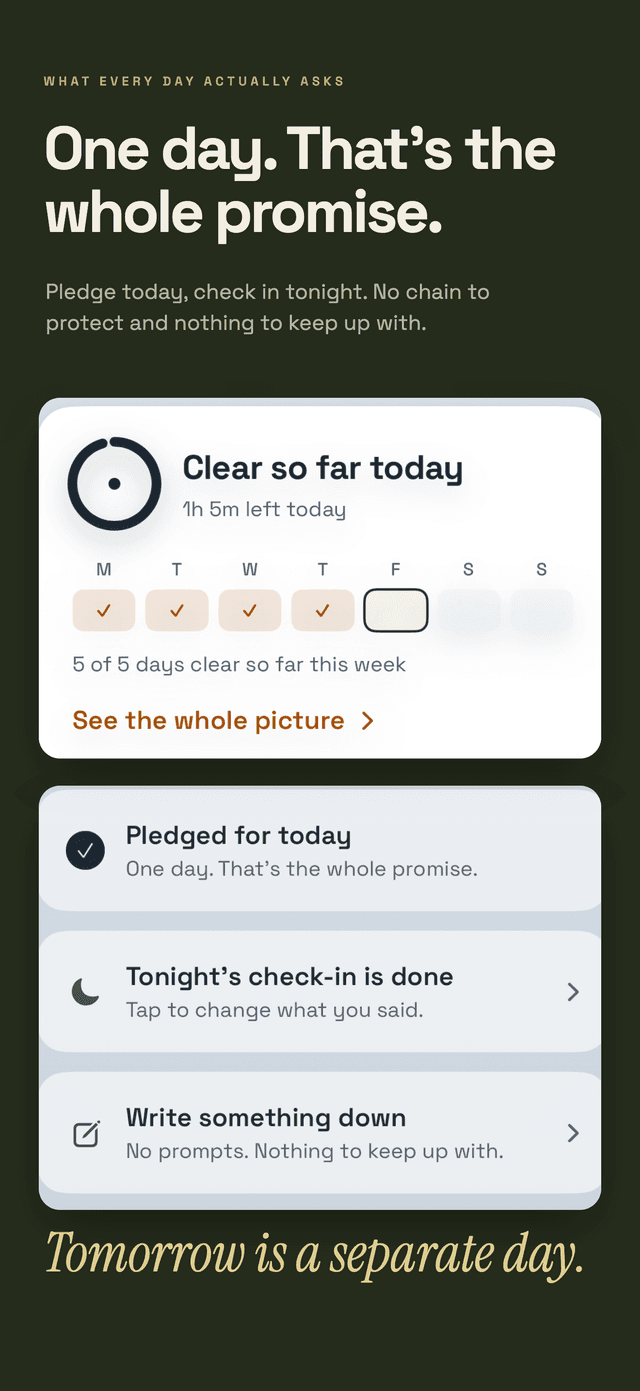
Hard Bit, an iPhone app, is built around this kind of record. You log drinking cravings and use privately on your phone, with no account. The free version includes a hard-moment flow that brings back a sentence you wrote about why you're stopping or cutting down. Hard Bit Plus adds a forecast of your difficult hours, calculated on your device from your own entries, with an advance warning before that hour. It makes no prediction until you have five entries and relies fully on your own history at about twenty. The Hard Bit overview explains how it works. A notebook works too. What matters is that the plan comes from your real evenings.
Keep the record honest. If you drank, log it. A difficult Tuesday is information you can use for next Tuesday.
When an after-work drink needs more than a routine change
Some after-work urges aren't just a habit. Get qualified support if:
- you drink most days and find it hard to go a single evening without alcohol,
- you get shaking, sweating, nausea or anxiety when you go without,
- the urge stays very difficult even after a few weeks of trying different strategies,
- drinking is affecting your work, relationships, driving or safety.
The NHS advises that if you're physically dependent on alcohol and need to stop completely, stopping overnight could be harmful. You should get advice about this, including about any medicine you may need to stop safely. Speak to a GP or local alcohol service before making a sudden change.
Call emergency services (999 in the UK, 911 in the US, or your local emergency number) for severe withdrawal symptoms such as seizures, hallucinations, severe shaking or confusion, or if anyone is in immediate danger.
Our editorial policy explains how we choose and review health sources.
Frequently asked questions
Why do I crave alcohol as soon as I finish work?
Often it's a combination: a learned routine at the same hour, tiredness, hunger, built-up stress and easy access. Drinkaware notes that alcohol can make stress and anxiety harder to manage, even if it feels like relief at first. Logging a few evenings usually shows which parts matter most for you.
Is a non-alcoholic drink a good replacement?
For many people it helps keep the ritual of marking the end of the day. For others, the taste or the bottle is itself a cue. Try it and note what happens. If it makes the urge stronger, switch to something less similar, like tea.
Should I stop completely or just cut down after work?
Either can be a valid goal, and the right one depends on your health and circumstances. If you're cutting down, set the limit before you leave work. If you may be physically dependent, get medical advice before stopping suddenly.
What if I gave in and drank after work anyway?
Record what happened without judging yourself, find the earliest checkpoint you could change, and adjust one thing for the next similar evening. The first alcohol-free Friday night guide may help if weekends are the next challenge.