A useful answer to how to handle gambling cravings starts by making the moment smaller. You do not need to win a lifelong battle in the next ten minutes. You need to pause, move away from the bet, make money harder to reach, do one prepared thing, and get another person involved if the urge feels bigger than your plan.
The goal is not to feel nothing. The goal is to get through this urge without a bet, and to learn something from it for the next one.
Name the urge instead of obeying it
Say something plain, out loud if you can: “I am having an urge to bet.” It sounds almost too simple, but it does two jobs. It reminds you that the urge is an experience happening to you, not a decision you have already made. And it stops the craving disguising itself as a reasonable idea, such as “just checking the odds” or “one small acca.”
A clinical psychologist and a clinical psychology registrar at Gambler's Help describe this as noticing the urge, pausing to observe it, and describing it without judging or reacting to it, for example, “I am noticing a really intense desire to place a bet, and my hands feel sweaty and tingly.” You are observing the craving, not negotiating with it.
Then delay. Not forever, just for the next few minutes. “I can decide after I have done one other thing” is easier to hold than “never again.”
Cut off the money route first
Gambling differs from most habits in one important way: the damage happens through money, and modern betting is built to make spending frictionless. So in the moment, the most effective moves are financial, not heroic.
Depending on where you are:
- leave your bank card and phone wallet behind and step away from the screen,
- move money out of the account you usually bet from, into one you cannot reach instantly,
- close the betting app and log out rather than just switching away from it,
- if you are near a bookmaker or venue, leave without your card, not just without placing a bet.
The NHS recommends putting these barriers in place ahead of time: asking your bank to block gambling payments, signing up to GamStop so you cannot use gambling sites and apps for six months, one year, or five years, and installing Gamban to block gambling sites and apps on your devices. It also suggests paying important bills on payday, by direct debit, before money is available to gamble. Barriers set up on a calm day protect you on a hard one, because a craving at full strength is exactly when friction helps most.
Ride the wave without expecting a timer
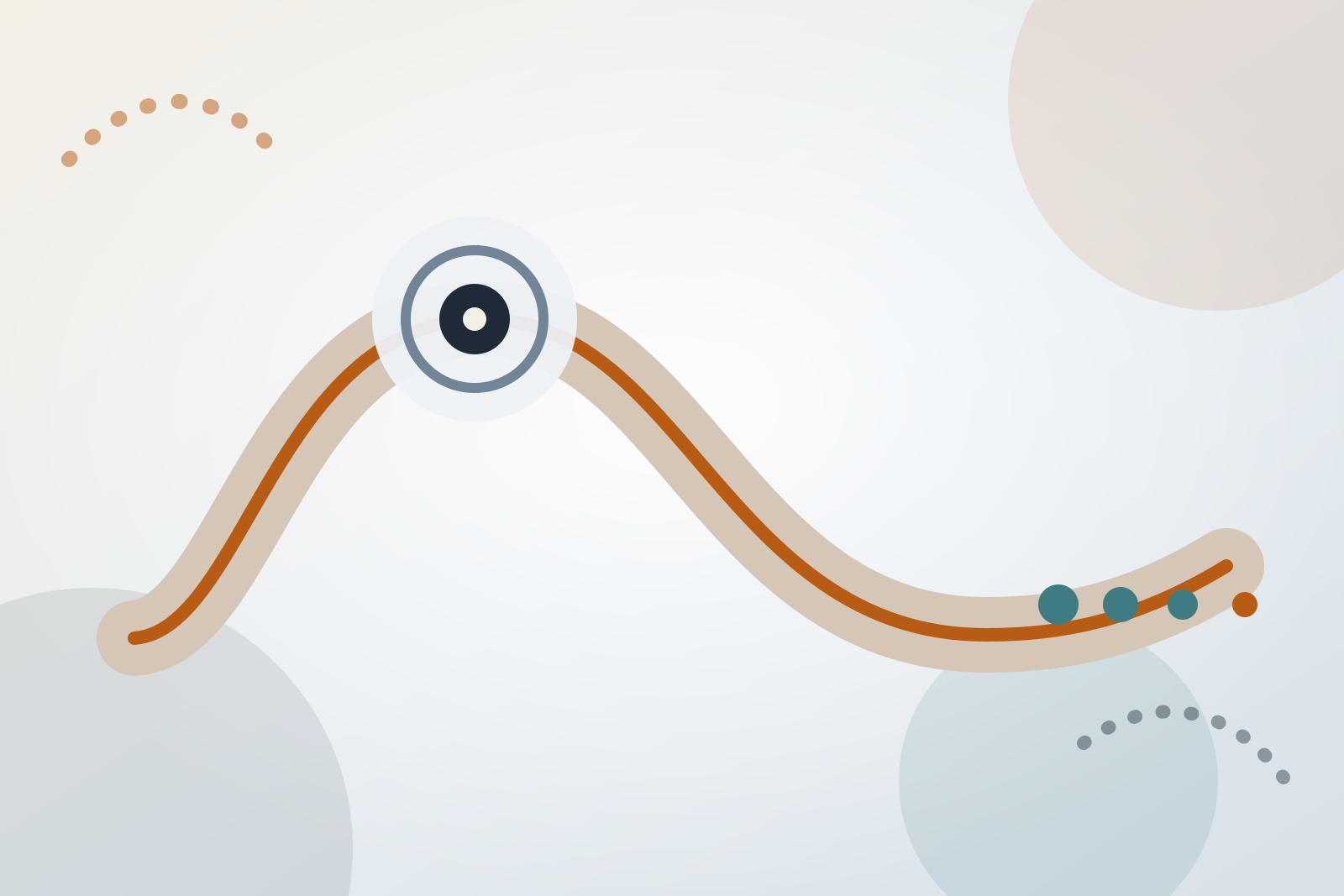
Urge surfing is a technique often suggested for gambling cravings. The idea, as Gambler's Help explains it, is that an urge can build like a wave, reach a peak, and then ease. Rather than fighting the urge or obeying it, you notice where it sits in your body, keep breathing, and let it run its course while you stay occupied.
Use it as a coping technique, not a guarantee. There is no fixed number of minutes after which a craving must pass, and some urges return in several waves. What the technique offers is a different posture: you are riding something changeable instead of being dragged by it.
A simple way through the peak:
- Put both feet on the floor and let your out-breath run slightly longer than your in-breath.
- Notice where the urge shows up physically, tightness, restlessness, heat, without trying to argue it away.
- Do something absorbing and ordinary until the intensity drops: a walk, a shower, a phone call, a programme you have seen before, food you have to prepare.
If the wave does not ease, that is information, not failure. It is a sign to add a person or a barrier, which the next sections cover.
Do one prepared thing, not a perfect thing
A long list of healthy alternatives is useless when your attention has narrowed to the bet. Pick one default action in advance, something that fits the actual hour and place where your cravings tend to arrive, and make it easy to start.
Late at night, that might be leaving the phone charging in the kitchen and going to bed with a radio on. After work, it might be a walk that does not pass the bookmaker. If boredom is the fuel, Boredom and Gambling Urges: Replace the Fast Decision looks at how to build a different default for exactly that gap.
The replacement does not need to be impressive or productive. It needs to carry you from “I want to bet” to the next decision, which you will make more clearly.
Recognise the chasing script
Some cravings arrive wearing a costume: “You are down this week, one good bet fixes it.” The NHS includes trying to win back money you have lost, chasing losses, among its screening questions for gambling harm, because the pattern is so common and so dangerous.
When the urge is specifically about recovering money, treat it as its own situation. The bet is not a plan to repair the loss; it is the thing that created the loss asking to do it again. Gambling Urges After a Loss: Pause Before Chasing goes deeper on interrupting that sequence, and if debt is already part of the picture, the NHS points people to the National Debtline rather than to another bet.
Bring another person into the moment
A craving survived alone is fine. A craving survived with help is also fine, and often easier.
In the UK, the National Gambling Helpline, run by GamCare, is free on 0808 8020 133, 24 hours a day, seven days a week. You do not need to be in crisis to call; “I am having a strong urge right now and I need to talk through the next hour” is a legitimate reason. GamCare also publishes a free self-help workbook, including an Access, Time and Money worksheet and a gambling diary, if you want structured material between urges. If you use Hard Bit, the Hard Bit support page explains what the app's hard-moment button does and how to reach the team; the wider principle is that support should be reachable while the urge is live, not bookmarked for later.
Longer term, the NHS runs specialist gambling treatment clinics in England that accept self-referral, and your GP can point you to local services. If gambling is seriously affecting your mental health and things feel urgent or unsafe, the NHS urgent mental health routes and emergency services are the right call. Reaching out mid-craving is not dramatic. It is the plan working.
Record the craving once it shifts
When the intensity drops, whether you gambled or not, take thirty seconds to log what happened: the time, what triggered it, how strong it was, what you tried, and what it cost or nearly cost.
This is not bookkeeping for its own sake. One craving is an event; several logged cravings are a pattern you can prepare for. You might find that the urge is really “Saturday, during the match, after a few drinks” rather than “all the time.” How to Track the Hours You Are Most Likely to Gamble explains how to read that kind of time pattern without treating it as destiny.
Hard Bit is built for this: each habit keeps its own private log and difficult-hour record on your phone, with no account and no data leaving the device, and the hard-moment flow puts your own reason for stopping in front of you while the urge is loud. A Private Way to Track Gambling on iPhone describes how that works. A notebook does the same job if you prefer one. What matters is that the record is honest, including the urges that ended in a bet, because those entries teach you the most about where your plan breaks.
Set up the next craving before it arrives
After the moment passes, turn what you learned into preparation:
- One barrier: a bank gambling block, GamStop, Gamban, or cash-only days.
- One action: the single replacement you will do first, chosen for your actual difficult hour.
- One person: the helpline number or the friend you will message when an urge starts.
- One sentence: the reason you are doing this, written while you are calm.
Keep the plan where the craving happens, usually on your phone. Rehearse it once when nothing is at stake. And if the same situation keeps beating the plan, change the conditions, the access, the people, the route, rather than simply demanding more willpower from yourself. You will find more practical, source-reviewed gambling guides in the Hard Bit blog.
Frequently asked questions
How long does a gambling craving last?
There is no reliable fixed duration, and anyone who promises one is guessing. Urges can rise, peak, and ease, and they can come back in waves. The practical move is to create decision space with a delay, a barrier, and an absorbing activity, and to get support if the urge stays intense rather than easing.
Is urge surfing enough on its own?
For some urges, yes. For others, especially where money, debt, or repeated loss of control is involved, it works best alongside practical barriers and human support. Think of it as one technique in a wider plan, not a test of mental strength.
What should I do if I have already opened the betting app?
Close it and log out, move away from the screen, and remove the payment route before deciding anything else. The sequence only ends when you stop feeding it. If you do place a bet, record what happened honestly and look for the earliest point you could change next time, rather than writing the whole day or week off.
When should I call the National Gambling Helpline?
Whenever the urge feels bigger than your plan, and you do not need to wait for a crisis. The helpline (0808 8020 133) is free and open 24 hours a day. If you feel at risk of harming yourself, treat that as urgent and contact NHS urgent mental health services or emergency services.