Phone addiction is a common phrase, but screen time alone cannot tell you whether it applies to you. A more useful first step is to map what happens.
For seven days, collect two kinds of information: the totals already recorded by your phone and a short context note when a session feels automatic or continues longer than you intended. The device report shows amount and frequency. Your notes show the cue, purpose, and consequence. Together, they can reveal one specific pattern worth changing.
Start with what the label can and cannot tell you
A 2018 Digital Health editorial defined problematic mobile phone use as difficulty regulating use that eventually brings negative consequences in daily life. That is a research definition, not a diagnosis you should apply to yourself.
Johns Hopkins Medicine notes that the phone-addiction label remains debated. Its practical signs of concern focus on loss of control and interference with school, work, or daily activities, not one universal number of hours.
The World Health Organization does define gaming disorder in ICD-11, with activity-specific criteria that include impaired control, increasing priority, continued gaming despite negative consequences, significant impairment, and a pattern normally evident for at least 12 months. Those gaming criteria should not be transferred to every kind of phone use.
The safer question is therefore not “Does this number prove addiction?” Ask whether use is repeatedly unplanned, difficult to stop, or displacing something important.
Use recorded totals without treating them as a verdict
Memory is especially weak at counting frequent, brief interactions.
In a 2015 PLOS ONE study of 23 Android users, phones recorded a mean of 84.68 uses per day while participants estimated 37.20. Estimated and recorded numbers of uses were not significantly correlated. Fifty-five per cent of recorded uses lasted less than 30 seconds.
The study also found no significant relationship between its problem-use scale and either recorded or estimated use. That does not invalidate every questionnaire or prove that time never matters. It shows that frequency, duration, and perceived difficulty are different measures.
The study was small, involved university staff and students, and used software that sometimes counted calls and music as active use. Its averages are not targets or population norms. The useful lesson is narrower: let your phone count interactions, then use your notes to explain their context.
Build a seven-day map, not a diagnosis
Use one ordinary week if possible. Travel, illness, deadlines, or major events can produce an unusual pattern, so note them rather than pretending the week is typical.
Collect three layers:
- Device totals: screen time, pickups or unlocks, notifications, and most-used apps.
- Context notes: what happened before an automatic session and what you opened first.
- Consequences: whether the session delayed sleep, interrupted work, displaced a conversation, or caused no meaningful problem.
Seven days is a practical observation window, not a clinical timeline. It gives you a hypothesis to test.
Copy the numbers your phone already records
On iPhone, open Settings, then Screen Time. Apple says its daily and weekly summaries can show total time, frequently used apps, pickups, and notifications.
On supported Android phones, open Settings, then Digital Wellbeing and parental controls. Google describes reports for screen time, times opened or device unlocks, and notifications. Labels and available details can vary by phone manufacturer and software version.
At roughly the same time each evening, copy:
- total screen or app time,
- pickups, unlocks, or times opened,
- notifications received,
- the two most-used apps.
If your report combines several devices, decide whether to keep that setting on or off for the whole week. Consistency matters more than choosing the perfect metric.
Do not compare iPhone pickups directly with Android unlocks or another person's report. Use the same measure to compare your own days.
Add notes only when use feels automatic
Do not try to record every pickup manually. Let the device report handle frequency. Write a short note when you notice that you opened the phone without a clear purpose, changed apps automatically, or continued after deciding to stop.
Record:
- the time and day,
- where you were,
- what happened immediately before,
- what you opened first,
- what happened afterwards.
For example:
Tuesday, 11:20pm; in bed; checked one message; opened short videos; stopped after midnight and delayed sleep.
Keep some deliberate sessions too:
Thursday, 8:10am; on the bus; opened work email for a reply; closed it after answering.
The contrast matters. If you record only frustrating episodes, the map will make all phone use look harmful. Deliberate use for work, navigation, care, health, and connection may be exactly what you want to protect.
Never type a log while driving, crossing a road, or handling another unsafe situation.
Review the map by time, entry point, and consequence
After seven days, make three passes through the record.
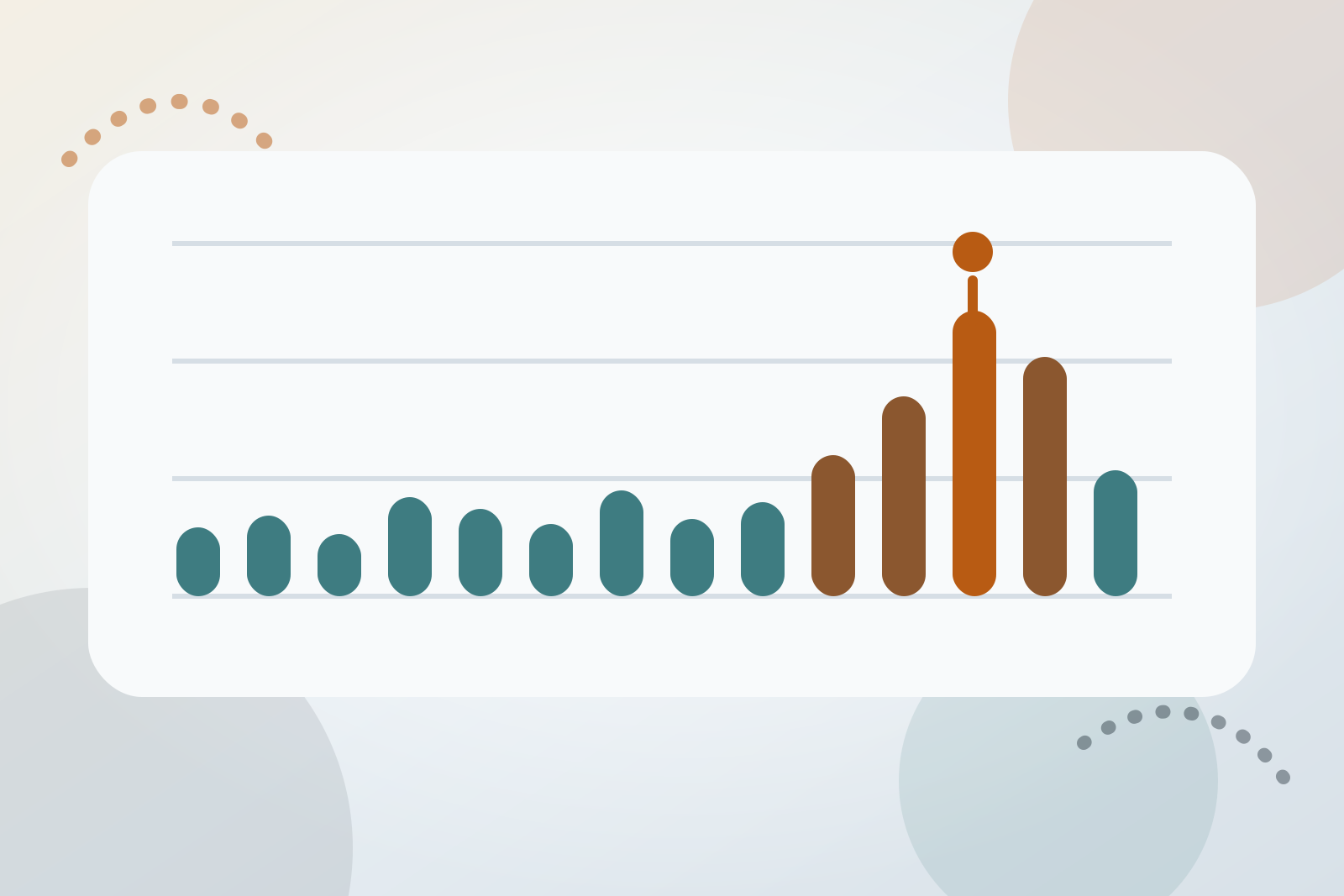
Time: Circle hours and weekdays that appear more than once. Replace “nights are bad” with something specific, such as “Tuesday and Thursday after 10:30pm.”
Entry point: Look for the doorway into the session. It might be a notification, checking the time, bringing the phone to bed, finishing a task, or opening one particular app.
Consequence and control: Mark whether the session was chosen, ended when intended, or displaced sleep, work, food, movement, or contact with another person.
A useful pattern combines all three:
On weeknights after 10:30pm, a message notification leads to short videos, and bedtime moves later.
Do not assume every brief check is harmful. The point is to find the repeated route connected to a consequence you care about.
For a broader method covering feelings, routines, places, and people, read how to identify your craving triggers and difficult times.
Test one change around one pattern
Choose the clearest repeated combination and alter one condition for the next week:
- turn off non-essential notifications from the entry app,
- charge the phone beyond arm's reach during the repeated hour,
- remove the first-opened app from the home screen,
- decide when you will check messages rather than checking every alert,
- prepare a specific activity for the gap you usually fill with scrolling.
Write an if-then plan:
If I take my phone to bed after 11pm, I will put it on the dresser before opening another app.
Changing one condition makes the result easier to read. If you simultaneously delete apps, impose limits, change bedtime, and silence every notification, you will not know which part helped or which rule was unrealistic.
Compare the same device totals and consequences after another week. A useful change might mean fewer unplanned openings, an earlier bedtime, or easier stopping. It does not need to produce zero use.
This is a personal experiment, not a proven treatment. If the pull feels strong in the moment, use the short sequence in how to handle a craving in the moment. If a plan does not hold, what to do after a slip without erasing your progress explains how to adjust it without turning the result into a character judgment.
Where Hard Bit fits
Hard Bit is an optional iPhone companion for the context side of the map. You can keep separate habits, log uses and difficult moments, write your reason for changing, and choose whether you want to stop or cut down. Logging, the journal, and export and delete tools are free.
A subscription adds the forecast, warning message, patterns, calendar, widgets, and short reads. The forecast is calculated on your device from your entries. It makes no prediction below five entries and relies fully on your history at around twenty. There is no account, social feed, or server copy of the record.
Use Screen Time or Digital Wellbeing for device totals. Use a private log, paper, or notes for context. No tracker can decide whether you have an addiction or assess the cause of sleep, anxiety, or low mood.
The Hard Bit overview describes the complete workflow, while the Hard Bit support pages explain features, free and subscription boundaries, privacy, and data export.
Know when mapping is not enough
Consider qualified support if phone use is repeatedly:
- reducing sleep or making it difficult to meet basic needs,
- happening while driving or in another dangerous setting,
- interfering with work, study, caring, or relationships,
- connected with worsening anxiety, low mood, or severe distress,
- continuing despite plans you genuinely want to follow.
A GP, psychologist, or other qualified professional can help assess the wider situation. If the phone is mainly an entry point to gambling, risky sexual contact, harassment, or another problem with specific harms, seek support for that issue rather than relying only on screen-time controls.
If you are in immediate danger or thinking about harming yourself, contact emergency services or a crisis service where you are. Do not wait to complete the map.
More practical articles are available in the Hard Bit guide library. Our editorial policy explains how Daily Life Apps reviews health and product claims.
Frequently asked questions
Is phone addiction a diagnosis?
Do not treat the phrase as a self-diagnosis. The label remains debated, and a screen-time report cannot assess a disorder. WHO criteria for gaming disorder apply specifically to gaming and should not be generalized to all phone use.
How many hours of phone use are too many?
No single daily total answers that question for everyone. Work, navigation, accessibility tools, health tasks, and relationships can all add legitimate time. Look at control, purpose, and consequences alongside duration.
Do I need to log every pickup?
No. Use your phone's report for frequency. Add context notes only for sessions that feel automatic, continue longer than intended, or contrast clearly with deliberate use.
Can a seven-day map fix the problem?
It can reveal a testable pattern, but it cannot guarantee change or replace professional assessment. Treat the first week as a baseline, test one condition, and seek more support when safety, functioning, sleep, or mental health is deteriorating.