To stop scrolling after bad news, you need an exit, not more willpower. The loop usually has a shape: the news lands, you reach for the phone to find certainty or to go numb, and the feed rewards you just enough to keep going. Interrupt it with a short sequence: name what just happened, move the phone, decide what you actually need, and do one planned thing for the next few minutes. Later, when you are calm, prepare for the next time the same cue appears.
This works whether the bad news is personal (a message, a result, a bill) or global (a breaking story). The mechanics of the loop are the same.
Notice the handoff from the news to the scroll
The loop rarely starts with a decision. It starts with a handoff: the moment the upsetting thing arrives and your thumb opens a feed before you have chosen anything. That handoff is the point worth catching, because everything after it runs on habit.
Say it plainly, even silently: “That message rattled me, and I am now scrolling.” This is not self-criticism. It separates the event from the reaction and gives you a half-second in which a different move exists.
It also helps to know why the scroll is sticky. A clinical psychologist at UW Medicine describes doomscrolling as an attempt to control the uncontrollable, kept going by intermittent reinforcement: most of what you read makes you feel worse, but the occasional useful or reassuring piece keeps you searching. Mind similarly lists feeling anxious, helpless, and unable to stop scrolling as common responses to upsetting news. None of that is a character flaw. It is a predictable reaction to an unpredictable feed.
Exit the loop in the first two minutes
When you catch the handoff, run a short exit sequence. Keep it small enough to use while you are still rattled:
- Name it. “Bad news just landed, and I am scrolling.”
- Move the phone. Face down in another room, in a drawer, or on a charger across the hallway. Physical distance beats a closed app.
- Unclench the body. Feet on the floor, one slow exhale, shoulders down. This is orientation, not a calmness guarantee.
- Do one prepared thing. Kettle on, short walk, shower, ten minutes of a task with a clear end.
The structure in A Five-Minute Plan for the Start of a Craving adapts well here: the scrolling urge after bad news behaves like any other urge, and the first minutes matter more than the first principles. The goal is not to feel fine. It is to reach the next decision with your attention intact.
Work out what you were actually looking for
People scroll after bad news for different reasons, and each one has a different exit. Before you go back to the phone, ask which of these you were chasing:
- Information. “What exactly happened? What does this mean for me?” If so, the exit is a defined search: one or two trusted sources, a time limit, then stop.
- Comfort. “I feel awful and want it to dull.” If so, a feed is the wrong tool. Comfort comes from a person, movement, food, rest, or something absorbing, not from more of the thing that hurt.
- Action. “I need to do something about this.” If so, write down the one real next step (reply, appointment, payment, plan) and do that instead of reading fifty opinions about it.
Samaritans notes that searching for more information during difficult times is natural and can be genuinely useful; the problem starts when you pass the point of finding what you were looking for. That is exactly what this triage is for. It converts a vague itch into a specific need with a specific ending.
If the honest answer is “I do not know, I just needed to not feel this,” that is a useful answer too. It points toward the next section.
Give the feeling somewhere to go
Bad news produces a real emotional load, and scrolling is often a way of not sitting with it. Mind suggests acknowledging what the news stirred up, focusing on what you can control, and talking to someone you trust. None of that requires performing serenity. It requires giving the feeling one honest outlet before it funnels you back into the feed.
Pick one:
- Write three plain sentences about what happened and what it stirred up. A private journal entry works; so does a notes app.
- Say it out loud to one person: “I got some bad news and I am spinning a bit. Can I talk for five minutes?”
- Move your body in a way that matches the energy: a brisk walk for agitation, stretching for numbness.
- Do one small controllable thing (wash up, water a plant, reply to one easy message) to remind your nervous system that some things still respond to you.
If stress is the engine of your scrolling more generally, What to Do When Stress Triggers Doomscrolling goes deeper on that pattern. And if the feeling is bigger than the news, or keeps arriving even on quiet days, that is worth raising with your GP or a support service rather than managing alone.
Set a deliberate way back to the news
Exiting the loop does not mean going uninformed. It means choosing the terms. UW Medicine's psychologist recommends three limits: how much time you spend on news, how many sources you use, and when in the day you engage. Samaritans likewise suggests setting a limit on news reading and curating feeds toward trusted sources. Mind adds asking yourself how you are feeling before you check, since already-overwhelmed is a bad state for a breaking-news feed.
A workable setup looks like this:
- One window. Pick a time you can absorb difficult information, not the moment before sleep or the first minute after waking.
- Few sources. Two or three trusted outlets, visited directly, instead of an algorithmic feed that never ends.
- Alerts off. Samaritans recommends switching off news and social media push notifications so you engage when you choose, not when the app chooses.
- An after-plan. Decide what follows the news window before you open it: tea, a walk, a call. UW Medicine's psychologist specifically suggests planning a wind-down activity after reading news so you do not sit spinning in what you just consumed.
If you want to stay informed without being pulled under, How to Stop Doomscrolling Without Avoiding the News covers that balance in detail.
Spot the pattern before the next bad day
One bad-news evening is an event. Several of them, at similar times, are a pattern, and patterns can be prepared for. This is where a small amount of honest tracking earns its keep.
After a loop, log four things: the time, what the news was, what you did, and roughly how long the scroll ran. Do it without a verdict. “Thursday 10:40pm, email about the job, scrolled ninety minutes, felt worse” is data. “I have no discipline” is not.
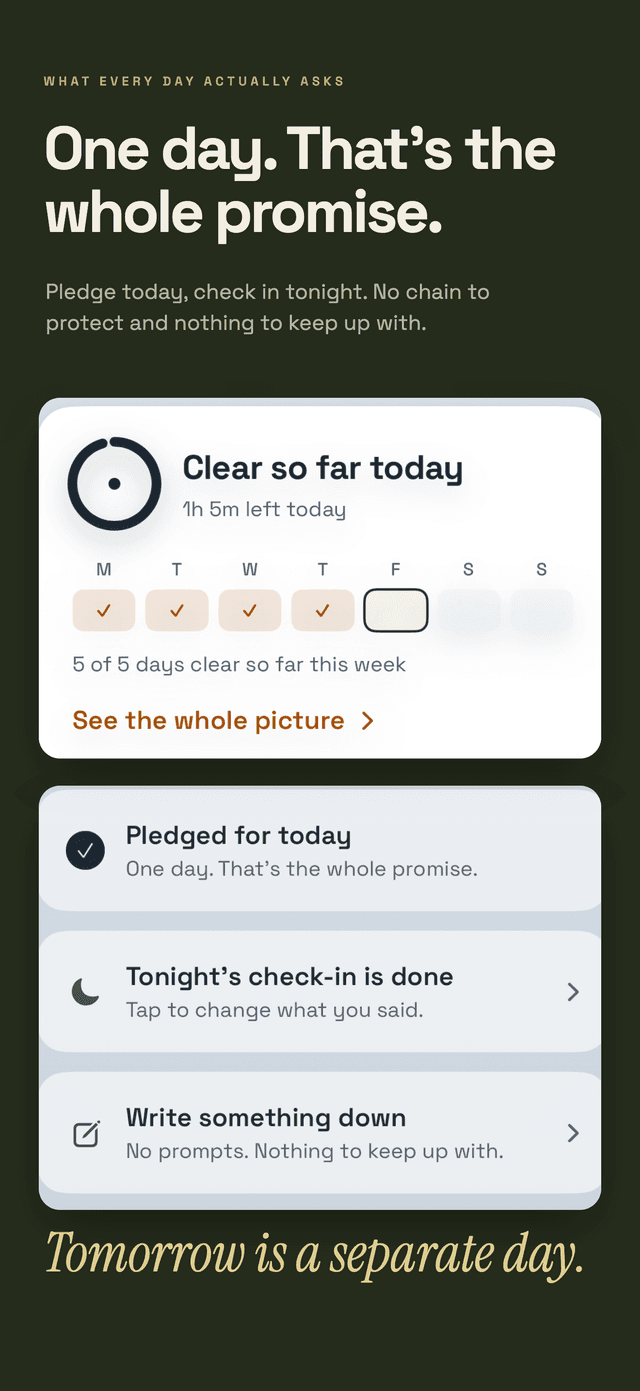
Over a few weeks, combinations emerge: late evening plus bad news plus being alone, or payday plus a worrying headline plus the group chat. Hard Bit is built around exactly this. It keeps a private log for your scrolling habit on your device, works out the hours you are most likely to struggle from your own entries, and, with Hard Bit Plus, can warn you before a likely hard hour arrives. It makes no prediction from fewer than five entries and leans fully on your history at about twenty, so the pattern is yours, not an assumption. The Hard Bit overview explains the workflow. If you prefer to do it by hand first, How to Track the Hours You Scroll Most Automatically shows the manual version.
A tracker cannot tell you why the news hurt or what to feel about it. It can tell you when the loop tends to start, which is the piece you can plan around.
Write your exit plan before you need it
The best time to design the exit is a calm day, not the next bad evening. Reduce it to four lines and keep them somewhere you will actually see:
- My cue: the kind of news that sends me scrolling (money, health, work, world events).
- My handoff: the first thing I usually open when it lands.
- My exit: phone to another room, kettle on, ten-minute walk.
- My person: who I message if the feeling is too big for a walk.
Rehearse it once while nothing is wrong. Then, when the next difficult notification arrives, you are following a plan instead of improvising against a feed designed to outlast you. More practical, source-reviewed guides live in the Hard Bit guide library.
Frequently asked questions
Why do I scroll more when the news is personally bad?
Scrolling after bad news is often a search for certainty or a way to numb the feeling, and feeds are built to keep you searching. Occasionally finding something useful or reassuring keeps the behaviour going even when most of what you read makes you feel worse. It is a common reaction, not a personal failing.
Should I just delete the news and social apps?
Removing access can help, especially at night, and Samaritans suggests deleting news apps and asking people you trust to pass on genuinely important updates. But for most people the more durable fix is choosing terms: one window, a few sources, alerts off, and an activity planned for afterwards. Total avoidance tends to break on the first big story.
What if scrolling after bad news is affecting my sleep, work, or mood most days?
That is a signal to add support, not just another technique. Mind advises reaching out, starting with your GP, if difficult feelings are very upsetting, long-lasting, or stopping you enjoying life. If you ever feel unsafe or in crisis, contact someone you trust, a listening service such as Samaritans on 116 123 in the UK and Ireland, or emergency services.
Is wanting to check the news repeatedly a sign of addiction?
Not necessarily, and this article cannot diagnose anything. A more useful question is whether the behaviour is difficult to control and causing harm: lost sleep, rising anxiety, avoidance of life. If the honest answer is yes, treat that as reason to change the setup and, if needed, to talk to a professional, whatever label fits.
Can an app stop me from doomscrolling after bad news?
No app can stop a loop for you, and Hard Bit does not block anything. What tracking can do is show you when the loop tends to start and which cues precede it, so your exit plan is aimed at the right hour. The exit itself is still yours to walk.