A practical way to respond to smoking cravings is to make each one smaller. Write down the cue, list the physical actions that normally follow it, and change the earliest safe step you can. This cue-to-action map is a planning exercise, not a treatment for nicotine dependence. Use it alongside qualified cessation support and stop-smoking medicines when they are suitable for you.
Separate the cue from the action
The NHS says smoking cravings can be triggered by stress, situations, and routines such as drinking coffee or waiting for a bus. The National Cancer Institute (NCI) distinguishes cravings related to nicotine withdrawal from psychological cravings prompted by familiar people, places, moods, or activities.
For planning purposes, divide one craving into two parts:
- Cue: what happened just before the urge, such as pouring coffee, finishing a meal, seeing someone smoke, or ending a shift.
- Next action: the first observable thing you did, such as standing up, reaching for a pocket, collecting a jacket, or walking towards a doorway.
This does not mean every craving has one simple cause. Withdrawal, mood, routine, and access can overlap. The split simply gives you something concrete to examine.
Write the movement chain
Choose one recent craving you remember clearly. Write the physical sequence without explaining or judging it.
For example:
- Kettle switched on.
- Coffee poured.
- Phone picked up.
- Back door unlocked.
- Left pocket checked.
- Cigarette lit.
A work sequence might be: meeting ends, laptop closes, lift to the ground floor, side exit, usual smoking area.
Mark the earliest step you could safely and realistically change. You might leave the phone in the kitchen, drink the coffee in another room, take the main exit, or keep gum where the cigarettes used to be.
Calling this point the “seam” is an editorial planning device, not a clinical finding. Its value is practical: it replaces “resist the whole craving” with one specific action you can prepare for.
For a shorter response when an urge is already strong, use how to handle a craving in the moment.
Name the cue without labelling yourself
The CDC recommends noticing the thought that appears just before or during an urge and testing a more useful response. Instead of “I cannot cope without a cigarette,” you might say, “The meeting ended, and I am expecting the usual smoke break.”
A recent preregistered laboratory study also tested cue labelling. Participants selected words describing cigarette-related images. Among the 46 participants with usable craving ratings, cue labelling produced slightly lower reported craving than matching cigarette images, with a small overall effect. The age-related result appeared stronger above about 47 years, but the subgroups were small.
The study did not test self-generated labels during daily life, lasting effects, or whether participants smoked less. It also lacked a passive craving baseline. Treat it as preliminary evidence for a low-cost experiment, not proof that naming a cue will stop a craving.
Try a neutral description:
- “That is the smell near the doorway.”
- “That is coffee after breakfast.”
- “That is the end-of-shift routine.”
Describe the cue, not your character.
Change one early action
Official guidance supports changing routines and making cigarettes less accessible. The NHS suggests options such as taking a work break at a different time, changing a commute route, chewing gum, or brushing your teeth after a meal. The CDC recommends removing cigarettes, lighters, matches, and ashtrays, cleaning items that smell of smoke, and preparing substitutes for your hands and mouth.
Choose one change that fits the actual cue:
- Coffee: use a different chair and keep gum beside the mug.
- Work break: take another exit or walk with a colleague who does not smoke.
- Driving: remove smoking supplies and keep an appropriate substitute within reach.
- After a meal: stand up to wash dishes or brush your teeth.
- Seeing others smoke: move away until they finish and ask them not to offer you cigarettes.
The CDC advises practising alternatives before your quit day so they are familiar when an urge arrives.
Alcohol can make smoking cues harder to resist. Changing where, when, or whether you drink during the first weeks may help. If you are concerned that you may depend on alcohol, do not stop abruptly because of an article. Ask a clinician or alcohol service for withdrawal advice.
Log the cue and action together
A brief paired record can show which sequences recur. Include:
- time and place,
- what happened immediately before the craving,
- your first physical action,
- what you changed,
- whether you smoked.
An entry could read: “Friday 5:40pm, shift ended, followed Sam towards the smoking area, used the main exit instead.” Another might say: “Tuesday 9:15pm, kitchen cleaned, stepped outside, checked pocket, smoked.”
Review several entries together. Look for repeated combinations of hour, place, person, and movement. Do not treat one entry as a diagnosis or a prediction. How to identify your craving triggers and difficult times explains how to review a longer log.
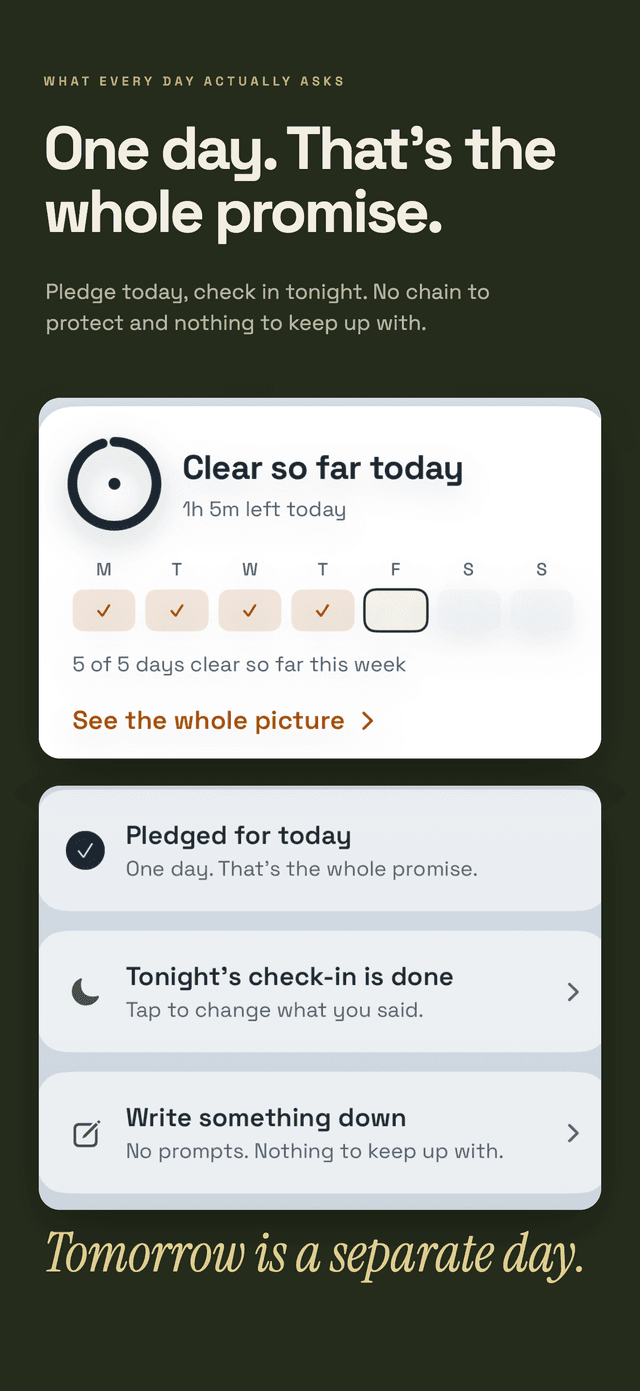
Hard Bit can keep smoking in its own private record on your iPhone, with its own counter, reason, entries, and difficult-hour pattern. The counter, hard-moment flow, logging, and journal are free. Forecasts and pattern views require a subscription. Forecasts are calculated on the device, show no prediction below five entries, and rely more fully on your history at around twenty entries. There is no account or social feed, and your entries do not leave the phone.
The Hard Bit overview explains the workflow, while the support notes describe the feature and subscription boundaries. If you record a cigarette, the app keeps the full history, so day 84 can become 81 of 84 days clear rather than returning the entire record to zero.
Expect more than one timeline
An individual craving and the broader withdrawal period are not the same thing.
The NHS says individual cravings usually last a few minutes and are often hardest during the first 28 days. The NCI says nicotine withdrawal symptoms are generally worst in the first week, often peak during the first three days, and usually decrease during the first month. Some people experience symptoms for several months, and occasional mild cravings can return much later.
Use a short delay to create decision space, not as a promise that every craving will end by a particular minute. A later craving does not erase progress.
If you smoke, keep the entry and review where the sequence changed. What to do after a slip without erasing your progress provides a structured next step.
Add evidence-based cessation support
Cue mapping is self-management. It does not assess nicotine dependence or replace treatment.
The World Health Organization recommends behavioural support and lists nicotine replacement therapy (NRT), varenicline, bupropion, and cytisine as treatment options for adults who smoke and want to quit. Availability and prescribing rules vary by country. Combining a nicotine patch with a shorter-acting NRT product such as gum or a lozenge is one supported option.
A clinician, pharmacist, or trained quit adviser can help you choose a product, check interactions and side effects, and decide how long to use it. Seek individual advice before using cessation medicines during pregnancy or breastfeeding or if you are under 18.
In England, the NHS provides free local Stop Smoking Services. It links separately to support in Wales, Scotland, and Northern Ireland. In the United States, call the free, confidential quitline at 1-800-QUIT-NOW. The NCI also offers counselling and referrals at 1-877-44U-QUIT.
Seek urgent help for chest pain, severe breathing difficulty, self-harm thoughts, or another medical or mental health emergency. Contact a clinician promptly if withdrawal-related low mood, anxiety, or sleep problems are severe, persistent, or difficult to manage.
Our editorial policy explains how health information and product descriptions are reviewed.
Build one four-line plan
Prepare one plan for one recurring cue:
- Cue: “Coffee at 7am.”
- Early action: “I normally unlock the back door.”
- Change: “I will drink the coffee in the front room with gum beside me.”
- Support: “If that is not enough, I will use my agreed treatment and contact my quit adviser.”
Rehearse the change while you are calm. If it repeatedly does not fit the situation, change the environment or add qualified support rather than blaming yourself.
More source-reviewed planning articles are available in the Hard Bit guides.
Frequently asked questions
How long does a smoking craving last?
The NHS says cravings usually last a few minutes, but this is not a guarantee for an individual urge. Withdrawal can be strongest during the first days and weeks, and occasional cravings may return later. Use a delay as breathing room, not a countdown.
Should I avoid a smoking cue or practise responding to it?
Avoiding cigarettes and high-risk situations can be sensible during the early weeks. Some cues, such as meals or work transitions, cannot be removed permanently and need a prepared response. Choose the safer option for the situation and involve a quit adviser if repeated exposure keeps leading to smoking.
Why are cravings strong in the morning?
The NCI notes that nicotine levels fall during six to eight hours of sleep. Morning cravings may also be tied to a well-rehearsed waking routine. Remove cigarettes from the usual location, prepare your treatment or substitute as advised, and change the first activity of the day.
Can tracking replace NRT or a quit service?
No. A log can reveal repeated cues and help you explain your pattern to an adviser. It cannot assess dependence, recommend a medicine for your circumstances, monitor side effects, or provide counselling. Use it alongside appropriate cessation support.