To handle pornography cravings in the moment, start by putting physical distance between you and the screen. Then notice the thought bargaining for "just a quick look". Let the arousal be there without obeying it, and use a sentence you wrote earlier to choose the next ten minutes. If you are already scrolling, stopping partway still counts.
If urges feel out of control, are causing serious distress, or come with thoughts of harming yourself, these steps are not enough on their own. Contact a qualified professional or a crisis service.
This guide doesn't diagnose you, and it doesn't treat wanting to watch porn as a moral failure. It's a practical sequence for the minutes when the urge is loudest.
Put distance between you and the screen first
Most porn urges have an unusual feature: the thing you want is often already in your hand. Arguing with a craving while you hold the device is hard, so change the setup before you test your resolve.
Pick the fastest option that fits where you are:
- put the phone face down in another room and walk away from it,
- plug the laptop in somewhere you would not normally sit,
- open the door, or move into a shared space if other people are home,
- step outside for a minute without the device.
This is editorial advice rather than a clinical rule. The reasoning is simple: every extra step between you and the screen gives you another chance to decide differently. If the phone is usually the way in, How to Prepare for Phone-Based Porn Triggers covers the setup changes worth making before the urge arrives.
Name the bargain for what it is
Porn cravings often don't start by asking for everything. They ask for something small: "I'll just check one thing." "Only a preview." "I'm not going to watch, just scroll." Many people trying to cut down describe this as the point where the plan quietly slipped. This comes from lived experience, not a measured finding.
Say the bargain out loud or write it down, then add a plain label:
"That's the craving negotiating. I can notice it without agreeing to it."
You don't need to win the argument or prove the thought wrong. Labelling it moves you from being inside the urge to looking at it, and that's enough for this step.
Treat arousal as a body state, not a command
Arousal can make a craving feel urgent, as if something has to happen now. Wanting sexual release is a normal human experience. The goal here is not to shame that feeling. It is to separate the feeling from the specific action you have decided you don't want to repeat.
Try this short check:
- Notice where you feel the urge: chest, stomach, hands, restlessness.
- Rate it from 1 to 10 without judging the number.
- Let your breath out slowly, a little longer than the in-breath, five times.
- Rate it again.
The number may go down, stay the same, or go up for a while. All three are fine. You're practising staying with a body state without acting on it, not chasing a particular score.
If focusing on your body makes things more intense, use something outside you instead. Hold something cold, name five things you can see, or describe the room aloud.
Ride the urge with attention, not force
Urge surfing means watching a craving rise, peak, and change, the way you would watch a wave, instead of pushing it away or giving in. It's a coping technique, not a promise. No reliable timetable says how long your craving will last, and some urges come back several times in one evening.
What the evidence suggests: most research on urge surfing comes from smoking, not pornography. In a randomised study of 123 student smokers, brief urge-surfing instructions did not significantly reduce urges compared with a control group, although participants who received them smoked fewer cigarettes over the following week. The authors suggested the technique may change how people respond to urges rather than the urges themselves. That distinction matters. The aim is not that the craving vanishes. The aim is that you can feel it and still choose.
A simple way to try it:
- Silently say "rising" as the urge builds.
- Notice the moment it feels strongest, and say "peak".
- Notice any small change afterwards, and say "shifting".
- Keep your hands busy with something unrelated while you watch.
If sitting with the urge feels unbearable, switch to an absorbing task instead. Both approaches are reasonable, and the safer one for the situation is the right one. What Is Urge Surfing and How Can You Practise It? covers the technique in more depth.
Use one if-then line you wrote earlier
Motivation you try to find in the middle of a craving tends to sound either harsh or vague. A line written on a calm day is usually clearer.
Established research, applied here: if-then plans, which psychologists call implementation intentions, had a medium-to-large positive effect on reaching goals across many kinds of goal in a large meta-analysis. That research wasn't about pornography, but the format transfers well:
- "If I notice myself searching, then I put the phone on the hallway shelf and make tea."
- "If it's after 11pm and I'm still in bed with my phone, then I charge it in the kitchen."
- "If I feel lonely after a call, then I message one friend before I open anything else."
Write a reason alongside it that is kind and specific, such as "I want my evenings back", rather than a threat aimed at yourself. To build the full version before you need it, use Make a Craving Plan for Pornography Before You Need It. For a shorter, general version, see A Five-Minute Plan for the Start of a Craving.
If you are already scrolling, stop partway
Many guides assume you catch the urge before you start. Often you don't. You notice the craving five minutes into browsing, with tabs already open.
Stopping at that point is a real decision, not a lesser one. Try:
- Close the tab or app without "finishing" first.
- Lock the screen and put the device down somewhere out of reach.
- Stand up and change rooms.
- Do one physical thing with a clear end, such as washing a cup, taking a shower without the phone, or walking to the end of the street.
Notice the thought "I've already started, so it doesn't matter now." That's another bargain. What you do over the next few minutes still matters, whatever happened in the last few.
Record what happened, briefly and honestly
Once the intensity has changed, write a short note. A few words are enough: what time it was, what happened just before, what you tried, and whether you watched. Keep shame out of it. "Tuesday 10:40pm, after scrolling in bed, tried the hallway shelf, urge came back twice" is useful. A verdict on your character is not. How to Track Pornography Without Turning It Into Shame goes deeper on keeping that record useful.
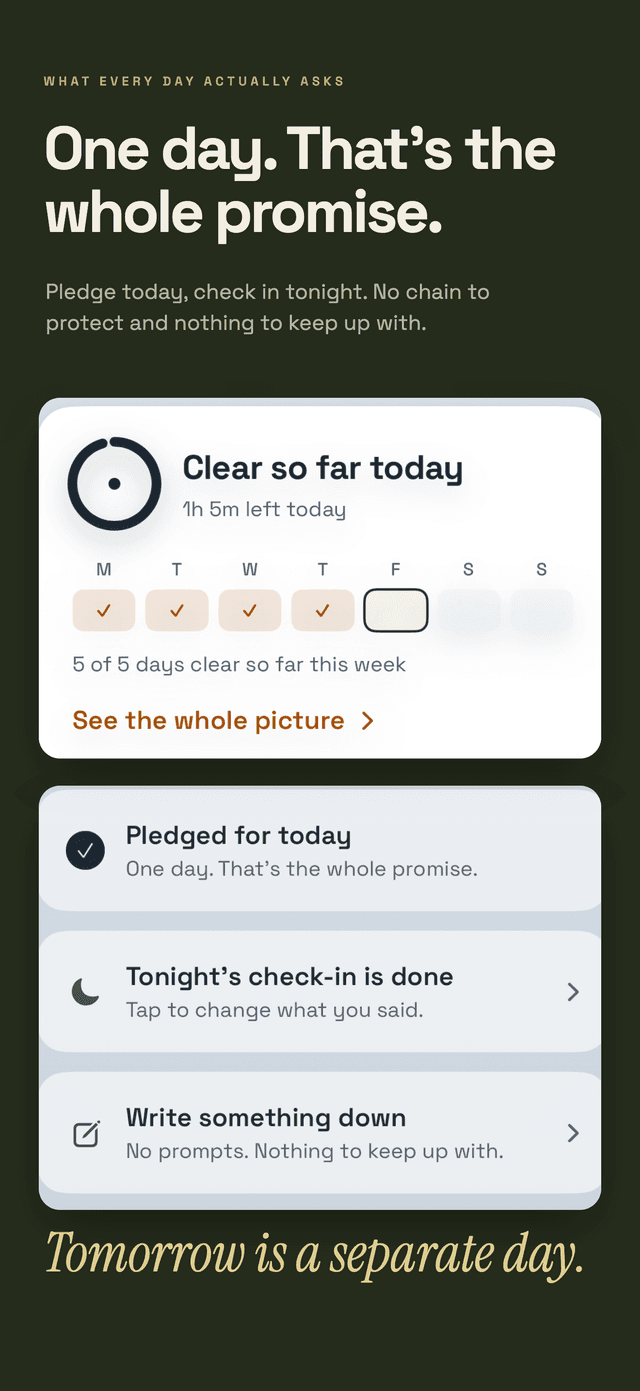
If you use Hard Bit, the free hard-moment button brings back the sentence you saved when you set the habit up, and logging a slip doesn't reset your counter, so the record stays honest rather than flattering. With a subscription, an on-device forecast can use those logs to show which hours keep coming up; it makes no prediction below five entries. There is no account, and nothing leaves your iPhone. The Hard Bit overview explains how it works. A paper note works too. What matters is having an honest record.
Know when in-the-moment tactics are not enough
Coping steps help with individual moments. They are not a treatment, and needing more support is not a failure.
Established fact: ICD-11 recognises compulsive sexual behaviour disorder, described as a persistent pattern of failing to control intense, repetitive sexual impulses or urges, resulting in repetitive sexual behaviour over an extended period that causes marked distress or significant impairment. Distress that comes only from moral disapproval is not enough for that diagnosis. Only a qualified clinician can make that assessment. A craving, or wishing you watched less, does not establish it.
Emerging evidence: structured psychological approaches are being studied. For example, a small randomised trial of acceptance and commitment therapy for problematic internet pornography use reported reduced viewing compared with a waitlist. The sample was 28 men, almost all from one religious community, and the authors called for research with more diverse groups.
Consider talking to a GP, a counsellor, or a therapist experienced with compulsive sexual behaviour if:
- you repeatedly can't follow plans you made calmly,
- use is affecting sleep, work, money, or relationships,
- you feel intense shame, low mood, or anxiety afterwards,
- urges are linked to other risky behaviour.
If urges involve sexual material involving children, non-consensual material, or another person's safety, step away from access and seek specialist professional help now rather than relying on self-help steps.
If you are thinking about harming yourself, contact emergency services. In the UK and Ireland, Samaritans is free to call on 116 123, day or night. In the US you can call or text the 988 Suicide & Crisis Lifeline. Elsewhere, use your local emergency number. For nights that keep going wrong, How to Get Through a Difficult Pornography Night has a longer plan.
Our editorial policy explains how we separate established evidence from practical advice and product information.
Frequently asked questions
How long does a pornography craving last?
There is no reliable fixed duration. Intensity can rise, settle, and come back, and it varies from person to person and from night to night. Use a short delay to give yourself room to decide, not as a promise that the urge will be gone by a certain minute.
Is it normal to feel aroused even when I don't want to watch?
Yes. Arousal and the wish not to watch can exist at the same time. The steps above aim to separate the body state from the specific action you want to change, not to make you feel guilty about having sexual feelings.
Does having strong porn cravings mean I'm addicted?
Not necessarily. Cravings on their own don't establish a diagnosis. ICD-11 describes compulsive sexual behaviour disorder as a persistent pattern of loss of control that causes marked distress or impairment, and a qualified clinician would need to assess that. If use feels out of control or is harming your life, that's a good reason to talk to a professional, whatever label applies.
Should I distract myself or sit with the urge?
Either can help. Urge surfing suits some people. Others do better leaving the room and starting an absorbing task. Choose whichever is safer and more realistic at that moment, and change your approach if one keeps failing.
What if I gave in tonight?
Keep the night in your record rather than deleting it, and look for the earliest point you could change next time, which is often when the phone came into the room. Then return to your ordinary routine. One evening does not erase the progress you made before it. What to Do After a Slip Without Erasing Your Progress walks through the next steps.