To handle evening cannabis cravings, treat the usual hour as a fixed appointment and plan for it earlier in the day. Write down when it tends to start, where you are, and what the session gives you. Before evening, make three decisions: what you will do instead (or, if you are cutting down, what the smaller version looks like), what you will move out of reach, and what you will do if the urge is still strong.
The reason is practical. At 4pm you are usually away from the cue and less tired. At 9:30pm you are often sitting where the session normally happens.
Why the same evening hour keeps coming back
The research is still limited, so it is worth separating what it shows from what it does not.
Emerging evidence: In a 2019 study, 85 people aged 15 to 24 were prompted on their phones at intervals through the day. They reported stronger cannabis craving in the evening and late night than in the morning. Craving was also stronger around cannabis-related cues and at more stressful moments. This is one study with a small, young sample. It does not explain why your own evenings are hard.
Another small study: Over two weeks, 49 college students who used cannabis rated their craving several times a day. Within the same day, craving was higher before use and lower afterwards, and most use happened when other people were also using. The authors suggested that craving, anxiety, and peer use may help keep use going.
Editorial interpretation: Evenings often stack several cues together: less structure, tiredness, the house going quiet, the familiar spot, and sometimes other people who use. None of that makes using inevitable. It does mean the plan should start before the evening begins.
Describe your usual hour in one line
A vague sense that "evenings are bad" is hard to plan for. A single, specific line is easier. For example:
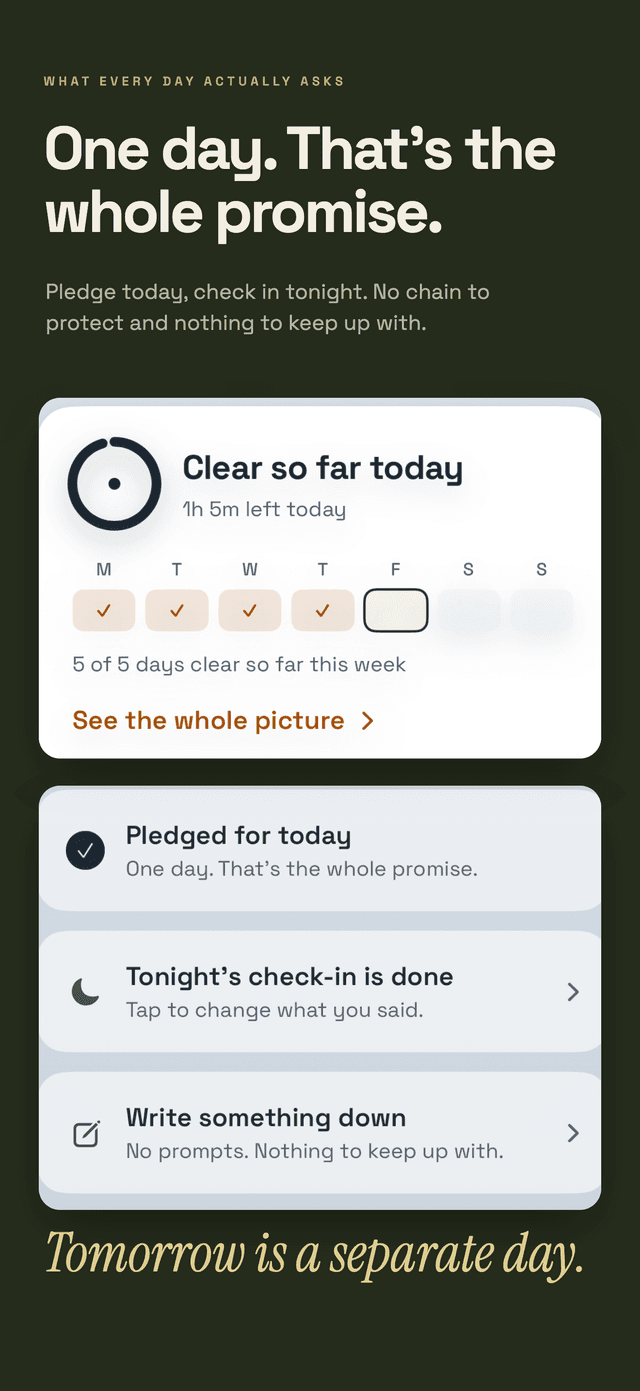
Weeknights, around 9:30pm, on the back step, once the dishes are done and the house is quiet. What I want: ten minutes that are only mine.
Include five details:
- The window: roughly when the urge starts and when you usually act on it.
- The opening cue: the event that tends to come just before, such as finishing dishes, a partner going to bed, or closing a work laptop.
- The place: the step, sofa, balcony, car, or bedroom.
- What the session gives you: rest, alone time, sleep, a reward, relief from boredom, or simply the end of the day.
- Tonight's goal: stop, or a specific cut-down version.
If you are not sure when your hour actually is, start with the guide to tracking the hours you are most likely to use cannabis. If the urge clearly begins the moment you get home, the plan for cannabis cravings after work covers that handover in more detail.
Make tonight's decision earlier in the day
Choose a fixed checkpoint well before the usual hour: lunch, the end of the working day, or after the evening meal. At that point, write three short lines:
- Instead: "At 9:30 I will take tea and headphones to the step."
- Out of reach: "Equipment stays in the locked box in the hall cupboard."
- Backup: "If I still want to at 9:45, I will text Alex and shower."
If your goal is cutting down rather than stopping, make the smaller version concrete. WithYou recommends small, achievable goals, such as cutting out one joint a day or using slightly less in each. You might decide "not before 10:30pm" or "Friday and Saturday only." Write it down at the checkpoint, not in the moment.
This is editorial advice rather than a research finding. The point is to avoid "I'll see how I feel," which leaves the decision to the most tired, cue-heavy part of the day.
Give the hour a different job
The usual hour usually does something for you. A replacement that ignores what the session provides is harder to keep up. Keep the time slot, but change what fills it.
| What the hour gives you | A replacement that fits the same time |
|---|---|
| Permission to stop for the day | A fixed closing ritual: lights down, phone on charge, a hot drink |
| Time alone | Keep the solitude and change the activity: the same step with music or a podcast |
| Help winding down for sleep | A consistent wind-down routine, and a GP conversation if sleep is the main reason |
| Something to look forward to | A specific treat chosen in the afternoon: an episode, a bath, a call |
| Relief from boredom | One short task with a clear end, such as prepping tomorrow's lunch |
Be honest about energy. A plan that needs a gym trip or high concentration at 9:30pm may not survive a long day. If music or gaming is part of the session, the guide on changing a music-and-cannabis routine looks at separating the activity from the use.
Change the setting before the hour starts
Small changes to the environment can make the usual sequence less automatic. Make them during the day:
- Move cannabis and equipment out of the room or spot where the hour happens. If you are stopping, consider not keeping a supply at home.
- Change the location for a week. If the back step is the place, sit somewhere else or use the step for something different.
- Put a planned action straight after the opening cue. When the dishes are done, the kettle goes on, rather than leaving an empty gap.
- If someone you live with uses, agree on a time and place arrangement in advance.
- If drinking and cannabis tend to go together in the evening, plan for both. If you drink heavily every day, do not stop alcohol suddenly without medical advice.
Do not move another person's medication. If your cannabis is prescribed, follow your prescriber's guidance.
When the urge arrives on time anyway
Expect the urge to turn up at the usual time for a while. Its arrival does not mean the plan has failed.
WithYou suggests a "delay and distract" approach. Set a five-minute timer on your phone and do something else, such as showering, making tea, or tidying, then try longer delays as you get used to it. Some people also practise urge surfing: noticing the craving rise and change without acting on it. These are coping techniques, not guarantees. A craving may ease, return, or take longer than you expect.
You can rehearse a fuller sequence with a five-minute plan for the start of a craving. It can also help to keep one sentence written earlier, in your own words, about why you are changing this hour. Hard Bit's free hard-moment button brings up the sentence you saved, but a note on your phone works the same way.
If you do use, record it plainly and keep going. The guide on tracking cannabis without turning it into shame explains how to keep that entry useful rather than harsh.
When withdrawal shapes the evening
If you are stopping or cutting down regular use, evenings may feel harder for a while for physical reasons as well as habit. WithYou lists sleep problems, strange dreams, anxiety, irritability, appetite changes, and cravings among withdrawal symptoms. It describes these as usually temporary, with the main symptoms fading within a few weeks. Individual experience varies.
During that period, keep the evening plan simple and lower expectations for sleep. Getting through a difficult cannabis night covers bedtime urges and waking in the night. If symptoms feel severe or are getting worse, speak to a GP or drug service.
Review the hour after one week
After about seven evenings, look back with a few neutral questions:
- Did the urge start at the same time, earlier, or later?
- Which of the three lines (instead, out of reach, backup) actually happened?
- What was different on the evenings that went the way you planned?
- Which single part should change next week?
Paper is enough for this. If you prefer an app, Hard Bit keeps each habit's log, difficult hour, and reason for stopping separate on your iPhone, and lets you choose to stop or cut down. Logging, the journal, the counter, and the hard-moment button are free. Hard Bit Plus adds a forecast of your difficult hours and a warning before one arrives. The forecast is calculated on your phone from your own entries. It makes no prediction below five entries and only leans fully on your own history at about twenty. The Hard Bit overview explains the workflow, and the support page covers privacy and subscription details.
Know when an evening plan is not enough
Look for more support if evenings stay unmanageable, if cannabis is affecting your mental health, sleep, work, money, or relationships, or if you keep missing limits you meant to keep.
The NHS says a GP can talk through a drug problem and will usually refer you to a local drug service, and that you can also contact a local service directly. In the UK, the FRANK helpline on 0300 123 6600 can explain the options. Outside the UK, contact a local health or drug service.
Seek urgent help for severe paranoia, hallucinations, thoughts of harming yourself or someone else, or any immediate danger. In the UK, call 999 in an emergency or NHS 111 for urgent advice; elsewhere, use your local emergency number. A plan or a private log cannot assess those situations. Our editorial policy explains how health information on this site is sourced and reviewed.
Frequently asked questions
Why are my cannabis cravings worse in the evening?
There may be several reasons at once: tiredness, less structure, a familiar place, a quiet house, or stress building up during the day. One study of young people found craving was stronger in the evening and late night than in the morning, but your own record is the better guide to your pattern.
Should I stop completely or just push the hour later?
Either can be a valid goal, and the right choice depends on your circumstances. A later start or smaller amount can be a cut-down step if it is written down in advance. If cannabis is prescribed, or you are unsure which goal is safe for you, speak to your prescriber, GP, or a drug service.
What if the urge moves to a different time once I change my evening?
This can happen. Keep logging, and treat the new time as information rather than failure. Apply the same three-line plan to the new window.
Will the craving always pass if I wait?
There is no fixed duration you can count on. A short delay creates room to decide what to do next. If the urge stays strong, move further from the cue, contact someone, or use your backup line.