
To track habit progress without perfection, choose your measures before a difficult week arrives, not after it. Then test each one with a single question: if this week goes badly, will this number show it honestly without wiping out everything before it?
A streak fails that test because one use sends it to zero. Measures that pass include clear days out of a fixed window, a rolling four-week view, how quickly you return to your plan, how many urges you met with a plan, and how big your hardest day was. Below are eight options. Pick three.
Why one bad week can feel like the whole story
After a rough week, people often think "I've blown it, so it doesn't count." Clinical researchers have studied this reaction. Marlatt's relapse prevention model separates a single lapse from a full return to the old pattern. It describes guilt and self-blame after a lapse, called the abstinence violation effect, as one reaction that may affect whether a lapse continues.
The evidence on that reaction is mixed. In one smoking-cessation study, lower confidence after a lapse predicted moving on to the next lapse. Self-blame and guilt did not predict it in the way the model expected. That is one study about one habit, not a rule for everyone.
The practical lesson is limited but useful. A measure that makes you feel everything has been lost can also knock your confidence that you can carry on. Smokefree.gov makes a similar point for smoking: a slip is a temporary setback, not failure or a return to square one.
This article is about reading the week afterwards. For what to do in the hours after a slip itself, see what to do after a slip without erasing your progress.
The test every measure should pass
Before you trust a number, ask three questions:
- Does a bad week change it? A measure that hides difficult days is flattery, not tracking.
- Does the change stay in proportion? One week should move the number, not delete a month.
- Can I keep recording it on my worst day? If logging feels shameful when things go wrong, the record will have gaps exactly when it matters most.
There is reasonable evidence that monitoring itself helps. A 2016 meta-analysis of randomised studies in Psychological Bulletin found that interventions which increased progress monitoring improved goal attainment on average. Effects were larger when progress was physically recorded or reported. Most of the included studies involved health-related goals rather than cravings specifically. Treat that as support for keeping a record, not as proof that any particular measure works for any particular habit.
Eight measures that hold up after a rough week
These are editorial suggestions drawn from the principles above, not clinical outcome measures. Choose the ones that fit your goal.
1. Clear days out of a fixed window
Write the result as a fraction: "19 of 28 days clear." A bad week lowers the fraction, but the 19 days still count. Always show what you are dividing by, and mark days you did not record as missing rather than assuming they were clear. The guide to counting clear days without worshipping a streak covers how to define a clear day and what to do with unrecorded days.
2. A rolling four-week view
Compare the latest four weeks with the four weeks before them, instead of judging this week alone. A rough week becomes one quarter of the picture. It still shows, and if the next week is also rough, the rolling view shows that too.
3. Return-to-plan time
Measure the time between a slip and your next planned action. That action might be logging honestly, moving a supply out of reach, or messaging someone. Going from "three days of drifting" to "back on plan by the next morning" is real change, even if the slip itself happened again.
4. Urges met with a plan
Count the urges you logged and note how each one ended. "Eleven urges, eight met with my plan" is useful whether or not the other three ended in use. If the same situation keeps beating the plan, the plan needs to change. You may not need more effort. Choosing one action for a difficult twenty minutes can help you redesign it.
5. Size of the hardest day
Record the amount, money, or time on your single worst day each week. This one keeps the others honest. Fewer use days alongside a much larger hardest day is a mixed result, not a win. It matters especially for alcohol and gambling, where a single heavy occasion or large loss can cause serious harm.
6. Difficult hours prepared for
If you know Thursday at 9pm is hard, did you go into it with a plan? Count prepared hours against known difficult hours. This measures what you did before the moment, which is often easier to change than the moment itself.
7. Support used
Count contacts with a supporter, an appointment kept, or a call to a quit line or specialist service. A week with more slips and more support can tell you more, and leave you better placed, than a quieter-looking week with no record and no one to talk to.
8. Days actually recorded
Count the days you logged at all, especially during the difficult stretch. A full record of a bad week is more useful than a perfect-looking record with the bad week missing.
If cutting down is your goal, the guide to noticing reduced frequency as real progress explains how to compare use days, episodes, and gaps fairly.
Pick three before the week starts
Eight measures is too many to keep up. Choose:
- One outcome measure: clear days out of a window, or the rolling view.
- One process measure: return-to-plan time, urges met with a plan, or prepared hours.
- One harm check: size of the hardest day, or money spent.
Write them down in advance, with the exact wording you will use. For example: "Each Sunday I will record clear days out of seven, how quickly I got back on plan after any slip, and my most expensive day." Deciding beforehand stops you from choosing whichever number looks best afterwards.
Some habits need a habit-specific harm check. The guides to measuring smoking progress beyond a perfect streak and measuring gambling progress beyond a perfect streak give examples.
Keep a separate set for each habit if you are working on more than one. The guide to tracking more than one habit without mixing the data explains why combined scores hide useful detail.
Read an imperfect week in one sentence
At the end of the week, sum it up in one plain sentence that includes the difficult part:
"4 of 7 days clear; rolling four weeks 20 of 28, down from 23. Back on plan within a day after each slip. Hardest day was Saturday, larger than usual — the pub after football needs a new plan."
That sentence admits the rough week, keeps the earlier progress, and points to one change. It is also something you can show to a supporter or professional.
A short, regular review makes this easier than checking numbers all the time. Try the weekly craving-log review for a ready-made structure.
When the numbers should worry you
These measures are designed to survive a bad week. They are not designed to excuse a worsening pattern. Take it seriously if:
- the hardest day keeps getting bigger,
- return-to-plan time is growing rather than shrinking,
- consequences are piling up: debt, missed work, arguments, or health symptoms,
- you have stopped logging because the record feels unbearable.
A self-tracking record cannot assess dependence, withdrawal, or what level of care you need.
Alcohol. If you may be physically dependent, do not stop suddenly or cut down fast without medical advice. The NHS advises getting medical help before stopping or reducing if you get withdrawal symptoms. Severe shaking, hallucinations, seizures, or confusion need urgent medical help.
Sedatives such as benzodiazepines. Do not stop abruptly or reduce quickly without your prescriber or another qualified clinician. The FDA warns that physical dependence can develop even when these medicines are taken as prescribed, and that abrupt stopping can cause serious withdrawal reactions, including seizures.
Smoking or vaping. A stop-smoking service, pharmacist, or clinician can talk you through evidence-based support and medicines. The coping ideas here do not replace those options.
Gambling. If money is at risk, practical barriers matter more than a better chart. The Gambling Commission describes self-exclusion for people who think they are spending too much time or money on gambling. Specialist gambling support and free debt advice can also help.
Any habit. If you have thoughts of harming yourself, are in immediate danger, or someone else is at risk, contact emergency services or a crisis line now. Do not wait to finish a measurement window.
Where Hard Bit fits
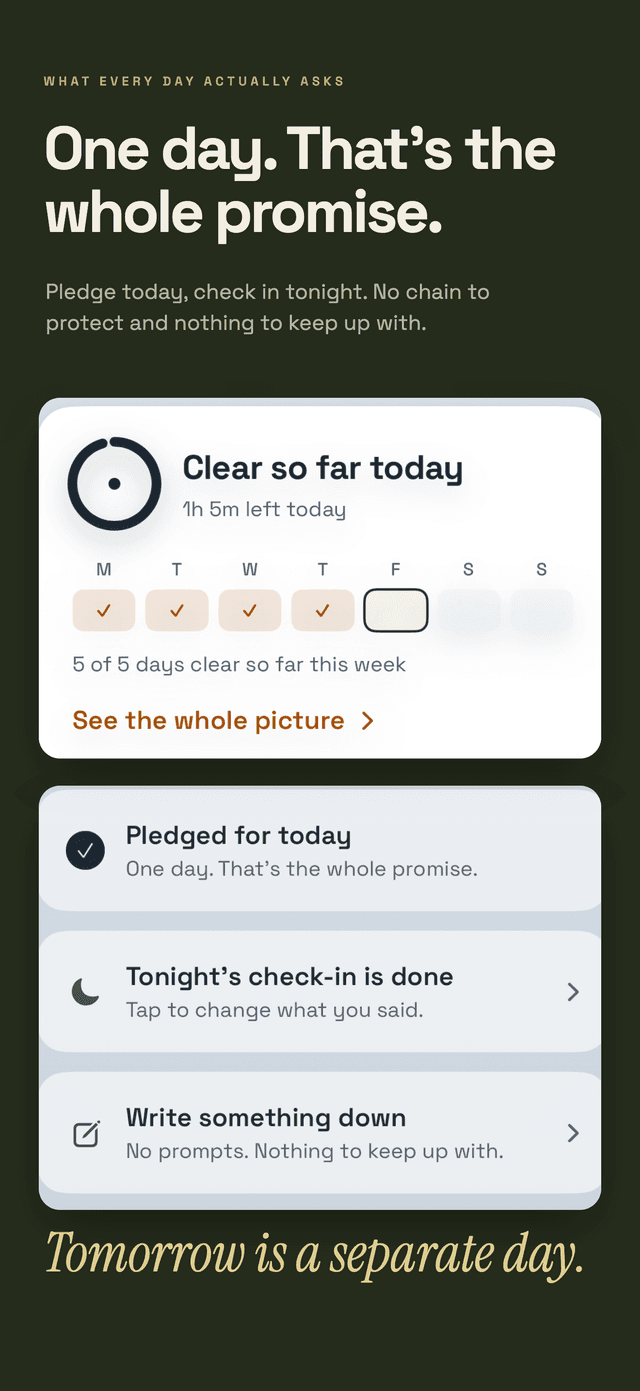
Hard Bit is an optional iPhone craving tracker, not treatment or a clinical assessment. Its counter does not reset after a logged use, so earlier clear days stay in the history when a week goes badly. Each habit keeps its own counter, logs, difficult hour, and reason for stopping. You can choose to stop or cut down.
The counter, the hard-moment button, logging, the journal, milestones, and export are free. You can export entries and work out return-to-plan time or a rolling view yourself. Hard Bit Plus adds the forecast of difficult hours and its warning, patterns, a calendar, widgets, and short reads. The forecast is calculated on your phone from your own logs: it makes no prediction under five entries and relies fully on your own history at about twenty. There is no account, and nothing is stored on a server.
The Hard Bit overview describes the workflow, and the support page lists current features. An app can only describe what you record. You still decide which measures matter.
Our editorial policy explains how we review health information and keep it separate from product details.
Frequently asked questions
Should I stop tracking a streak altogether?
Not necessarily. Some people find a current streak motivating. Keep it as one number among several, and pair it with at least one measure that survives a reset, such as clear days out of a fixed window.
What if my process measures improve but use does not?
That can happen, and it is still information. Faster returns to your plan and better-prepared hard hours can come before fewer use days. If use, amount, or harm stays the same over several weeks, bring the record to a qualified service rather than waiting.
Is it cheating to choose measures that look good?
It is if you choose them after the week to protect your mood. Pick your measures in advance and always include one harm check. Then a good-looking number cannot hide a bigger hardest day.
How long before I can tell whether my measures are working?
There is no fixed timeline. A rolling four-week view needs at least two blocks of four weeks to compare. One quiet or rough week on its own tells you little, so look for direction across several windows.